Missouri committee hears bill to publish municipal public-assistance counts to help local nonprofits
Loading...
Summary
A legislative committee heard House Bill 18-17, sponsored by Representative Becky Lobinger, which would require monthly publication of municipality-level counts of people receiving public assistance for communities with 1,000 or more residents so local charities can better target services; members asked about privacy, need and whether the data are already produced.
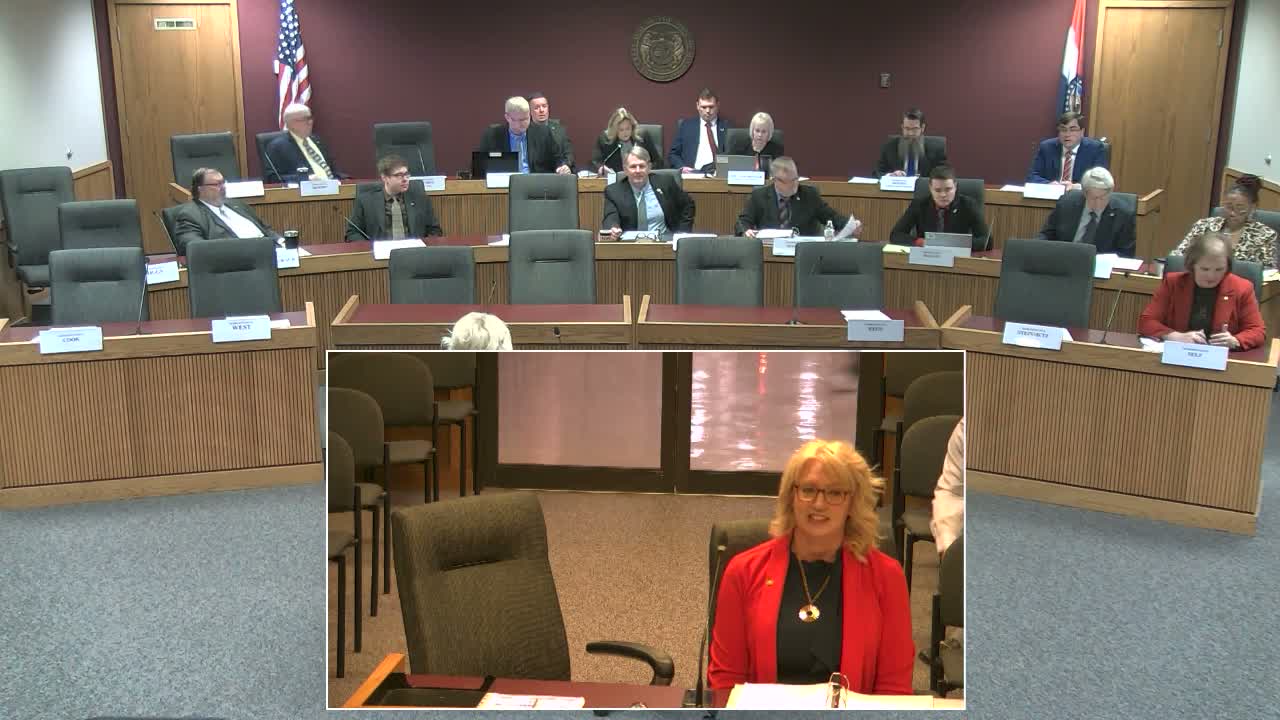
Representative Becky Lobinger opened a public hearing before the Committee on Government Efficiency on House Bill 18-17, saying the proposal aims to publish aggregate counts of public-assistance recipients at the municipal level in places with 1,000 or more inhabitants so local nonprofits can plan and measure the effectiveness of their programs. "This is not publishing anyone's personal information. It is just the numbers," Lobinger said, adding that the purpose is to give nonprofits a target for outreach and to measure whether community interventions lower assistance dependency.
Lobinger read a letter from James Whitford, a Joplin ministry founder, describing local outcomes and arguing that municipal data would allow nonprofits to focus resources where they are most needed. She cited statewide figures — roughly 655,000 to 662,000 people on SNAP, about 150,000 receiving housing assistance and an estimated share on Medicaid — and said county-level reporting already exists but the municipal detail funded in 2022 has not been consistently published. "We paid for it already," she said, describing the bill as an implementation step to publicize data the department should already be producing.
Lawmakers pressed for technical and privacy clarifications. Representative Murphy said raw counts may not change volunteers' behavior and asked how charities would reach individuals who are unidentified by the data; Lobinger replied the information is intended as a planning tool for nonprofits, not a way to identify individuals or replace direct outreach. Representatives asked why the bill applies only to jurisdictions with at least 1,000 inhabitants; Lobinger and supporters said the threshold is intended to reduce the risk of identifying individuals in very small places.
Members also raised alternatives to a statutory mandate. Representative Mayhew suggested nonprofits or lawmakers could request the county-level data or use census estimates before creating a law that obligates departmental resources; members noted a fiscal note indicates no recurring cost but that the department estimated an initial 40-hour website adjustment. Representative Jacobs and others urged more coordination between state agencies and nonprofits so data publication translates into on-the-ground service improvements rather than "busy work."
James Harris of FGA Action testified in favor, saying consolidated data could reveal service gaps or "hot spots" and help policymakers and nonprofits coordinate.
The committee heard the testimony and questions and concluded the public hearing; the department was expected to provide its perspective separately. No formal vote was taken on House Bill 18-17 during this session. The committee adjourned the hearing and entered executive session on other business.