
Committee separates combined property-tax package into two bills, outlines key fixes
Get AI-powered insights, summaries, and transcripts
Subscribe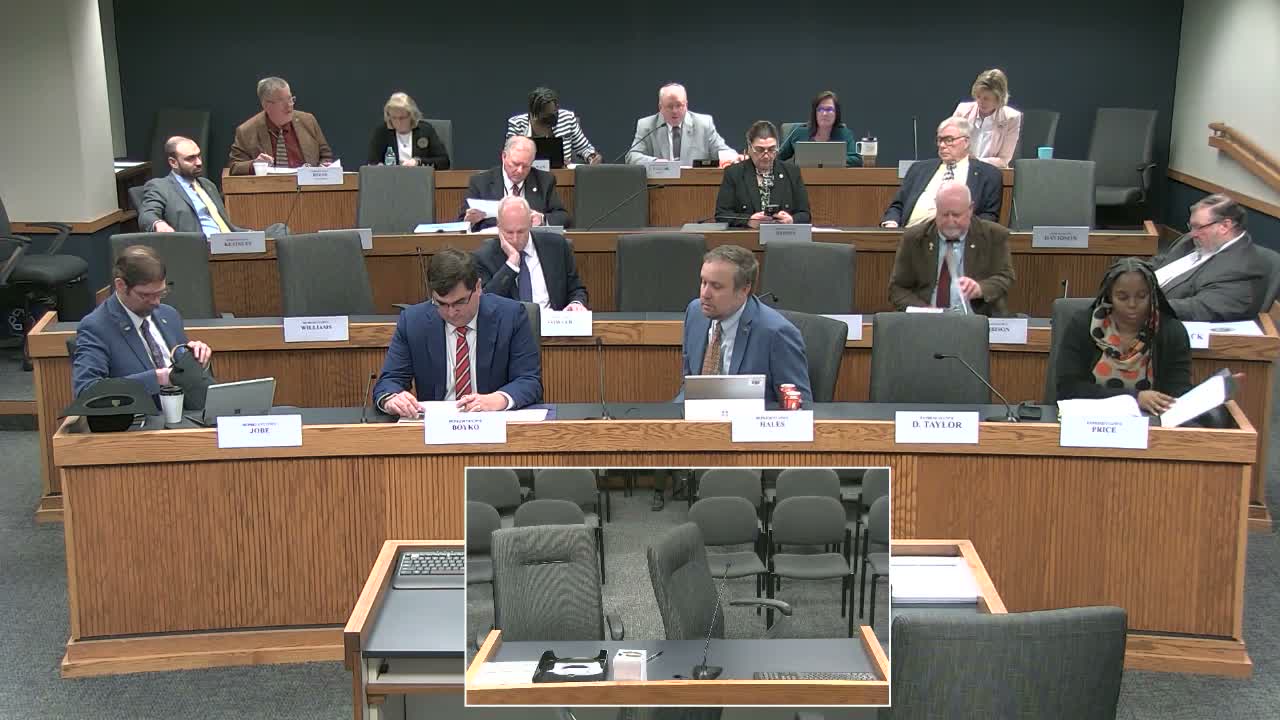
Summary
Members agreed to split a previously combined property-tax package into two separate measures. Committee leaders said bill 2780 will include abatements, levy-by-subclass and commercial protections, while a separate bill will carry ballot-language and no-tax-increase provisions.
Unidentified Speaker opened the meeting and said the committee would separate a previously combined tax package back into two distinct bills and not rejoin them: "We're back to square 1." The chair made clear the move was intended to simplify deliberations and encourage member feedback over the weekend.
Why it matters: splitting the package narrows the scope of each measure and affects which policy fixes can be considered on the floor. Committee members said the split is intended to make the core reforms easier for rank-and-file legislators to understand and to preserve options for additional, narrower committee bills.
What the bills will contain: the committee previewed that bill 2780 will include provisions addressing abatements, a levy-by-subclass approach, commercial protections recently discussed on the floor, and Representative Murphy's so‑called Hancock fix. A separate vehicle (identified in discussion as House Bill 2668) will be used for clearer ballot language, a provision on no-tax-increase ballot measures, and clarifications to Senate Bill 190.
Members asked for data and outreach. Several members asked staff to provide district-level rate data so the committee can confirm which districts are affected and how changes would operate in practice. Representative Dolan said constituents called worried that the changes could sharply reduce some rates; Representative Dolan urged clear communications: "Don't believe exactly what you're hearing now; look at the product," she said.
Process signals: several lawmakers urged caution about adding amendments late on the floor without committee hearings. Representative Reedy warned that amendments not vetted in committee can create problems when bills go to the Senate. The chair said he would accept simple, non‑fiscal additions but wants to limit complexity so the package can move forward.
Next steps: the chair asked members to review the proposed itemization and provide input; the committee will meet again next week to consider amendments and referral.
The meeting adjourned with no votes taken.