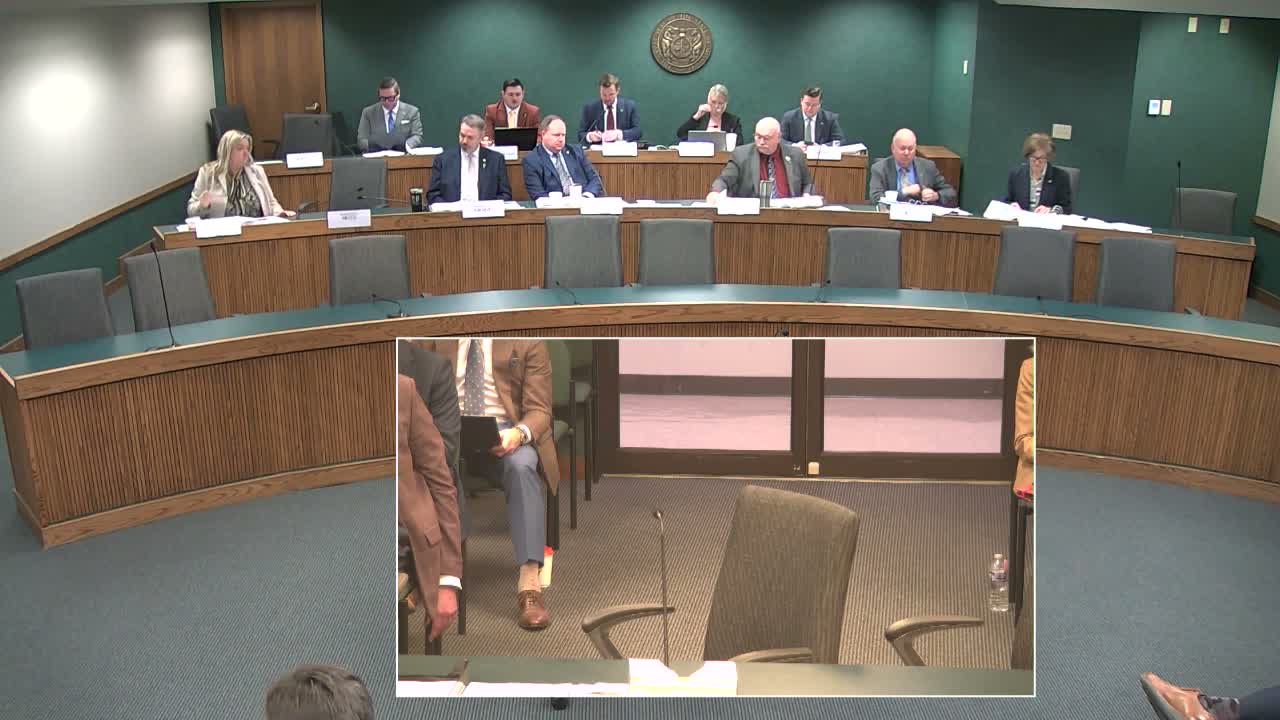
Missouri Innovation Zones bill draws broad support and implementation questions
Loading...
Summary
Representative Brad Christ presented House Bill 23 31 to establish voluntary local 'innovation zones' with a scorecard and incentives including redirected net-new property taxes, public-safety revenue reinvestment, and office-to-residential conversion incentives; business groups broadly supported the bill while city officials flagged implementation and revenue concerns.
Representative Brad Christ presented House Bill 23 31, a sweeping innovation-districts framework that would allow cities to opt in and qualify urban, suburban or main-street areas as Missouri Innovation Zones. The sponsor described multiple incentive streams: a rural development fund funded by 10% of net new property tax revenue from a zone, a public-safety and infrastructure reinvestment of 50% of net new state income and sales tax generated in the zone, employer retention and relocation incentives (including the possibility of capturing up to 3% of gross wages in withholdings), office-to-residential conversion credits, transferable tax credits for large redevelopment projects, and a ten-year program sunset.
Christ said the program would be voluntary for local governments but would require a local master plan, a scorecard and certain local policy commitments such as a fast-track permitting option for projects inside a zone. He characterized the framework as a performance-based, coordinated package that aligns state and local tools to attract private capital and jobs.
Developers and business groups went on record in support. Charles Goldman (Goldman Group) said the framework creates predictable rules and conditions necessary for large redevelopment projects. The Missouri Chamber, Greater Saint Louis Inc., municipal leagues and local redevelopment advocates also supported the bill.
Municipal officials and others raised implementation concerns. Jackie Bargier of the City of St. Louis said the "one-stop shop" permitting requirement and staffing needed to administer it created practical hurdles; city representatives said revenue diversions and some scoring provisions (for example, prevailing wage and minority/women-owned-business participation) are structured as voluntary scoring metrics rather than mandatory local obligations. Labor and municipal leaders asked for more time and technical discussions. The sponsor and witnesses said they were open to amendments and follow-up conversations.
Next steps: the bill received extensive testimony and technical questions. Stakeholders expressed support but asked for negotiations on operational details; sponsors expect follow-up with municipal leaders and policy stakeholders before committee action.