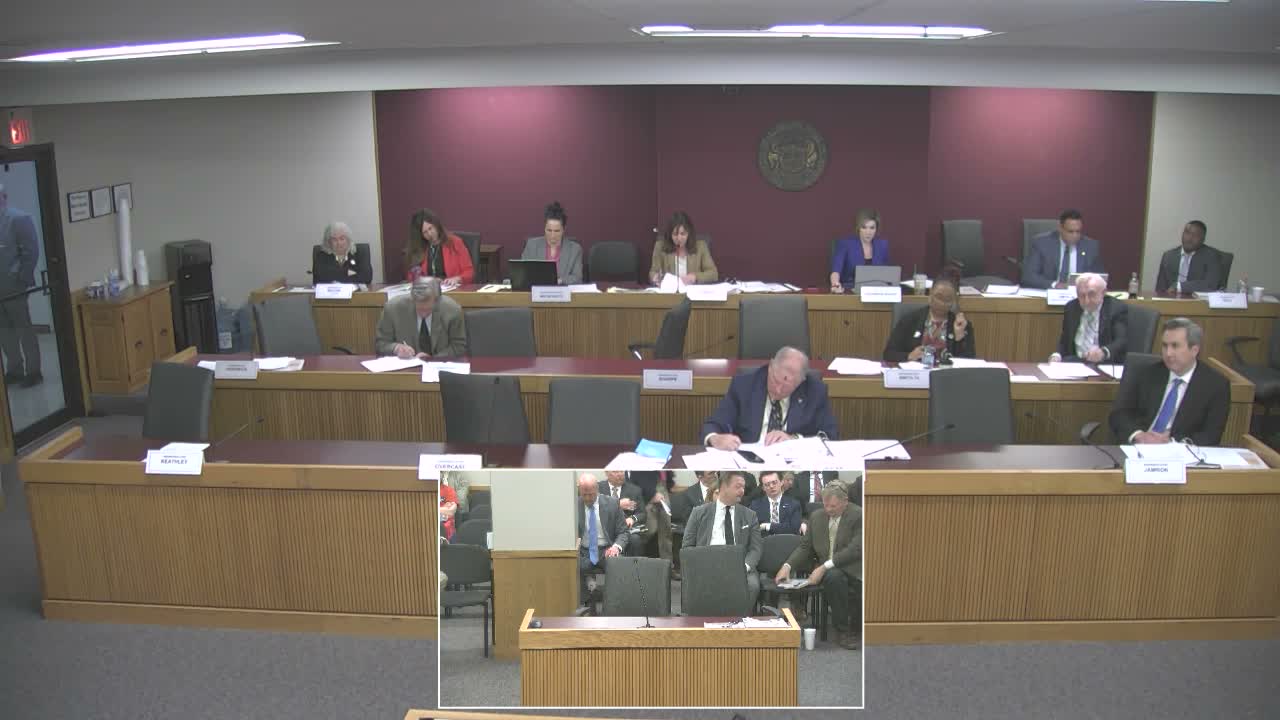
Bill to speed post‑conviction review for capital cases draws emotional testimony and procedural questions
Loading...
Summary
House Bill 2,254 would require earlier appointment of post‑conviction counsel and raise certain procedural standards to shorten the death‑penalty litigation timeline; supporters said it could cut several years from current delays, while opponents warned of conflicts, cost and risks to wrongfully convicted defendants.
Representative Barry Hovis presented House Bill 2,254 as a measure to accelerate post‑conviction review in capital cases and reduce the long delay families experience between conviction and execution. "When it does, there's issues with our particular law that we have in Missouri," Hovis said, describing lengthy waits in past decades and arguing earlier appointment of qualified counsel could move cases faster and give victims closure.
Greg Goodwin, chief counsel in the attorney general's public-protection section, told the committee the bill would assist both victims and defendants by requiring the sentencing court to appoint post‑conviction counsel immediately upon sentence so that counsel can begin investigations while direct appeal processes are pending. He estimated the bill could shave four to five years from the current timeline by reducing time spent in federal district court and accelerating post‑conviction preparation. "The benefit of this legislation is that it appoints an attorney to start working on those matters right away," Goodwin said.
Victims and family members described long waits for closure and the personal toll of multi‑year delays. Opponents including groups that oppose the death penalty argued that the procedural protections and the staggered appointment of counsel exist for reasons — such as preventing conflicts of interest and preserving effectiveness of distinct appellate and post‑conviction roles — and that simultaneous appointments could create conflicts or unnecessary cost for public-defender systems. Critics also warned that shortening timeframes could increase the risk of irreversible error in capital cases and might require more public-defender resources.
Committee members asked detailed questions about whether earlier appointment could create conflicts, whether the public-defender system had the capacity to take on earlier assignments, and whether the bill could unintentionally reduce time available to identify reversible appellate issues. Supporters said earlier appointment gives post‑conviction counsel time to preserve and develop evidence and does not remove required due process. No final committee vote was taken during this hearing; the committee received testimony and scheduled follow-up as needed.