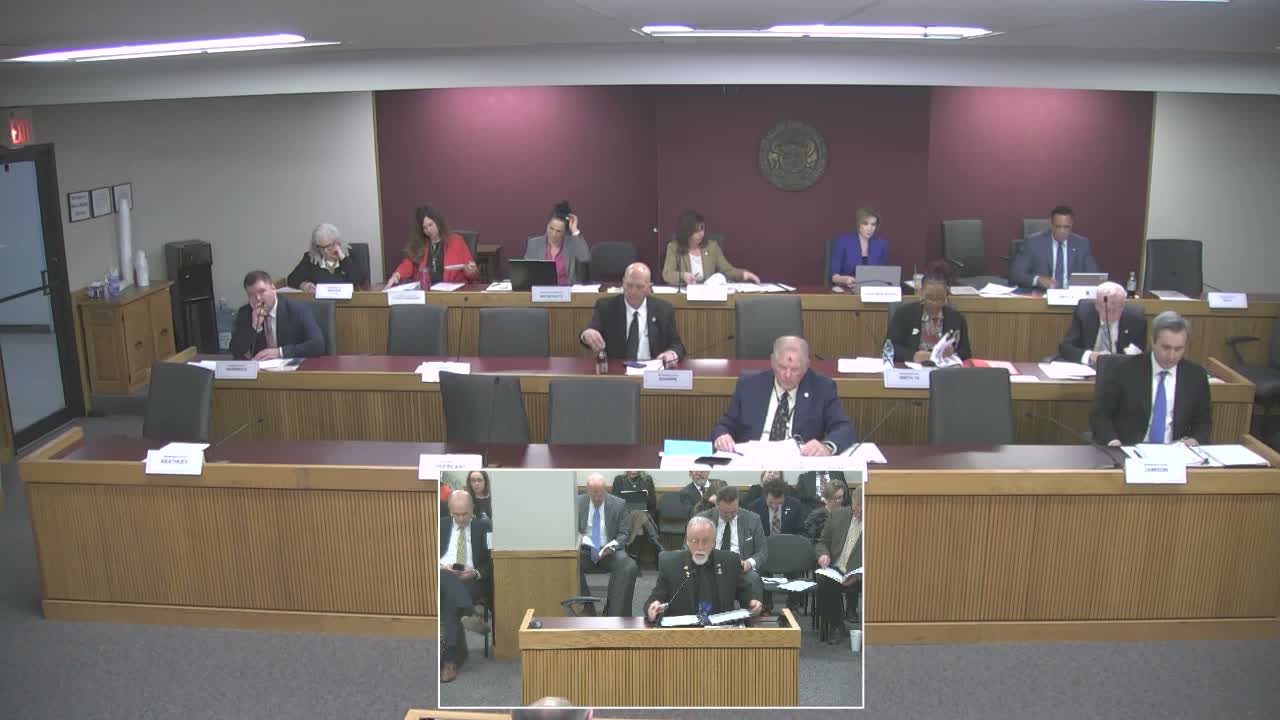
Missouri committee hears competing views on amendment to let voters allow retroactive civil claims for child sexual abuse
Loading...
Summary
Supporters told the House Judiciary Committee that a constitutional amendment would let victims sue institutions now barred by Missouri’s constitution; business and insurance witnesses warned retroactivity could create vast, unpredictable liabilities for schools and nonprofits.
Representative Brian Sites introduced HJR 130 to the House Judiciary Committee as a narrowly drawn constitutional amendment that, if approved by voters, would permit the legislature to enact time-limited revival windows allowing civil claims related to child sexual abuse that are currently barred by Missouri’s constitution. "This amendment applies only to civil claims seeking accountability and compensation," Sites said, adding that it would not change criminal statutes of limitation. He said 31 states have enacted some form of revival law and described the proposal as giving the legislature the option — not the obligation — to act if voters agree.
Elizabeth Phillips, an advocate who traveled from Dallas, testified in favor and described survivor experiences she has documented, including cases connected to summer camps. "You cannot sue an institution past the age of 26 in Missouri," Phillips said, urging a change because research shows many survivors disclose decades after abuse. She argued a voter-approved amendment would let the legislature create narrowly tailored revival windows for civil claims and hold institutional actors accountable.
Opponents including Hampton Williams of the Missouri Insurance Coalition warned that retroactive civil liability can produce severe fiscal impacts for public entities, schools and nonprofits. Williams cited experience in California and Maryland where retroactivity exposed school districts and state agencies to multi‑billion-dollar claims and disrupted insurance markets, and said the amendment’s phrase "caused or contributed to cause" could sweep in third parties without clear guardrails. "These costs are being paid out of current operating dollars, not reserves," he said, noting that higher premiums and smaller coverage pools followed retroactive expansions elsewhere.
Witnesses and committee members questioned whether the amendment is necessary (rather than a statutory change) and pressed the sponsor on scope and safeguards. Sites replied that the Missouri Constitution currently blocks retroactive civil measures and so a constitutional change is required before the legislature could pass revival legislation. Some members suggested narrowing the amendment language to explicitly tie it to statute-of-limitations relief rather than broader references to civil claims.
Advocacy groups argued revival windows have exposed unsafe institutional practices and prevented future harm by surfacing prior abuses. Industry and insurers urged alternatives such as victim-compensation funds and cautioned against language that would expose well‑intentioned institutions to unlimited retroactive liability.
The hearing ended with the committee receiving additional written materials; members did not take a committee vote on HJR 130 at this session. The committee scheduled further consideration as part of its ongoing calendar.