
Panel hears bill to give MU Health Care antitrust immunity to aid struggling rural hospitals
Get AI-powered insights, summaries, and transcripts
Sign Up Free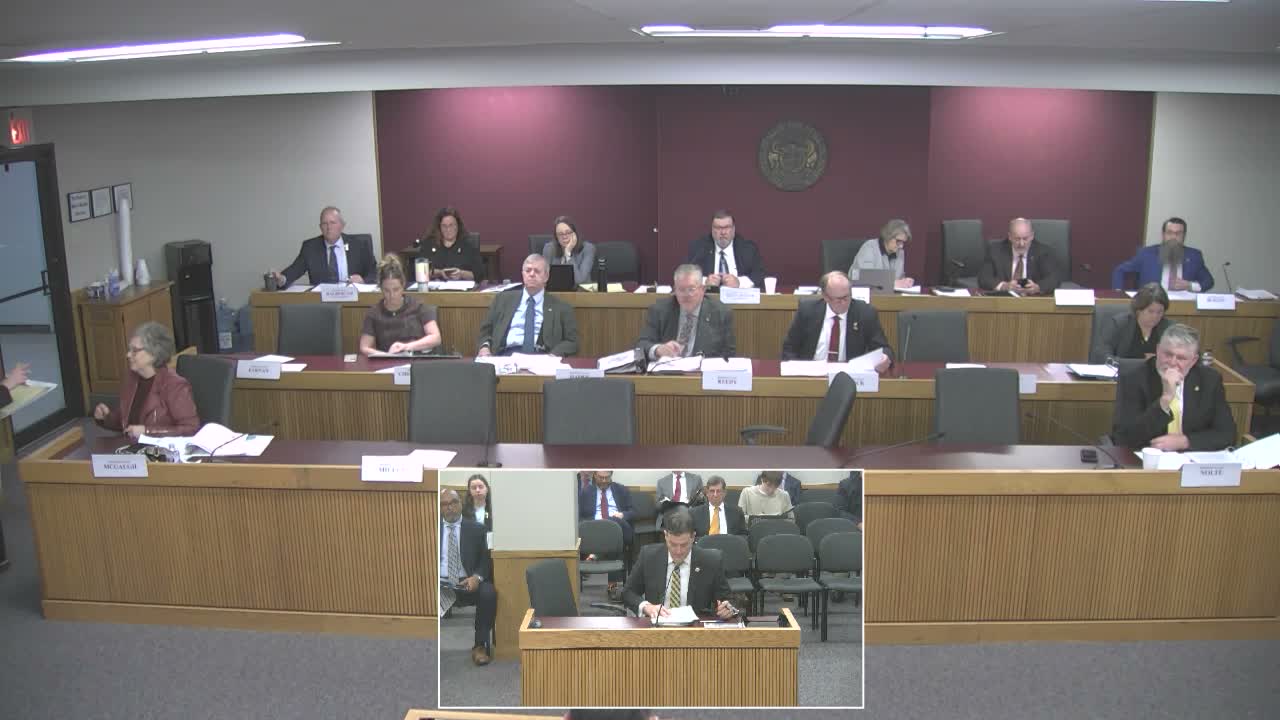
Summary
A House committee heard hours of testimony on House Bill 3170, which would authorize state-action antitrust immunity for MU Health Care in a 25-county area to facilitate voluntary partnerships with struggling rural hospitals; supporters said it preserves access, opponents warned of market concentration and higher prices.
A House committee on Monday heard competing testimony on House Bill 3170, which would authorize a state statute to allow MU Health Care to enter transactions that might otherwise face federal antitrust challenges, supporters said, in order to preserve access to care in rural communities.
The bill’s sponsor and bill handler, Representative Jeff Nye, told the committee the measure would create a clear legal framework that allows MU Health Care to collaborate voluntarily with hospitals across a defined 25-county primary service area to "preserve long term access" and keep rural hospitals open. Nye said participation would be voluntary, not a forced takeover, and that the measure simply removes an antitrust barrier that can slow or prevent timely interventions.
Supporters said the legislation responds to a wave of hospital closures and fragile rural hospital finances. Rick Ransom, chief executive officer of MU Health Care, said the 25-county area was chosen because it accounts for more than 85% of MU Health Care’s patients and argued state-action immunity would allow the system to move more quickly to help communities where hospitals are at risk. "This is about preserving access to care," Ransom said, noting MU Health Care has evaluated similar legislation in other states and that passage would not force any hospital or physician organization to participate.
Physicians and local leaders described the consequences of closures. Laura Morris, MU Health Care’s chief medical officer for ambulatory care, testified that more than 20 hospitals have closed in Missouri since 2014 and detailed local impacts in Callaway County after a hospital closure, including lost services and longer travel times for urgent care. Bill Hellebusch, CEO of Hermann Area Hospital, said MU’s partnership helped his hospital respond to a mass-casualty incident and preserved local services.
Opponents warned the measure could entrench market power and raise costs for insurers and patients. Hampton Williams of the Missouri Insurance Coalition cited the University of Pittsburgh Medical Center example and urged the committee to consider safeguards, noting consolidation elsewhere led to anticompetitive concerns and litigation. David Willis of the Missouri Health Plan Association said codifying immunity could be effectively permanent and might drive up rates for commercial and Medicaid plans.
Committee members pressed witnesses on safeguards: whether participation is truly voluntary, why Boone County and the 25-county geographic scope were chosen, and whether acquisitions could lead to higher facility fees or reduced competition. Ransom said the system is not the largest in the state and pointed to contractual constraints that would prevent unilateral price jumps during existing managed-care contracts; he attributed differences in Medicare/Medicaid reimbursement averages to case mix and specialized services, not unfair advantage.
Several witnesses clarified that the bill is intended to protect transactions from antitrust challenge and is not intended to grant immunity for malpractice or routine clinical liability. A hospital CEO said he understood the immunity to apply to the acquisition or partnership transaction, not to medical malpractice claims.
The committee did not take a final vote on HB 3170 at the hearing’s close. The measure will remain subject to further amendment and committee consideration.