
Charter school authority urges commissioners to view reserves in context; commission asks for cap analysis on PCFP contributions
Get AI-powered insights, summaries, and transcripts
Sign Up Free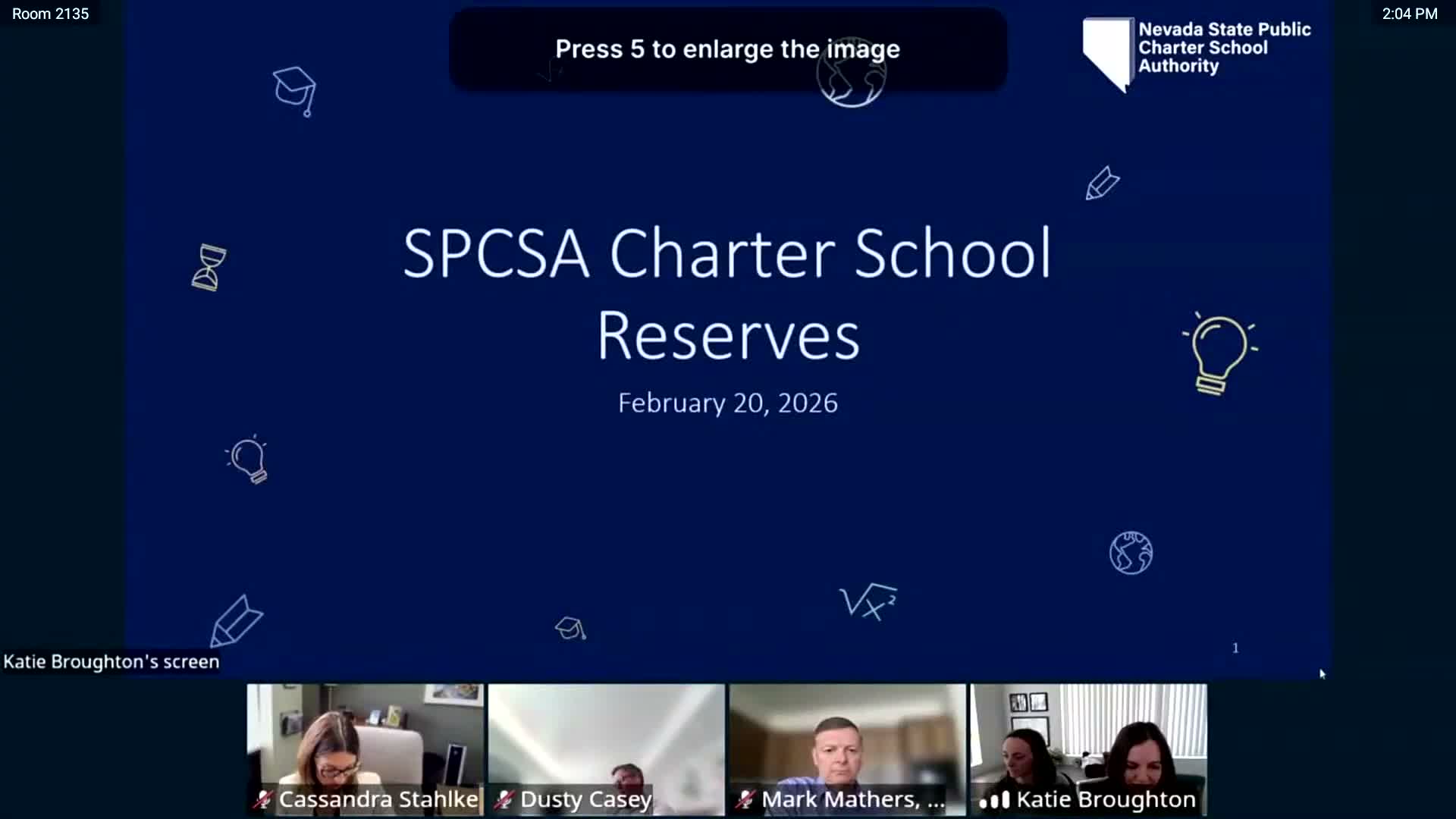
Summary
The State Public Charter School Authority briefed the commission that charter reserves (reported combined FY25 ~ $352.7M) reflect capital financing, philanthropic gifts and restricted funds beyond PCFP allocations; commissioners asked SPCSA and NDE to return with school-level reserve examples and asked the working group to analyze a potential cap (staff suggested up to 20% of PCFP receipts) on how much PCFP dollars can flow into reserves annually.
The SPCSA (Melissa Mackadon and Katie Broughton) told the commission charter schools must maintain reserves because they lack access to property‑tax revenues, auxiliary-service funding and broad capital mechanisms available to many school districts. The SPCSA said reserves reflect multiple sources — accumulated PCFP savings, philanthropic contributions, debt proceeds, bond‑coventant reserves and funds restricted by governing boards — and presented FY25 aggregates: SPCSA‑sponsored holders reported combined ending fund balances of $352,658,950 (including restricted and unrestricted amounts).
SPCSA walked commissioners through three examples: EIAA used USDA financing with an interest‑only period so the school could accumulate reserves tied to loan covenants; Oasis Academy used reserves for a conventional loan down payment and matching grant requirements; and Somerset Academy completed a reserve study recommending a per‑facility monthly set‑aside to fund maintenance and long‑term capital projects. The presenters said reserves are used to smooth enrollment volatility, meet debt covenants and finance facilities when bond or local tax mechanisms are unavailable to charters.
Commissioners asked practical questions about whether charters can create restricted capital and debt-service funds like districts and how rating agencies treat restricted versus general fund balances. SPCSA said restricted funds and debt proceeds are common, but the nonprofit/charter hybrid structure can complicate how days‑cash‑on‑hand and restricted dollars are counted for lenders. NDE staff noted the current statutory end‑fund‑balance sweep rules for districts and observed that site‑level "2468" posting is not enforced and may require BDRs to change reporting or enforcement.
Several commissioners suggested the commission consider a limit on how much PCFP funding can be routed to reserves each year to address the perception that PCFP dollars are accumulating rather than flowing to students. NDE/work‑group participants said a cap of "no more than 20%" of PCFP receipts had been discussed as a starting point. The commission asked SPCSA to provide school‑level examples (reserve level, enrollment and outstanding debt) and asked the work group to return with analysis by April.
Ending: SPCSA agreed to compile deeper examples and NDE committed to provide additional crosswalks; the commission deferred any immediate policy action pending further work and modeling.