Committee hears bill to require rear‑facing child seats until age 3 and tighten restraint rules
Loading...
Summary
Representative Ruth Sasseman told the committee House Bill 21‑70 would update Missouri law to align with AAP/NHTSA best practices by requiring rear‑facing seats until age 3, clarifying height/weight transitions and removing a previous unrestrained exception; MoDOT, pediatricians and emergency physicians testified in support, and no opposition appeared.
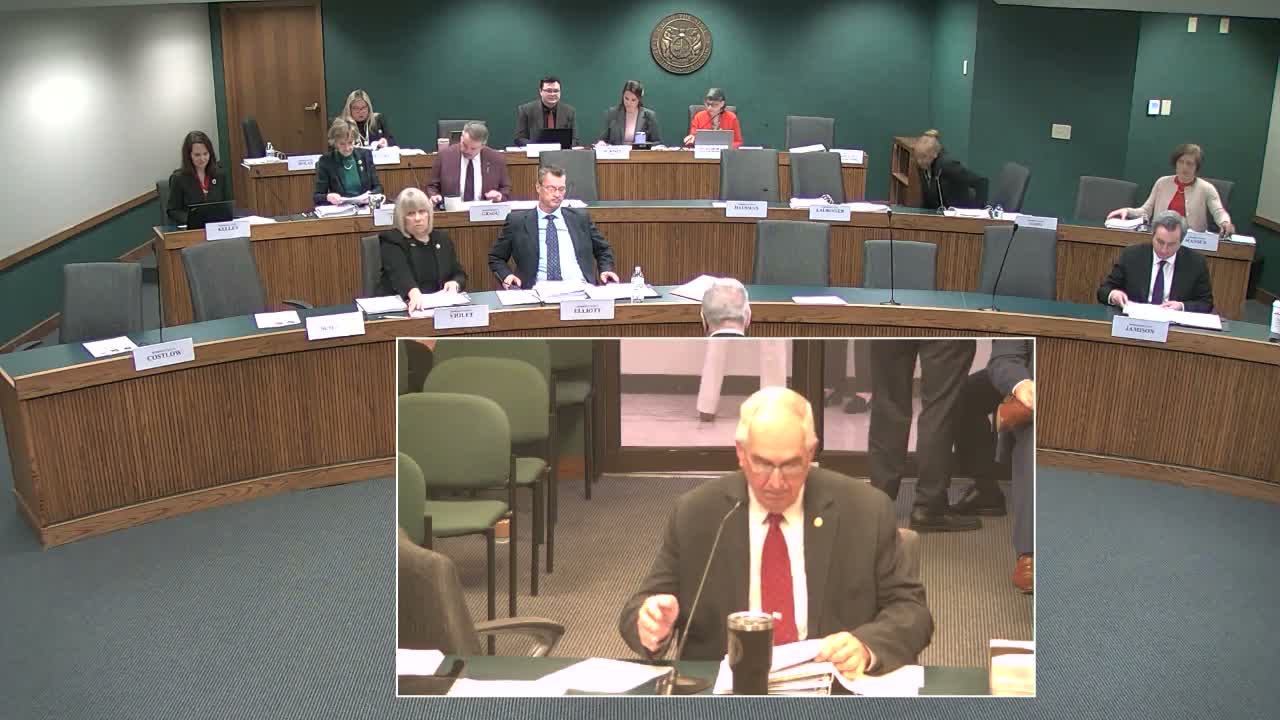
Representative Ruth Sasseman introduced House Bill 21‑70, saying the measure makes minor but consequential changes to child passenger restraint statutes: children under age 3 would be required to be secured in a rear‑facing child restraint system, the bill removes an existing exception that allowed some unrestrained travel, and it clarifies age, weight and height thresholds for forward‑facing seats, boosters and seat belts.
"These are small changes that can save the lives of children," Sasseman said, noting the bill codifies best practices recommended by pediatric and safety authorities. Supporters included Garrett Webb, a registered lobbyist for the Missouri chapter of the American Academy of Pediatrics, and Lillian Hinkson, MoDOT’s child passenger safety coordinator, who said Missouri law has not been updated since 2006 and that rear‑facing seats provide superior protection for infants and toddlers.
Witnesses highlighted research and practical considerations. Pediatric and emergency medicine organizations supported codifying guidance that keeps children in appropriate restraints until they outgrow manufacturer height/weight limits. MoDOT staff and advocates said the bill allows for manufacturer height/weight exceptions and that enforcement penalties are set as a maximum $50 fine plus court costs, which can be reduced or waived under some reconciliations.
Committee members asked about enforcement, large children who outgrow seats early, and the affordability and availability of car seats. Witnesses pointed to child‑safety seat distribution programs and training resources; MoDOT said the penalty is a maximum and that programs exist to help families obtain appropriate restraints.
No formal opposition testified during the hearing. The committee concluded the public hearing and did not take a recorded committee vote on the bill at that time.