
Missouri bill would require disclosure of third‑party litigation funding, target foreign‑linked investors
Get AI-powered insights, summaries, and transcripts
Subscribe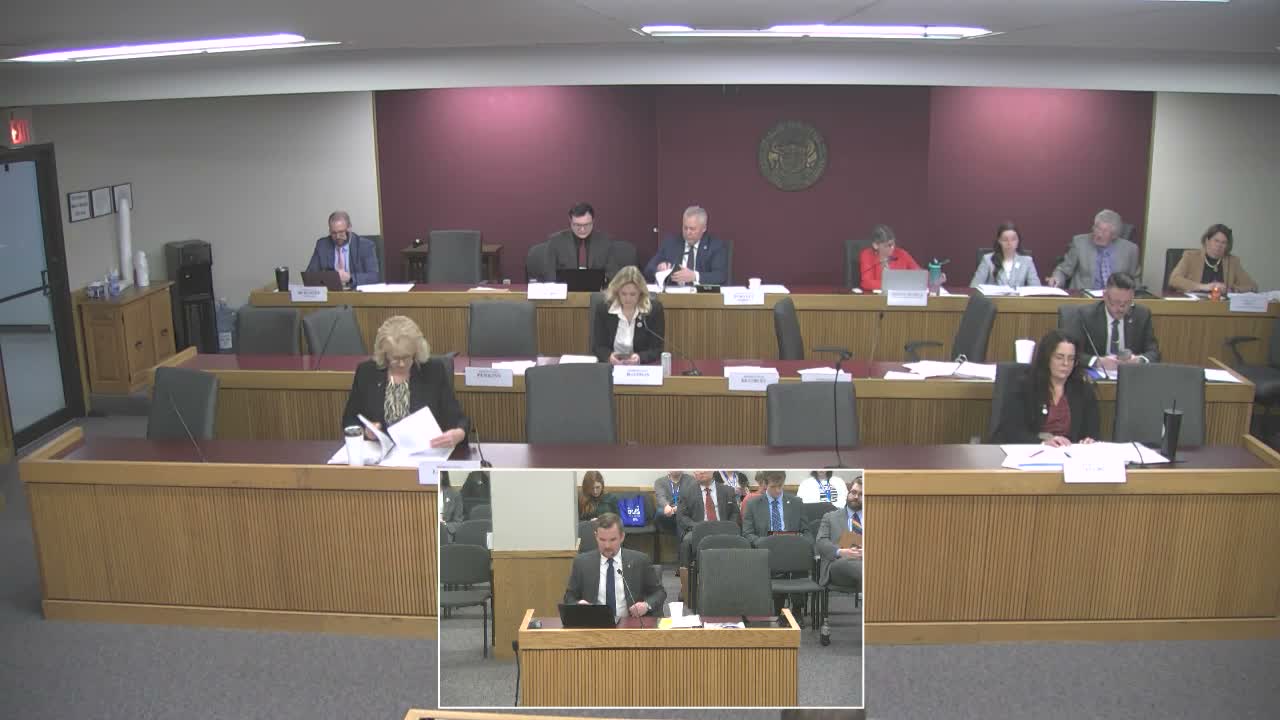
Summary
Representative Castillo (David Castile) told the committee House Bill 3205 would define and regulate legal funding transactions, require disclosure of third‑party and foreign‑linked funding, and give the attorney general enforcement authority including treating violations as unlawful practices and, for willful violations, a class E felony.
Representative Castillo (who identified himself as David Castile) presented House Bill 3205 to the Committee on Legislative Review, saying the measure aims to bring transparency and guardrails to third‑party litigation funding.
"When this happens in the shadows, judges, juries, and even defendants may have no idea that a lawsuit is being driven by an outside investor whose goal is not justice, but a personal financial return," Castile said, describing how outside funding can distort litigation incentives. He told the committee the bill would define "legal funding transactions," require disclosure of third‑party funders (especially those with foreign links), and provide enforcement tools to the Missouri Attorney General, including treating violations as unlawful practices under the Merchandising Practices Act and creating a class E felony for willful violations.
Members questioned the bill's scope, asking whether the problem exists in Missouri, how the bill treats banks and licensed financial institutions (which the bill text lists as not considered litigation funders), whether a list of foreign 'countries of concern' would be part of the definition, and whether designations by the U.S. Secretary of State could be used in ways that would affect domestic organizations. Representative Castile said the bill targets foreign adversaries (he cited examples such as China, North Korea, Russia, Iran, Cuba and Venezuela as illustrative federal 'countries of concern') and that he worked with Missouri trial attorneys when drafting the language.
Industry and professional groups testified in support. Matthew Smith of the Association of Industries of Missouri said third‑party funding raises risks that an adversary could acquire intellectual property through litigation-driven discovery. Hampton Williams of the Missouri Insurance Coalition and the Missouri 'Veil Justice Coalition' supported the bill and emphasized fiduciary duties and disclosure requirements for lenders; Jacob Scott for medical associations said litigation funders pose particular concerns in medical malpractice cases. Committee members requested clarifying language on scope, liability for funders, and how the bill's enforcement provisions would operate.
The hearing closed without immediate committee action.