Committee advances bill clarifying electronic monitoring violations after power loss (House Bill 17 12)
Loading...
Summary
House Bill 17 12 was advanced unanimously in committee after members discussed how judges currently treat unintentional monitoring failures (for example, from power loss) versus tampering; sponsors and members said judges typically review violation reports and may excuse power-related outages.
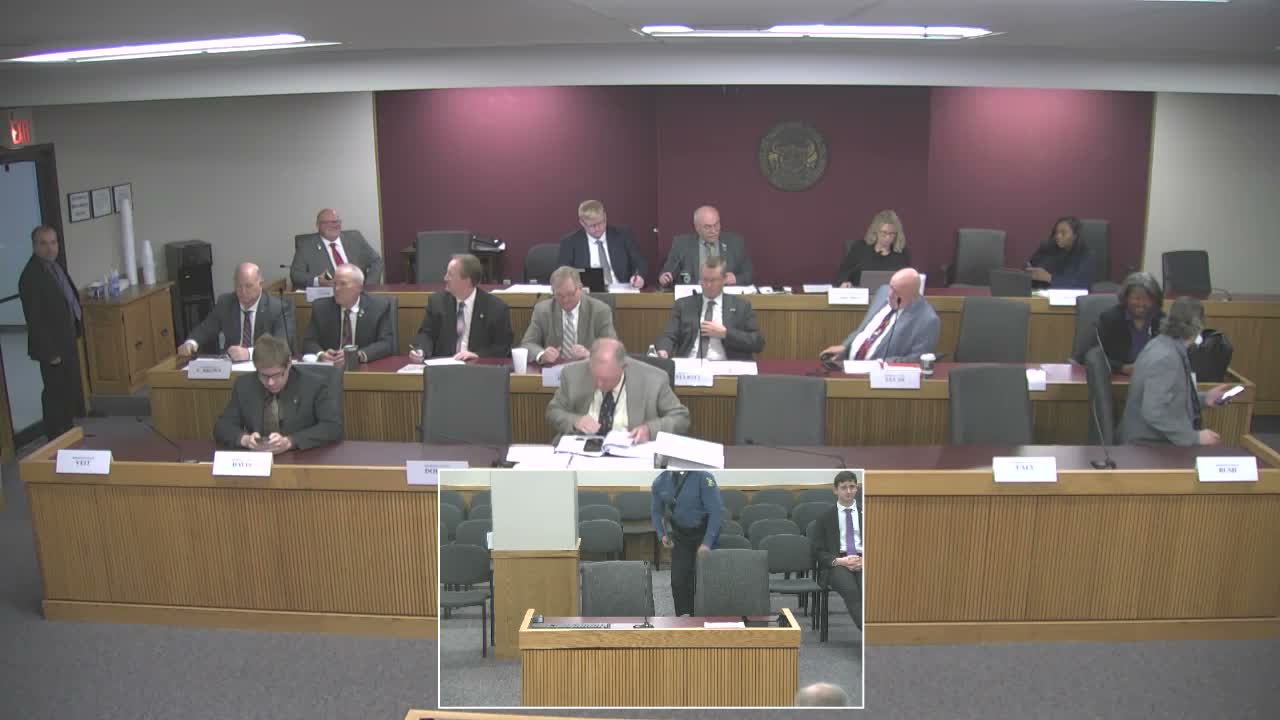
The Committee on Corrections and Public Institutions advanced House Bill 17 12 after members discussed how electronic monitoring violations are handled when a device stops communicating.
Ranking Member Collins asked what happens when an electronic monitoring device loses power unintentionally. Representative Hovis and Representative Dolan described current practice: a device that stops communicating generates a violation report sent to the judge, and the judge decides whether the lack of communication was the result of power loss or intentional tampering. Dolan and Hovis said judges have discretion; if the judge accepts that a power outage or storm caused the problem, the monitored person often remains on the program and is not returned to custody. If the judge finds evidence of tampering, the person may be charged and removed from monitoring.
Committee members queried whether the bill accounts for people who cannot reliably distinguish day from night or who unintentionally fail to keep a device powered, and witnesses said such cases typically do not result in immediate revocation without judicial review.
The committee adopted the bill on the roll call, 13 ayes and 0 nos, advancing it to the House calendar.