
House perfects constitutional amendment resolution to require work or activity for some Medicaid recipients; opponents warn of coverage loss
Get AI-powered insights, summaries, and transcripts
Subscribe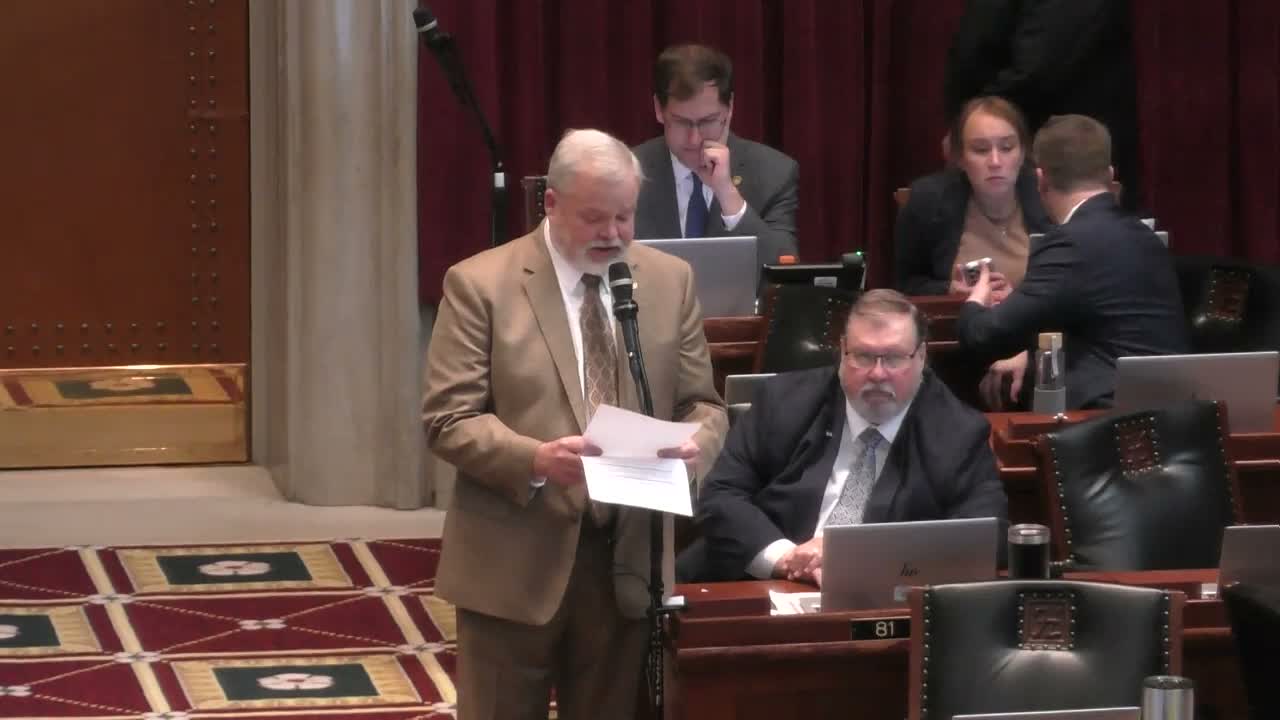
Summary
House Joint Resolution 154, which would put a constitutional amendment before voters to require certain able-bodied Medicaid recipients (ages 19–64) to meet 80 hours per month of work, community service, schooling or similar activity, was perfected and printed after extended debate over administrative burden, potential disenrollment and fiscal cost.
The Missouri House perfected House Committee Substitute for House Joint Resolution 154, a proposed constitutional amendment that would mirror the federal HR 1 framework and require able‑bodied adults ages 19–64 who receive Medicaid to perform 80 hours per month of work, community service, schooling or similar participation to remain eligible, subject to exemptions and verification. The sponsor said the measure is intended to mirror federal requirements that take effect January 1, 2027 and to make the obligation permanent at the state constitutional level (if approved by voters).
Supporters argued the requirement emphasizes work and community engagement and gives the state policy certainty; critics warned it would create major administrative burdens, add IT and staffing costs, and risk removing coverage from people who remain eligible but fall through bureaucratic cracks. Members cited experiences in other states: Arkansas reported thousands of beneficiaries dropped from rolls after implementation and Georgia’s program incurred large administrative costs, according to floor speakers.
Debate also covered whether the resolution’s language (including striking or changing existing constitutional language about maximizing federal funding) could reduce federal funding eligibility and whether imposing documentation requirements rather than self‑attestation would impose extra short‑term burdens on department staff. The House moved the previous question and, on a roll call, the clerk reported 92 yes and 43 no; the committee substitute for HJR 154 was perfected and printed and will proceed to next procedural steps (including placement on the ballot only if voters approve a constitutional amendment).