
House adopts wide-ranging property-tax package, shifts many local tax votes to November
Get AI-powered insights, summaries, and transcripts
Subscribe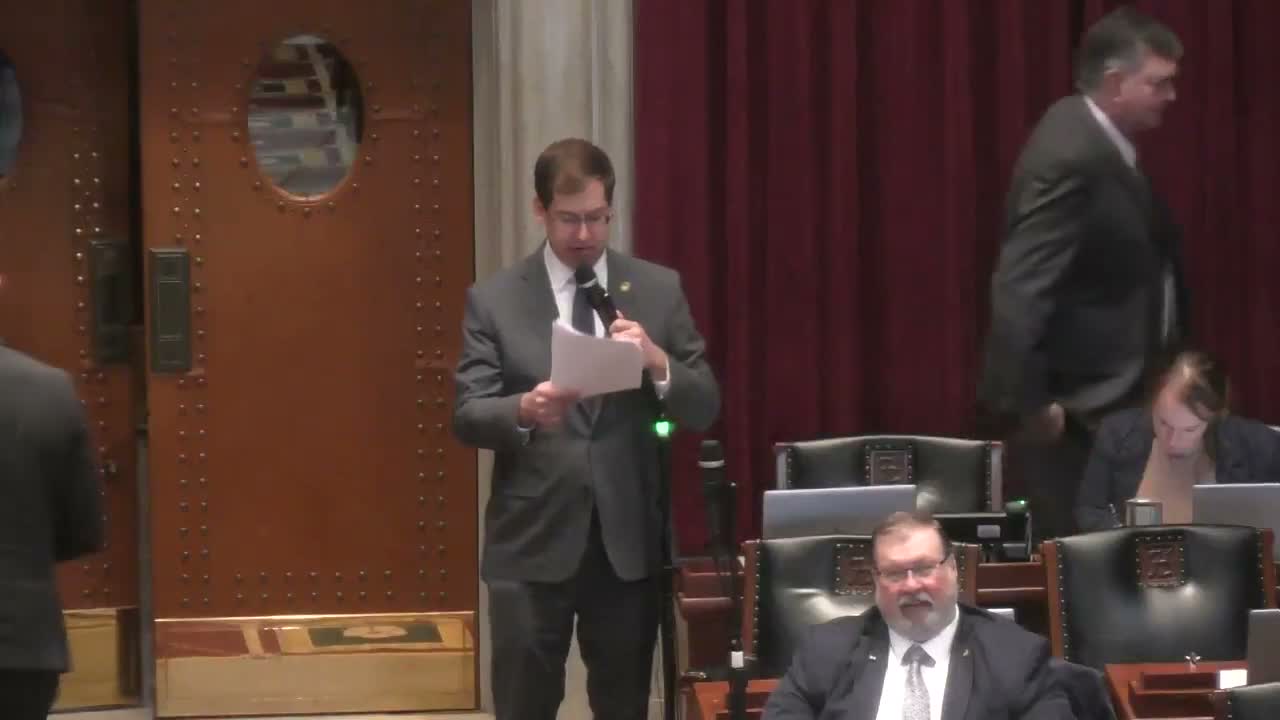
Summary
The Missouri House adopted a house committee substitute for HB 2780 and HB 2668 with multiple floor amendments, creating consolidated ballot-language rules, limiting many tax and bond elections to November general elections, and adding valuation and assessment guardrails including a 15% inspection trigger for commercial property increases.
The Missouri House on the floor adopted a house committee substitute for House Bills 2780 and 2668 as amended, advancing a large property-tax reform package aimed at stabilizing rapidly changing property assessments and standardizing ballot language for tax measures.
Representative Cooper, sponsor and committee chair, framed the package as a “first start” to “stop the bleeding” in a system he described as “a mess” after statewide hearings and 26 hours of public testimony. Cooper told colleagues the bill narrows the package’s title to focus on property taxation and incorporates several measures he said would protect taxpayers, including redefining market-value language and bringing personal property into certain Hancock-style protections. “We’re trying to stop the bleeding of the patient,” Cooper said, calling the changes foundational to the measure.
Why it matters: The bill makes several changes that affect how local taxing questions appear and how assessments are handled. Its most politically significant change moves many local tax and bond ballot measures so they may only be held at the November general election, a shift advocates say will increase voter turnout for tax questions and opponents argue will reduce local flexibility and could complicate grant-timing and capital-planning cycles.
Key provisions and floor debate: The adopted amendment package consolidated ballot-language requirements into a single statutory framework intended to make ballot statements clearer and uniform across jurisdictions. Cooper and backers argued the consolidation prevents misleading “no tax increase” descriptions and gives voters clearer information. Cooper also said the bill addresses how “true value” is calculated — including treatment of short-term rentals and redefinitions of market value and assessed valuation — and requires a physical inspection before a commercial property assessment can increase more than 15 percent.
Opponents raised implementation concerns. Members who run local elections or represent fast-growing districts warned that requiring tax votes to wait for the general election (held every two years) could delay projects that rely on time-sensitive grants or capital timelines and could enlarge November ballots, producing what some called voter fatigue. “If you shift all elections to November, your ballot is going to be so long that voter fatigue is an issue,” one member said. Supporters replied that higher turnout in November reduces the risk that a small share of voters decides broad tax obligations.
Floor process and outcomes: The House debated and adopted a series of floor amendments. Members passed a large amendment (described on the floor as an 85–87 page amendment) that consolidated ballot-language text (house amendment number 2), followed by additional technical amendments (including amendment 3 to remove duplicative lines and amendment 4 to exempt township counties from certain timing requirements). A procedural motion to limit debate passed by recorded vote (previous question: 93 yeas, 46 nays). The body ultimately adopted the house committee substitute as amended and ordered it perfected and printed.
What remains: Members repeatedly described the package as a work in progress that will be further refined in conference with the other chamber or in future amendments. Cooper and supporters said they expect additional negotiation as the bill moves through the process; the House’s action sends the committee substitute on for the next procedural step.
Ending: The House adopted the substitute for HB 2780 and HB 2668 as amended and ordered it perfected and printed, clearing the measure for subsequent processing under House rules.