State council, providers outline gaps and gains in North Dakota homelessness response
Loading...
Summary
State officials and providers told the Human Services interim committee that North Dakota has expanded homelessness funding and programs but still faces gaps — especially for youth, tribal communities and rural areas — as one-time programs end and demand outstrips state grant capacity.
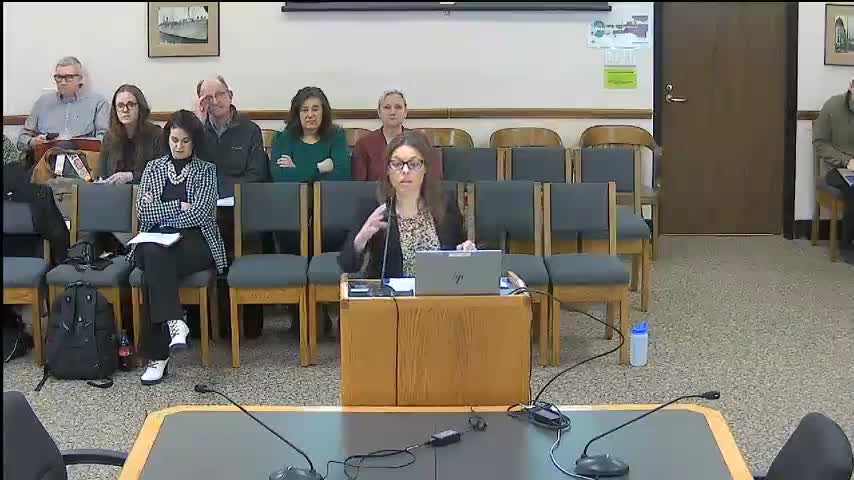
BISMARCK — State housing and service providers told the Human Services interim committee on Feb. 19 that North Dakota has increased housing dollars and created new coordinating structures, but persistent gaps — for youth, tribal communities and rural areas — mean millions in short-term relief will not replace sustained investment.
Jennifer Henderson, with the North Dakota Housing Finance Agency, told lawmakers the governor—s interagency council on homelessness began meeting in January and will produce a program matrix cataloging state and provider programs, funding sources and regional coverage. The council—s charge, she said, is to review resources, solicit broad stakeholder input and recommend coordinated strategies to prevent and end homelessness.
—We—re asking the council to identify what resources exist in each region and where gaps remain,— Henderson said.
Nonprofit providers described how that work looks on the ground. Beth Olson, housing navigation program director for Presentation Partners in Housing, summarized a Housing First approach used in Fargo–Moorhead and Cass/Clay counties that pairs permanent housing with intensive, community-based supports. Olson said the program served 86 people in 2025 (12 children, 74 adults), rehousing 85 of them and keeping 91% housed after one year. She presented seven-year data showing large reductions in emergency costs for a cohort of chronically homeless participants, telling the panel that the program produced net savings in service use and criminal-justice encounters.
—We moved people into housing and emergency room visits decreased by 64 percent; ambulance use dropped by 66 percent,— Olson said, adding that a seven-year return-on-investment review showed program savings could exceed operating costs for targeted cohorts.
Andrea Olsen, executive director of the Community Action Partnership of North Dakota, outlined statewide front-door services and funding mechanics. She described the federal Community Services Block Grant (CSBG) structure and how CSBG-funded community action agencies were receiving a portion of the state—s $10 million North Dakota Homeless Grant; Community Action has $2 million for staffing and direct assistance this year, Olsen said, but warned that the end of the North Dakota Rent Help program and one-time federal ARP funds left a substantial shortfall.
—The Rent Help program provided more than $149 million to nearly 31,400 households,— Olsen said. —We cannot replicate that scale with $2 million. Demand exceeds available funding.—
Mark Heinerd, executive director of YouthWorks, urged lawmakers to treat youth homelessness as a distinct policy area. Heinerd said YouthWorks operates emergency shelters and transitional housing for young people across several cities and reported a more than 90% success rate in transitional programs where young people move to stable housing and employment or education.
Chanel Willer of the North Dakota Continuum of Care presented the state—s HMIS (Homeless Management Information System) data for 2025: 9,863 individuals served across programs that include the Continuum of Care, Youth Homelessness Demonstration, Emergency Solutions Grant and state funding. Willer said providers report rising needs among older adults and persistent disabling conditions: roughly 22% self-report mental-health conditions and 14% report substance-use disorders in the submitted data, which she noted are based on intake reporting and have known limitations.
Local provider testimony reinforced the capacity problem. Joe Hubbard, interim executive director of Ministry on the Margins, said his organization provided the only low-barrier shelter in Burleigh County and that recent monthly shelter use required resource support beyond current appropriations. Jim Housler of Missouri Slope Area United Way described a Center for Opportunity facility that has operated as a night shelter and urged partnerships to restore 24/7 services.
Lawmakers pressed for specifics. Senator Hogan asked the council to identify youth, tribal and veteran populations separately in the program matrix; Henderson agreed. Committee members also asked for the council—s final guiding principles and for data showing how the new $10 million state grant is being used in rural communities.
The panel requested follow-up materials, including the interagency council—s finalized guiding principles and the Housing Finance Agency—s grant distribution data. The committee will reconvene to review those materials ahead of the May meeting.
Why it matters: The testimony showed that targeted local interventions can reduce emergency service use and keep people housed, but that short-term or one-time funding cannot replace a sustained, statewide funding strategy. As federal pandemic-era rental assistance sunset, providers told lawmakers that state-level resources and ongoing case-management funding will determine whether the system can prevent repeat homelessness.