
Senate advances S.2947 to strengthen fair-housing enforcement; amendments adopted on naming, gendered language and complaint anonymity
Get AI-powered insights, summaries, and transcripts
Subscribe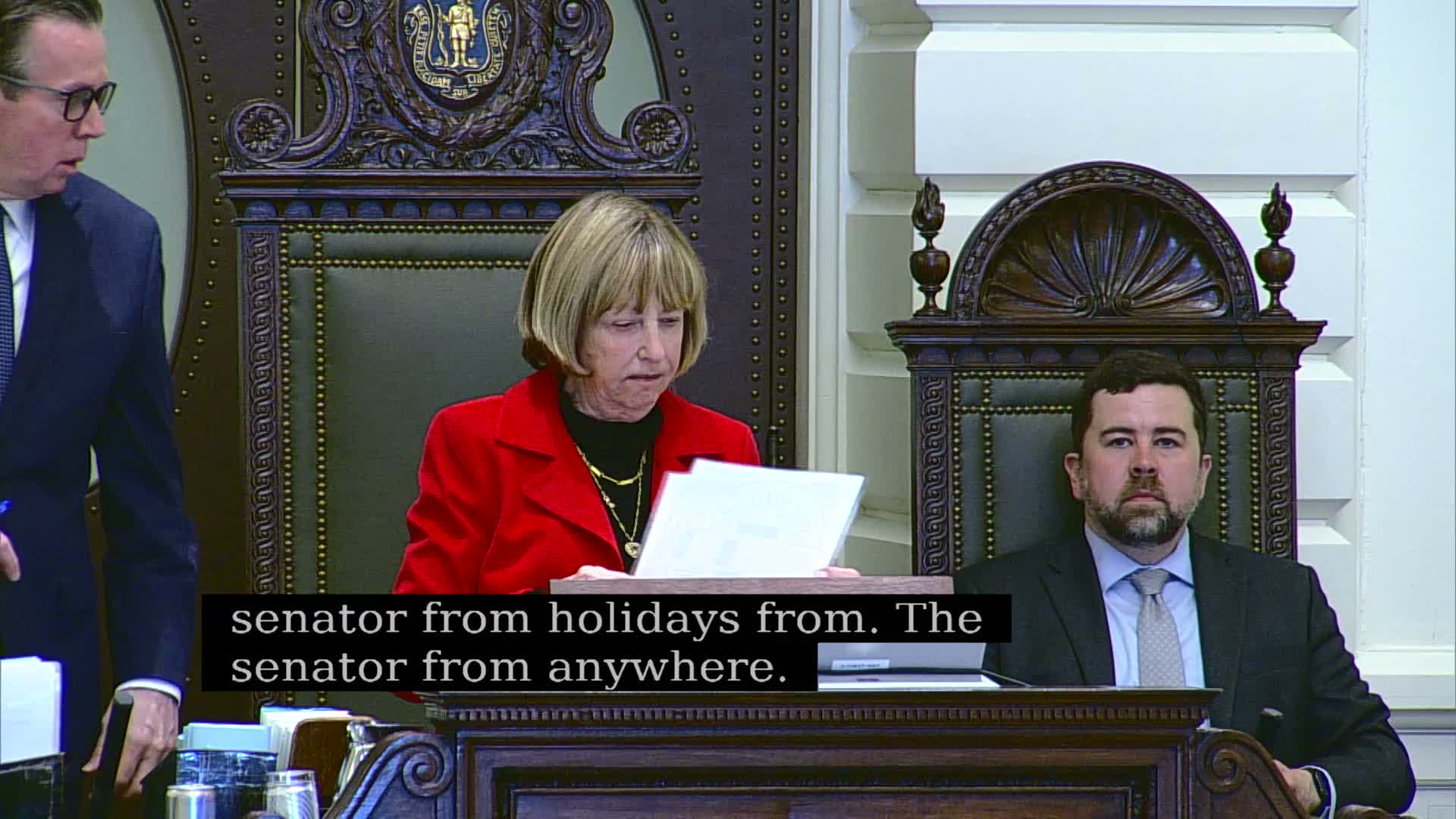
Summary
The Massachusetts Senate voted to pass S.2947 to be engrossed, advancing measures to expand enforcement tools, increase penalties for discriminatory licensees and require published complaint summaries; several amendments were adopted and one HUD-certification amendment failed.
BOSTON — The Massachusetts Senate on the floor advanced S.2947, “An Act regarding fair housing practices in the Commonwealth,” passing the measure to be engrossed after adopting multiple amendments intended to boost enforcement and transparency in cases of housing discrimination.
Senator Gomez, the bill’s floor sponsor, framed the legislation as a response to widespread, often subtle discrimination in housing markets. “This bill is about more than just statutes and regulations. It's about dignity, fairness, and the promise that every person in Massachusetts should have an equal chance at a place to call home,” he said, recounting a personal experience in which a rental agent’s treatment changed after he showed up in different clothes.
Gomez cited published research in describing the problem: “In 2020, the study by Suffolk University Law School and the Boston Foundation found that people using housing vouchers face discrimination 86% of the time when trying to rent apartments,” he said, using that evidence to justify tougher enforcement tools.
What the bill does S.2947 narrows enforcement gaps that advocates and senators said have allowed discriminatory brokers and salespersons to escape meaningful consequences. The measure expands the range of authorities that can refer disciplinary cases — currently limited to the Massachusetts Commission Against Discrimination — to include the attorney general and other certified fair-housing agencies; increases penalties so that a second violation within two years can trigger a 180-day license suspension rather than the current 90 days; and requires the Board of Registration of Real Estate Brokers and Salespersons to publish annual summaries of complaints and disciplinary actions, with the names of licensees whose licenses are ultimately suspended or revoked.
The bill also includes an education component requiring new license applicants to complete at least four hours of fair-housing instruction and renewal applicants to complete at least two hours.
Key floor amendments and outcomes - Amendment 1 (filed by Senator Ta) would have required municipalities and public agencies receiving HUD funding to annually certify compliance with the Fair Housing Act and Title VI, notify the attorney general and the Board within 30 days of HUD findings or requests for information, and submit corrective-action plans when deficiencies are identified. Senator Ta said the measure would create a state-level accountability mechanism. “Those who administer these programs need to certify that they are in compliance with the law,” he said. Senator Gomez opposed placing the Attorney General in that monitoring role, warning of data-sharing complications. The amendment failed on a roll call, 6 in the affirmative and 30 in the negative.
- Amendment 4 (Kennedy) replaced gendered wording such as “salesmen” with “salespersons” throughout the statutory language; the amendment was approved by voice vote.
- Amendment 5 (Pallano) corrected the bill’s drafting to require publication of names for licensees whose licenses are suspended as well as revoked; sponsors said failing to publish suspended licensees would undermine deterrence. That amendment was adopted.
- Amendment 6 (Edwards), proposing to add protections for people with criminal records (returning citizens) under the Commonwealth’s anti-discrimination statute, was presented but withdrawn by unanimous consent; the sponsor said changing the relevant chapter would require a larger vehicle.
- Amendment 8 (Keenan) required complaint summaries published by the Board to be de-identified while the Board deliberates, with names published if a licensee is later revoked; the amendment was adopted to balance due process and public information.
Procedural steps and vote The Senate adopted the Ways and Means substitute as amended and ordered the bill to a third reading. On the third reading the clerk called the roll and recorded the bill “passed to be engrossed” with 37 senators voting in the affirmative and none recorded in the negative.
What sponsors and supporters said Senator Gomez and other supporters described S.2947 as a combination of prevention, enforcement and transparency. “When we hold those accountable, trust in the system grows,” Gomez said, emphasizing mandatory education for licensees and public reporting to deter repeated violations. Supporters including advocates (one named in debate as Brad Kramer of One Family) and several senators argued the measure will reduce barriers faced by voucher holders and other protected groups.
Next steps With the Senate’s passage to be engrossed, S.2947 moves next in the legislative process (third reading completed on the floor). The bill’s further progress will depend on engrossing, any House action, and subsequent enrollment and transmittal for final approval.
Votes at a glance - Amendment 1 (Ta, HUD-certification and AG notification): Failed, 6–30 (roll call) - Amendment 4 (Kennedy, gender-neutral language): Adopted (voice vote) - Amendment 5 (Pallano, publish suspended or revoked licensees): Adopted - Amendment 6 (Edwards, protections for returning citizens): Withdrawn - Amendment 8 (Keenan, de-identified complaint summaries during deliberation): Adopted - Final on S.2947 (third reading): Passed to be engrossed, 37–0 (roll call)
Sources: Floor debate and roll-call votes on the Massachusetts Senate floor during the session addressing S.2947. All quotations and vote tallies are taken from the official floor transcript of that session.