
Mass. House advances bill requiring disclosure of synthetic media in political ads
Get AI-powered insights, summaries, and transcripts
Subscribe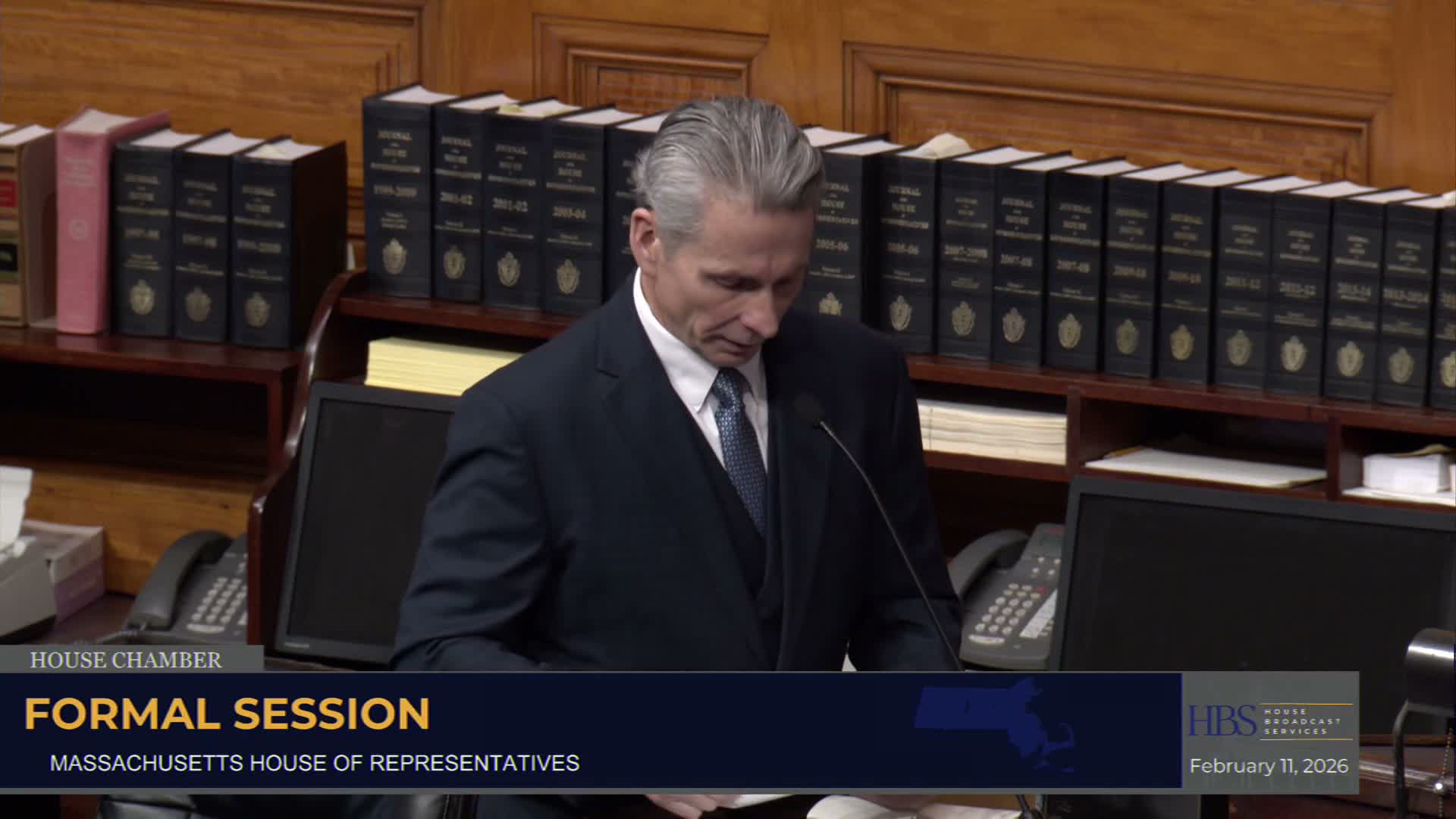
Summary
The House voted to pass H.5094 to be engrossed after adopting committee amendments that narrow its scope; the bill would require political ads made with artificial intelligence to include disclosures at the beginning and end and exempts certain paid broadcasters and platforms.
The Massachusetts House voted to advance House Bill 5094 to be engrossed after adopting committee amendments that clarify exemptions and scope. Representative Hunt of Boston, the member who spoke for the measure, described it as a ‘‘common-sense’’ requirement to have advertisements disclose when artificial intelligence was used in producing audio or visual material.
Hunt said the measure would require disclosure ‘‘at the beginning of a political advertisement and at the end’’ so voters know when content has ‘‘utilized artificial intelligence,’’ arguing the rule creates ‘‘accountability without censorship.’’ He cited recent examples of deceptive audio and robocalls and noted 26 other states had enacted similar measures.
Floor action included the adoption of a committee amendment that narrowed certain platform and broadcaster liability by exempting radio and television stations, cable or satellite television operators, and streaming services when paid to broadcast material, according to the amendment language read on the floor. The amendment was presented as committee Amendment Number 4 and adopted by the House.
After debate, the House ordered H.5094 ‘‘passed to be engrossed’’ on a roll-call that the clerk recorded as 156 in favor, 0 opposed. The bill will proceed through the legislature’s engrossment process and next steps before final enactment.
The House discussion emphasized the bill’s focus on ‘‘materially deceptive’’ audio and visual content and framed the requirement as a transparency tool for voters rather than a content ban. Representative supporters said the bill targets deception timed to influence elections and is limited to communications considered materially deceptive within 90 days of an election under related proposals on the floor.
The clerk’s proceedings show the committee and floor managers refined the measure’s exemptions during amendment consideration. No final effective date or implementation details (for example, enforcement mechanism or fines) were specified on the floor record; those details will be reflected in the engrossed text and subsequent legislative reports.