
House committee hears broadband rollout plan, seeks clarity on $900 million in 'non-deployment' funds
Get AI-powered insights, summaries, and transcripts
Subscribe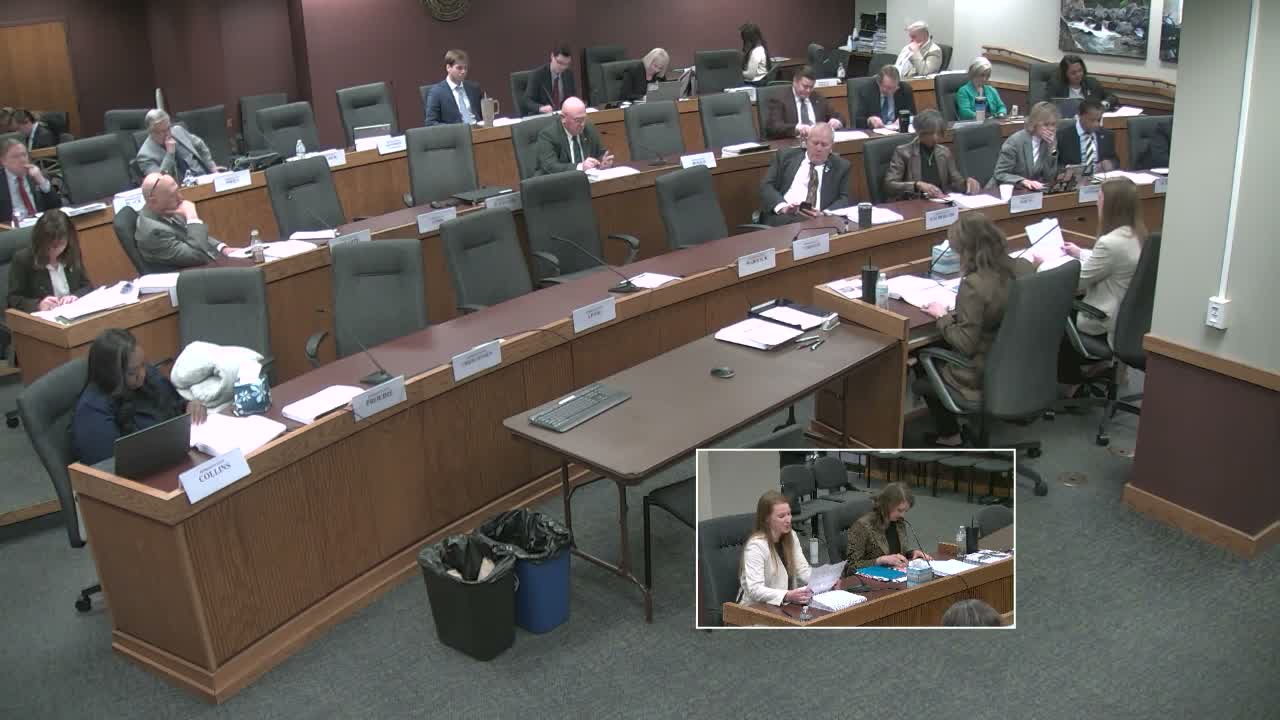
Summary
Office of Broadband staff told the House Budget Committee the state expects to award about $800 million in BEED deployment grants to connect roughly 200,000 locations and that up to $900 million in remaining "non-deployment" funds'whose allowable uses await federal guidance'could support digital equity, workforce training or public safety projects.
The House Budget Committee pressed state broadband officials on timelines and uses for two pools of federal broadband money on Friday.
BJ Tanks, lead director of the Office of Broadband, told the committee the state has about $800 million in BEED (Broadband Equity, Access and Deployment) awards ready to move to contract after federal approvals and expects to connect more than 200,000 locations using a mix of 82% fiber, 14% licensed fixed wireless and remaining low-earth-orbit satellite solutions. She said the final federal approvals were expected late in the month and that projects have a multiyear execution window that, because of recent delays, now stretches toward 2030.
"We have over 20 sub-recipients to do this work across the state, connecting over 200,000 locations in total," Tanks said, describing a six-month timeframe to get award contracts in place and a roughly four-year construction window after approval.
Members focused on a second bucket of funds Congress labeled "non-deployment." Tanks said Missouri's allocation includes a sizeable non-deployment balance (about $900 million by the state's math) because earlier state investments and changing federal scoring left additional funds after the deployment-phase priorities were set. Those funds are intended for permitted non-deployment activities such as affordability, digital skills training and public-safety uses, but the federal agency (NTIA/Department of Commerce) has not finalized detailed guidance; Tanks said the administration expects guidance in mid-March.
An executive order at the federal level tied access to non-deployment funds to a condition that states not pursue "onerous" AI regulation; Tanks said the precise definition of that phrase is pending federal clarification. "We know we are very likely to have these funds," she said, "but until we see the allowable uses, it's hard to speak specifically on how much and where." Representative Strickler asked whether pending state regulatory proposals could jeopardize the money; Tanks said the office was watching federal guidance closely and would brief the legislature if a conflict appeared.
Committee members also pushed on technology choices and the distribution of award types. Tanks said the NTIA restructuring guidance shifted some planned fiber builds toward lower-cost wireless or satellite options, which increased the leftover non-deployment balance because those alternatives reduce per-location costs. She said the state had required a 25% match from awardees and had used a competitive process with dozens of bidders.
On timing, Tanks said the state expects final federal sign-off and to begin contracting this month, with providers starting construction this calendar year where possible. "The goal is mid-2030 that all these projects are taking off and are on time," she said, but added that some projects may need re-bidding or additional adjustments.
The committee requested that broadband staff provide a clear plan for proposed uses of any non-deployment funds once federal rules are released, and urged outreach to rural and underserved communities to ensure the funds reach those areas. Tanks said the office has prepared a menu of candidate uses (public safety, precision agriculture, digital skills training, and similar programs) and will refine its recommendations when the federal guidance arrives.
Next steps: the House committee will expect a briefing after the federal guidance is published and before the legislature finalizes budget actions related to non-deployment funds.