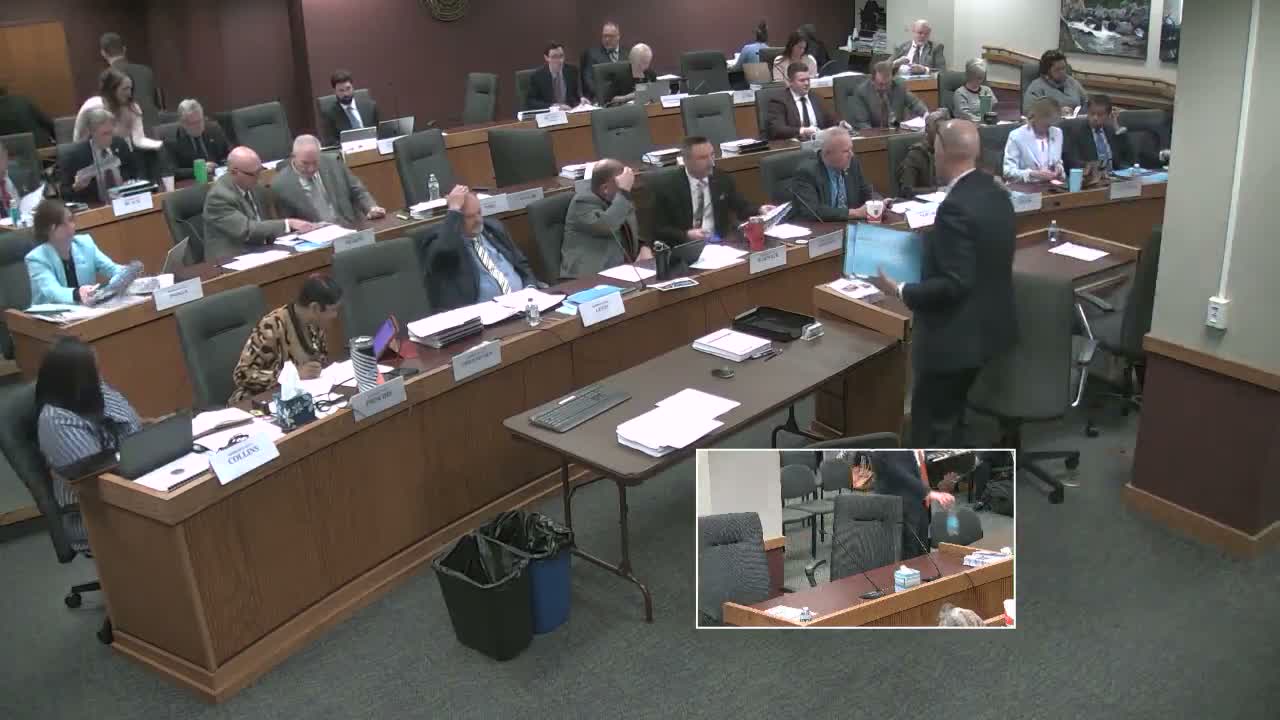
DOC budget hearing highlights staffing stipends, food‑service costs, health care and a $4M cut to pre/post‑conviction electronic monitoring
Loading...
Summary
Director Trevor Foley and budget director Susan Pulliam presented the Department of Corrections FY27 budget to the House Budget Committee, requesting NDIs for staff stipends (CERT and maximum/medium security), an increase to food service funding after inventory credits expire, ongoing healthcare costs including hormone replacement therapy under court order, and noting a proposed $4 million reduction to the pre/post‑conviction electronic monitoring appropriation.
The Department of Corrections told the House Budget Committee the agency is continuing workforce investments and facing several cost pressures in FY27.
DOC Director Trevor Foley and Susan Pulliam presented several new decision items aimed at improving hiring and retention in the state’s most stressed facilities. The department sought a new $100 stipend for Corrections Emergency Response Team (CERT) members (CERT currently has a 35% vacancy rate) and a proposed stipend increase for maximum‑security staff to $1.50 per hour and medium‑security staff to $0.75 per hour to address recruitment and retention in hard‑to‑staff locations.
DOC said food service costs require an NDI of roughly $9,000,000 after inventory credits from the contract are exhausted; components include inflation, population increases and contractual rate escalators. Committee members asked for institution‑level breakouts and a per‑meal figure; DOC reported a per‑meal cost of about $2.16 and an offender population just north of 25,000.
On health care, members asked whether DOC provides hormone replacement therapy (HRT). Director Foley said the department has provided HRT pursuant to a federal court order in litigation dating to 2016–2017 in the Eastern District; courts across several circuits have generally found HRT constitutionally required for diagnosed gender dysphoria, whereas gender reassignment surgery has been treated differently by the courts. Members asked DOC to request cost breakdowns from the vendor Centurion for reporting.
DOC also described a governor‑recommended fund swap to use some adult‑use cannabis proceeds for substance use and recovery services (a corrections reinvestment fund) to replace some general revenue for those programs; members requested clarity about constitutional intent, coordination with Department of Mental Health, and allocation details.
Finally, DOC told the committee the governor’s recommendation includes reallocation or reductions that would zero out an approximately $4,000,000 state‑funded line for pre/post‑conviction electronic monitoring that had been appropriated in prior years. Committee members and DOC staff discussed enrollment (DOC estimated roughly 12,000 individuals statewide under local contracts), the unknown counterfactual (how many would be jailed without monitoring), and whether local courts would opt into alternative arrangements if state support ends.
What’s next: Committee requested additional data (facility‑level utility and food cost projections, HRT caseload and cost estimates from the vendor, details on the cannabis fund allocution and EM enrollment impacts) before concluding DOC testimony after floor adjournment.
Provenance: topicintro: SEG 1564; topfinish: SEG 3660
Speakers quoted (first reference): Trevor Foley (SEG 1572); Susan Pulliam (SEG 1585).