Sponsors push bill to make alpha-gal syndrome reportable; opponents fear expanded DHSS powers
Loading...
Summary
Representative Matthew Overcast presented HB1855 to require lab reporting of alpha-gal syndrome and create a reportable noncommunicable disease category. Supporters emphasized federal grant access and patient data needs; opponents warned the bill could expand DHSS enforcement powers without opt-in protections.
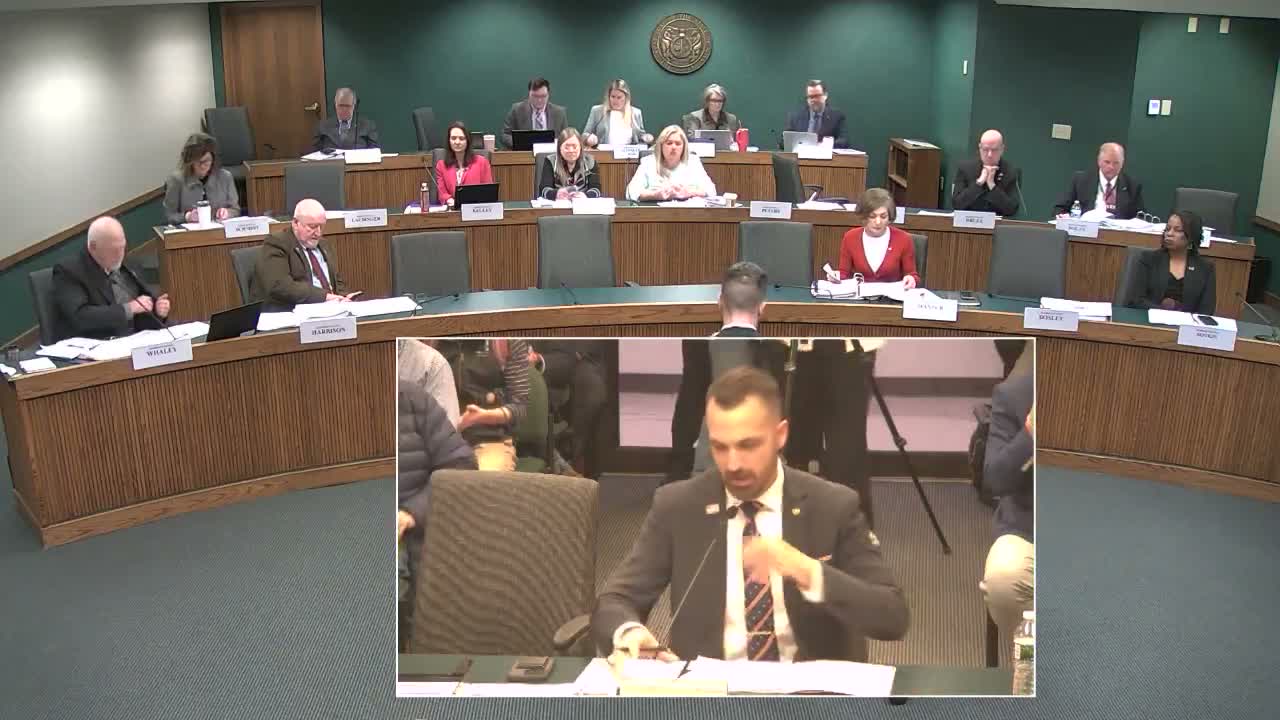
Representative Matthew Overcast (District 155) told the committee House Bill 1855 would establish reporting and surveillance for alpha-gal syndrome, a tick-associated allergy to mammal products. Overcast said the current bill differs from last year by shifting the reporting burden from clinicians to private laboratories and by creating a distinct statutory category for reportable noncommunicable diseases, which he argued addresses provider workload concerns.
Supporters included Ryan Deboof (Alpha Gal Alliance Action Fund), who walked committee members through a packet of state lists, CDC maps and potential federal grant opportunities—saying a forthcoming federal notice could include $10 million for alpha-gal tracking and that states demonstrating high or growing prevalence will be prioritized. Dr. Benjamin Kasterline (assistant professor of dermatology) described surveillance limits after 2022 when multiple labs began offering testing, and cited test sensitivity/specificity data from other jurisdictions (sensitivity ~98%, specificity ~92% in some studies) supporting lab-based reporting plus randomized follow-up sampling.
Patients and families gave repeated firsthand accounts of the condition’s effects on daily life, mental health and household budgets. Several agricultural and clinical groups endorsed the bill.
Opponents, led by Lisa Pinette, said the bill’s language that authorizes the Department of Health and Senior Services to "designate" and "enforce orders" for noncommunicable diseases is overbroad; she urged opt-in approaches or narrowing the statutory authority. Committee members pressed about the fiscal note (sponsor cited a figure around $500,000 if the department followed up on every case) and about test false-positive/false-negative rates. Sponsor and witnesses proposed lab reporting and randomized sampling to limit workload and argued state reporting is needed to access federal grants.
No formal committee action was taken during the hearing; the committee received broad testimony, both scientific and personal, and requested follow-up and continued negotiation on statutory language and fiscal impact.