Get Full Government Meeting Transcripts, Videos, & Alerts Forever!
Get email alerts on the River Restoration topic
No spam. Unsubscribe anytime.
Jordan River Commission urges regional coordination to address homelessness, pollution and invasive plants
Summary
Soren Simons, executive director of the Jordan River Commission, said rising homelessness and legacy channelization are compounding pollution and recreation challenges; he highlighted new access points, volunteer engagement and the need for coordinated shelter and services across jurisdictions.
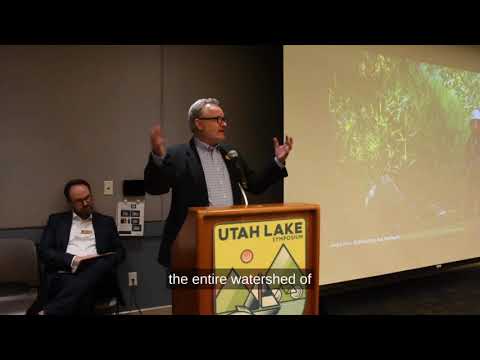
Soren Simons, executive director of the Jordan River Commission, used the symposium to describe the Jordan River's geologic history and the modern challenges of channelization, stormwater pollution, invasive plants and homelessness that now affect river health and recreation.
"There are a lot of different jurisdictions that have regulation over the Jordan River, and that's really why the Jordan River Commission exists today," Simons said, explaining the commission's role in convening cities, counties and state agencies. He described extensive stormwater infrastructure and said many storm drains feed directly into tributaries and the river, bringing sediment, litter and pollutants into the system.
Simons said invasive species ' phragmites, Russian olive and tamarisk ' reduce water availability and habitat and make recreation more difficult. He also told the audience that homelessness along the river has increased, contributing to debris and public-safety concerns.
In response to an audience question about safety, Simons described the complexity of the problem and cited previous enforcement efforts such as Operation Rio Grande. He said a state proposal led by the state homeless services board and state homeless coordinator Wayne Niederhauser has identified a site near the Jordan River for a "state homeless campus" and that preliminary capacity estimates range from roughly 1,200 to 1,600 people, though funding and details remain outstanding.
Simons highlighted positive developments as well: roughly 25 new access points have been added over the last decade, more volunteers are participating in regular cleanups, and community festivals and youth programs are expanding stewardship. He recommended greater cross-jurisdictional coordination, including shared shelter and services, to remove pressure from the river corridor and improve environmental outcomes.
Next steps: the Jordan River Commission will continue to convene partners, support access and stewardship projects, and advocate for coordinated regional shelter and services. No formal actions were taken at the symposium.