Get Full Government Meeting Transcripts, Videos, & Alerts Forever!
Get email alerts on the Invasive Species topic
No spam. Unsubscribe anytime.
Utah Lake Authority unveils multi-year push to extend invasive-plant removal into tributaries
Summary
Utah Lake Authority executive director Luke Peterson outlined a 5'6-year plan to build on recent phragmites reductions by expanding treatments up tributaries and tackling woody invasives such as Russian olive and tamarisk; funding and cross-jurisdictional coordination remain key challenges.
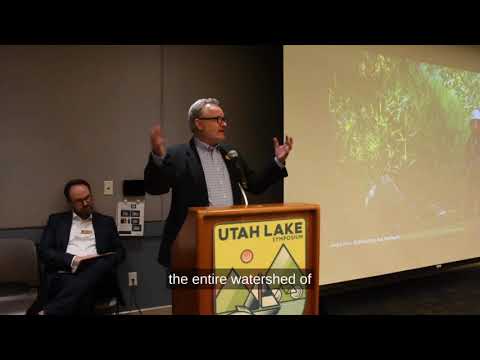
Luke Peterson, executive director of the Utah Lake Authority, on the symposium stage announced a multi-year plan to extend invasive-plant removal beyond the lake's shoreline and into upstream tributaries. Peterson said the Authority will continue shore treatments while ramping work in canals, streams and creeks to reduce reseeding and improve system-wide flows.
"Utah Lake is the healthiest it's been in a century," Peterson said, and he described the proposed effort as a way to "capitalize on that momentum" by attacking sources of reinfestation upstream. He credited recent work on phragmites removal for major improvements and said the program has achieved "about 85%" reduction in treated areas, a figure he described as approximate.
Peterson said the next phase will also target woody invasives, naming Russian olive and tamarisk. He told the room that Ben Abbott, present at the panel, had shared a startling figure about water use by these trees: "a mature Russian olive tree ... [uses] 100 gallons of water a day," a statistic Peterson said he had been shown by Abbott. Peterson argued removing these species would both improve habitat and "manage to get millions more gallons of water to Great Salt Lake" over time.
Funding for the initiative is partly in place: Peterson cited an earmarked appropriation from Sandra Curtis that will provide start-up capital and said the Authority will pursue additional grants to fill funding gaps. He warned that the plan raises coordination challenges: work must be negotiated with 16 local communities around Utah Lake, many private landowners, and neighboring counties such as Wasatch County, which the Authority has not previously engaged at scale.
Peterson described the Authority's role as a political operator: setting an ambitious direction and depending on partners to sort out technical and operational details. He acknowledged significant obstacles ' from land access to long-term maintenance ' but urged a decision to act now rather than delay.
Next steps: the Authority will pursue grant opportunities, expand partnerships with local governments and landowners, and develop operational plans for tributary and woody-invasive treatments over the coming five to six years. No formal motions or funding approvals were taken during the symposium.