Get Full Government Meeting Transcripts, Videos, & Alerts Forever!
Get email alerts on the Environment topic
No spam. Unsubscribe anytime.
Panelists urge continued investment and daily stewardship to restore Utah Lake
Summary
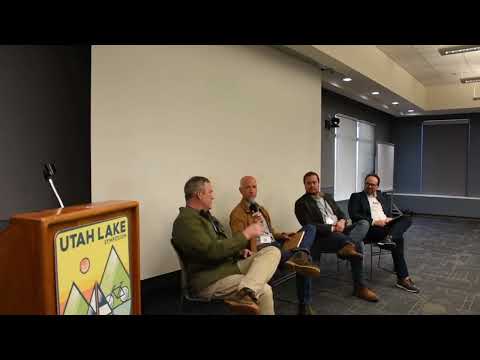
Panelists at a Utah Lake Authority discussion urged residents to press local and state leaders for continued investment (one panelist estimated about $200 million) and encouraged everyday stewardship—picking up one or two extra pieces of trash—to improve the lake and allow volunteers to focus on habitat restoration.
Panelist (Speaker 1) said many people "don't know about Utah Lake" or avoid it, and that changing public attitudes is key to building momentum for restoration and recreation.
"Let your local and state leaders know that the lake matters to you," Panelist (Speaker 2) said, urging continued investment and visibility. Speaker 2 suggested, as an estimate, "maybe that's 200, million dollars, for the for Utah Lake as well," characterizing the figure as a panelist estimate rather than a formal funding request.
Panelist (Speaker 3) urged individual action to reduce litter in waterways, citing cleanups on the Jordan River and at Utah Lake State Park. "If we just each person would make an effort to pick up 1 or 2 extra pieces of garbage that they see every day," Speaker 3 said, "it's gonna make a huge difference." Speaker 3 added that reducing routine litter would free volunteers to do longer-term habitat work such as cutting trees and replanting bushes.
The panel framed the two approaches—advocacy for public investment and everyday stewardship—as complementary: changing perceptions and getting people onto the water to see it firsthand, while also reducing visible pollution through small, regular actions.
The session closed with brief thanks to the panelists. The transcript contains no formal motions, votes, or binding commitments; the $200 million figure was offered as an approximate suggestion by a speaker and was not presented as a budget item backed by an agency or statute.