Subcommittee reviews six housing bills; recordation, fee-disclosure and cooperative bills move favorably, AC mandate held
Loading...
Summary
The Housing and Real Property Subcommittee heard six housing-related bills. The panel moved HB431 (plat recordation), HB80 (fee disclosures, as amended) and HB85 (limited-equity co-ops) favorably; HB153 (air-conditioning mandate) was held for further work after questions on definitions and exemptions; HB200 and HB335 will return with amendments or additional information.
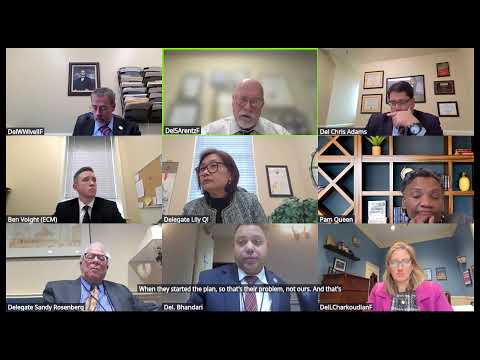
The Housing and Real Property Subcommittee met to consider six housing-related measures and took action on several. Members moved bills updating subdivision-plat recordation rules, requiring landlord fee disclosures (as amended), and authorizing limited-equity housing cooperatives; a proposed air-conditioning mandate for rental units was held for further work.
Speaker 1 introduced House Bill 200 as “the sale of residential real property, required flood risk disclosure,” saying the bill would require the Maryland Department of the Environment to publish a flood-risk disclosure form showing whether the property is within a flood hazard area, whether federal law would require flood insurance, whether the seller has flood insurance and whether a FEMA elevation certificate exists. Sponsor offices and realtor representatives discussed an amendment that would align the new form’s exemptions with existing seller-disclosure rules and would require the MDE form and any FEMA elevation certificate while not demanding a historical accounting of disaster assistance. The sponsor’s office indicated it is comfortable with the realtor-proposed changes and asked for finalized amendments to return at a future meeting.
On House Bill 153, which would require landlords to provide air conditioning in newly constructed units and those undergoing substantial electrical or heating upgrades, members pressed for clearer definitions. One member said the bill’s language around a “substantial upgrade” is vague and may be difficult to enforce in piecemeal remodels; another asked whether measurement would fall to listing agents, owners, inspectors or permitting authorities. The sponsor’s office and staff pointed to permitting processes and county standards (citing ASHRAE-derived measures used in Montgomery and Prince George’s counties) but members asked for more data on heat-related deaths and the rationale for the Baltimore Housing Authority exemption. After debate, a motion to move the amendment failed to advance the bill; the committee voted to hold the measure so members could seek additional information and possible drafting changes.
House Bill 431, which updates Real Property Article §3-108 for subdivision-plat recordation, was described by the sponsor as a technical modernization that permits digital submissions, updates GPS survey standards and replaces outdated terminology (for example, “marsh” to “wetland”). The sponsor withdrew a proposed fee increase during amendment negotiations; with that sponsor amendment in place, the committee approved the amendment and moved HB431 favorably.
House Bill 80, requiring landlords to disclose fees to prospective tenants and prohibiting mandatory undisclosed fees, was presented with sponsor amendments (including clarifying trash collection as part of utility language and removing the word “minor”). Members supported the disclosure goal but raised concerns about a penalty clause that allows courts to award up to three times actual damages with a two-year lookback; several members asked for consideration of graduated penalties or other adjustments. The committee moved the bill as amended and agreed to revisit enforcement language in full committee if necessary.
House Bill 85 permits Maryland nonstock corporations to convert to cooperative limited-equity housing corporations with resale limits designed to preserve affordability and restrict resale to low- and moderate-income households. The sponsor said she adopted MAKO’s requested clarifying language to ensure local zoning, stormwater and other laws still apply. After brief discussion about financing and dissolution mechanics, the committee moved HB85 favorably as amended.
House Bill 335 would codify a Court of Special Appeals holding treating private roads open to public travel for 20 years as an offer of dedication accepted if maintenance follows. The sponsor’s amendment removed the state from fiscal exposure and made the change retroactive; members raised concerns about potential local fiscal impacts (maintenance obligations, road width, and impact-fee implications) and requested follow-up from MAKO and MML before advancing the bill.
The subcommittee adjourned with instructions to circulate amendments and background materials in advance of the next meeting. Several members emphasized the volume of housing legislation this session and urged pre-meeting homework to speed consideration and drafting.