
Board hears legislative and funding updates as enrollment dips; lawmakers' bills could affect schools
Get AI-powered insights, summaries, and transcripts
Sign Up Free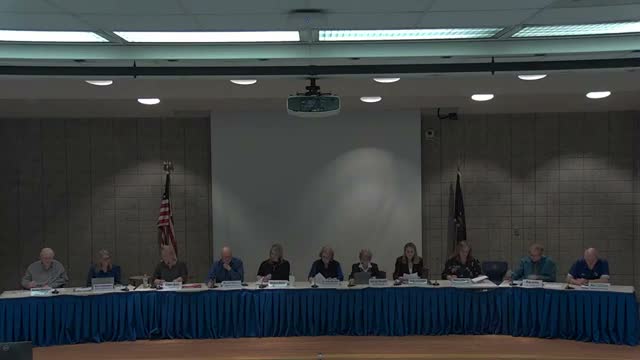
Summary
Board members reviewed a regional superintendent study council meeting, discussed several state bills (SB 76, HB 1210, SB 78) with potential operational impacts, and received an enrollment/funding report showing a drop of about 111 students and a per-student funding increase from $6,924 to $7,245 (figures presented by business director).
Board business on Feb. 17 included a longer discussion of state-level bills and a district budget and enrollment update.
Dr. Varrocco summarized a Feb. 6 Northwest Indiana Superintendent Study Council meeting that included presentations showing projected declines in certain revenue measures for calendar 2026 through 2031. He identified attending legislators (Representative Slager, Senator Durnell, Representative Aylesworth, Senator Rodney Pohl and Senator Niemeyer) and said the district had shared recorded presentations with board members.
On pending legislation, board staff discussed three bills of immediate interest: - Senate Bill 76: Described as an immigration-related measure with language still unsettled. Dr. Varrocco said the district is watching amendments because proposed provisions could affect whether schools must cooperate with law-enforcement or federal immigration authorities and cautioned about the operational and safety implications for schools. - HB 1210: Characterized as tax and fiscal policy that includes a requirement that certain financial-advisor engagements follow a request-for-quote process on Gateway; the district said the author's intent is increased competition and lower costs, but noted that some provisions could affect local income-tax timelines shared with schools. - Senate Bill 78: A proposed "bell-to-bell" cell-phone rule that would require students to store devices powered off and inaccessible during the school day. The board noted parental access and emergency-communication concerns and questioned enforceability given wearable devices and evolving technology.
Business Director Mr. James gave the district's enrollment and funding update. The district reported being down about 111 students between the October fall count and the February count. Mr. James said Lake Central's per-student funding rose from about $6,924 to roughly $7,245 and that the state's total education budget in his materials was shown as just under $9.4 billion; he said year-over-year increases were roughly 3.8% with a projected 3% increase next year. He warned that changes under SEA 1 could shift which local funds must cover certain costs and could lead more districts to pursue referendums.
Several board members asked clarifying questions about attendance at the Feb. 6 meeting, presenter names and which districts were represented; Dr. Varrocco provided names of presenters and said roughly two-thirds of referendum attempts recently have passed based on his materials.