Get Full Government Meeting Transcripts, Videos, & Alerts Forever!
Get email alerts on the Special Education topic
No spam. Unsubscribe anytime.
Parents and trustees spar over special-education trust after four CPAC officers resign
Summary
Parents criticized the district after four CPAC officers resigned, saying compliance metrics mask poor outcomes for students with disabilities; Superintendent Dr. Reiby acknowledged the resignations, described recent LEA reviews and staffing changes, and pledged further outreach and process improvements.
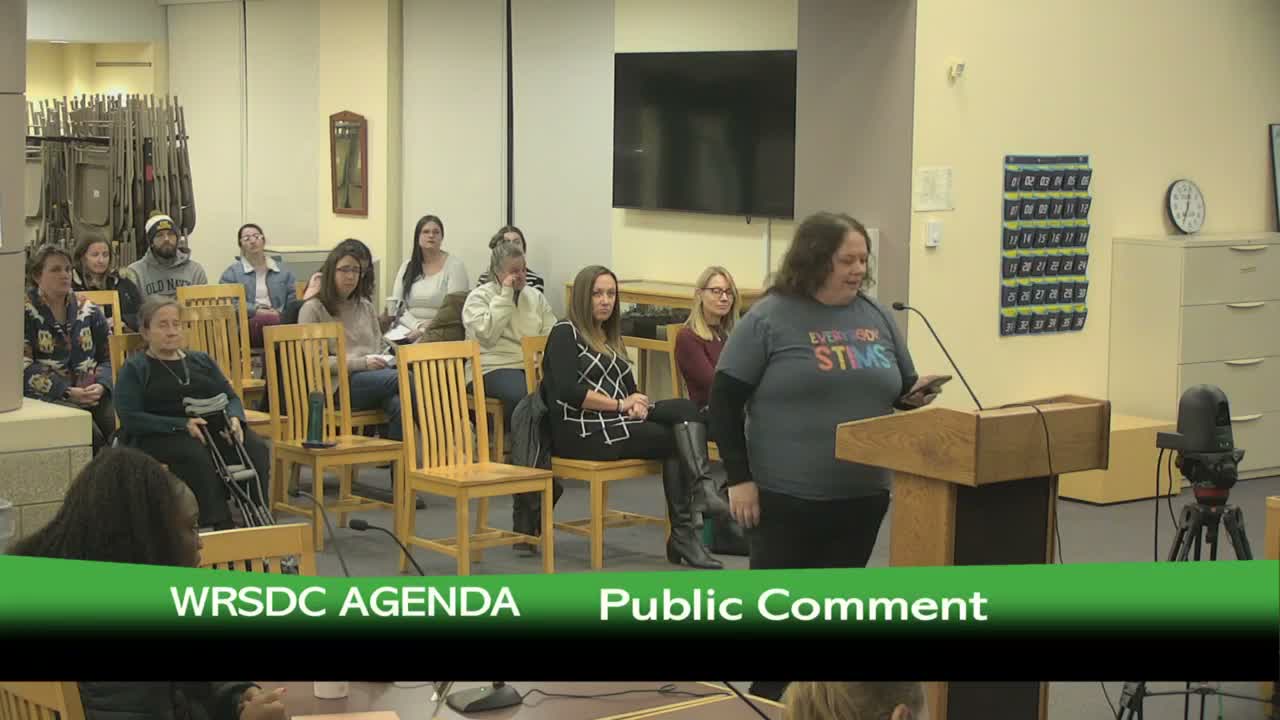
Parents and members of the community urged the Wachusett Regional School District Committee on Monday to reckon with what they described as a breakdown in trust between families of students with disabilities and district administrators. Parent speakers tied the resignation of four CPAC officers on Jan. 25 to years of unresolved concerns about special‑education services.
"Compliance is not the same thing as outcomes," said Katie Antinarello, who told the committee that families see regression, placement failures and burnout even when files appear compliant. Megan McIntyre added that the simultaneous resignations "should have brought this district to a halt," and said parents are tired of repeated silence and what she called dismissive responses from the administration.
Superintendent Dr. Reiby opened the committee’s report by acknowledging the resignations and the forum that preceded them. He said the CPAC submission ahead of the Jan. 21 community forum contained what his office counted as 95 individual questions and that some of the questions were "inappropriate and inflammatory." He defended staff participation in the forum and asked that anyone with a recording make it available: "If there is a recording, I would encourage its release."
At the same time, Reiby acknowledged persistent data and experience gaps. He told the committee that the district previously received an LEA determination of need for improvement and later received a "meets requirements" determination after implementing a root‑cause analysis, staffing changes and a team‑chair model. "There still needs to be substantial change," he said, and he urged community members to join and support a reconstituted CPAC.
Committee members pressed for specific fixes. Member Runstrom asked how the district will improve training so that families feel included as members of IEP teams; Reiby said the district has added team chairs, expanded monthly training and included DESE consultations but acknowledged more work is needed. On the question of retaliation, Reiby said he "would in no circumstance accept retaliatory behavior from the district," and civil‑rights coordinator Ace outlined the posted grievance procedure and offered the civil‑rights office as a resource.
Parents pushed for practical, measurable steps: expanded, evidence‑based professional development, clearer communication and third‑party mediation when local resolutions fail. Director DeAngelis and other administrators were cited as participants in ongoing efforts, and the superintendent said the district has hosted multiple meetings with CPAC leadership and will hold additional forums and CPAC elections to restore participation.
The committee did not take a formal policy vote on special education at the meeting but publicly recorded the exchanges and scheduled further follow‑up. The most immediate next steps announced were CPAC nomination and election meetings (nominations on Feb. 11; elections on Feb. 25) and continued follow‑up from the superintendent’s office and the civil‑rights coordinator.