Get Full Government Meeting Transcripts, Videos, & Alerts Forever!
Get email alerts on the Education Funding topic
No spam. Unsubscribe anytime.
North Attleboro school committee presses town over handling of Chapter 70 aid as FY26 budget moves forward
Summary
School committee members said roughly $287,000 in additional state Chapter 70 aid was not added to the district's base budget and debated whether the town's —oncealed— handling reduces funds available for teachers and special education. The committee discussed alternatives and took a symbolic vote on the FY26 budget before entering executive session.
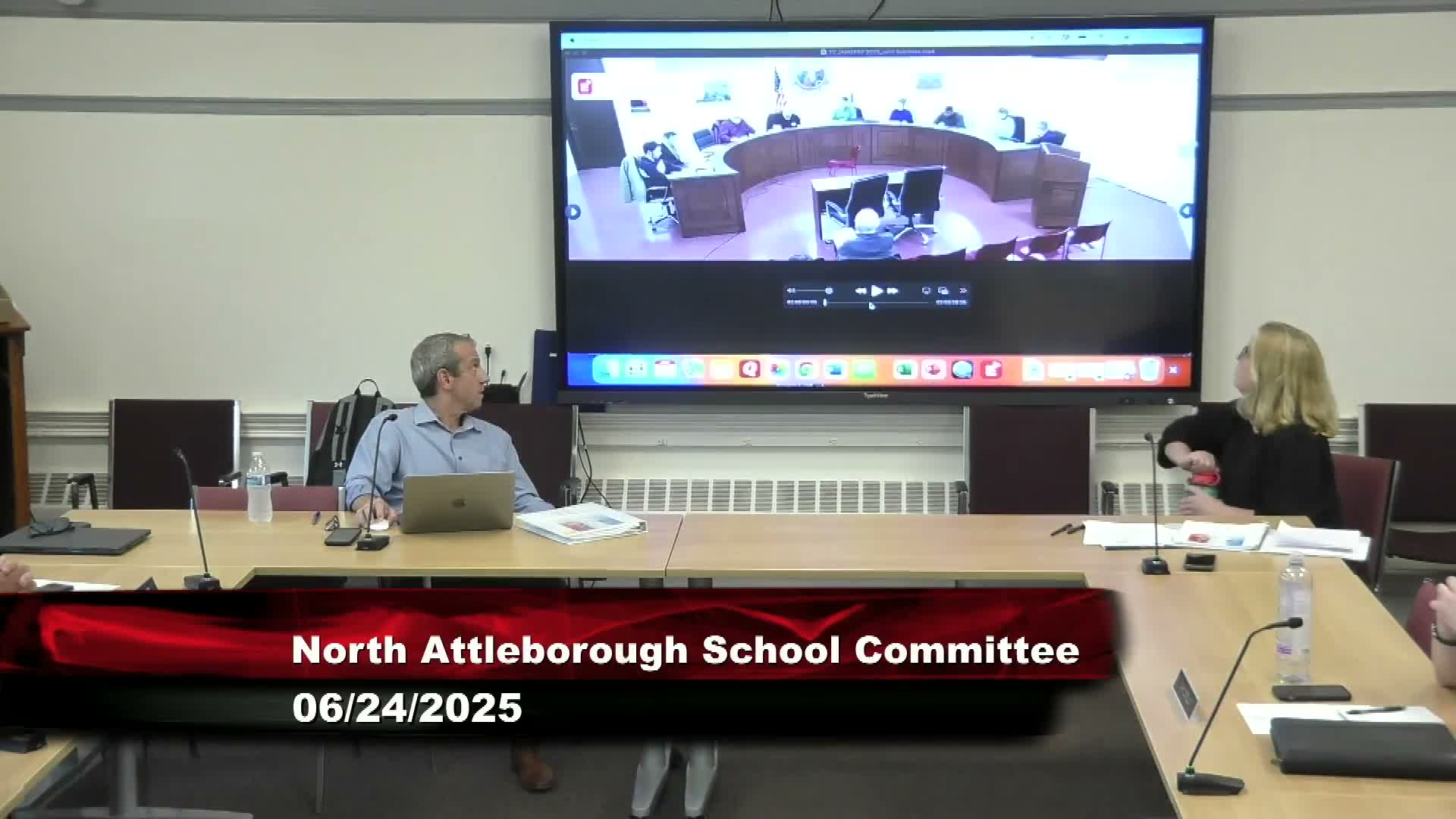
The North Attleboro School Committee spent most of its June 24 meeting disputing how the town is treating unexpected state school aid and detailing how the district's FY2026 operating budget will leave several classroom and special-education needs unfunded.
Committee members focused on an estimated $287,000 increase in Chapter 70 aid compared with earlier estimates. "We had a fistful of cash and we're begging for it," said Speaker 2, summarizing the committee's frustration that state education dollars arriving in town appear to be routed into town accounts and projects rather than added to the school department's base budget. The committee's business director, Speaker 11, confirmed the Senate estimate produced a $287,850 difference on the FY25 cherry sheet that the district had not secured in its operating base.
Why it matters: School leaders said the roughly $287,000 shortfall would fund about three teachers or key special-education positions the district requested. "That is three teachers, or an assistant principal, or staff that would reduce class sizes," Speaker 11 said, noting the district had prioritized athletics and homeless/foster transportation needs but that most non-salary line items would not be funded.
What officials said: The committee heard competing explanations. Some members argued Chapter 70 revenue is intended for classrooms and should be directed toward the district's recurring needs. Other participants, including those describing the town's "one-budget" approach, said the town has been providing the schools with more than the minimum required and that timing of the state budget and town budget process complicate direct passthroughs.
On legality and practice: The meeting included repeated clarifications that members were not asserting illegality. "They're not misusing the funds," Speaker 5 said, calling the dispute more philosophical than legal. The committee discussed options: asking the town council to dedicate excess Chapter 70 money to schools, placing funds in a special-education stabilization account (which speakers warned might not be accessible the same fiscal year), using one-time outside revenue (school choice or building rental) to free up roughly $200,000, or returning to town meeting or council later in the year.
Budget motion and next steps: The committee introduced a motion to approve the FY2026 operating budget and recorded a second; participants acknowledged a vote could be largely symbolic because school leaders would still receive the funds the town and state have already committed. The transcript does not record a clear final tally for the FY26 budget motion. The committee then moved to public comment (no speakers) and voted by roll call to enter executive session.
What remains unresolved: Committee members repeatedly asked why about $911,246 in excess Chapter 70 funds since 2019 had not translated into sustained base funding for schools and urged clearer communication with families and the town council. Several speakers recommended the school committee pursue formal legal or procedural clarification and public outreach in the coming year.
The school committee adjourned into executive session following the public-business portion of the meeting; no additional votes on FY26 budget items were recorded in the public transcript.