Get Full Government Meeting Transcripts, Videos, & Alerts Forever!
Get email alerts on the School Budget topic
No spam. Unsubscribe anytime.
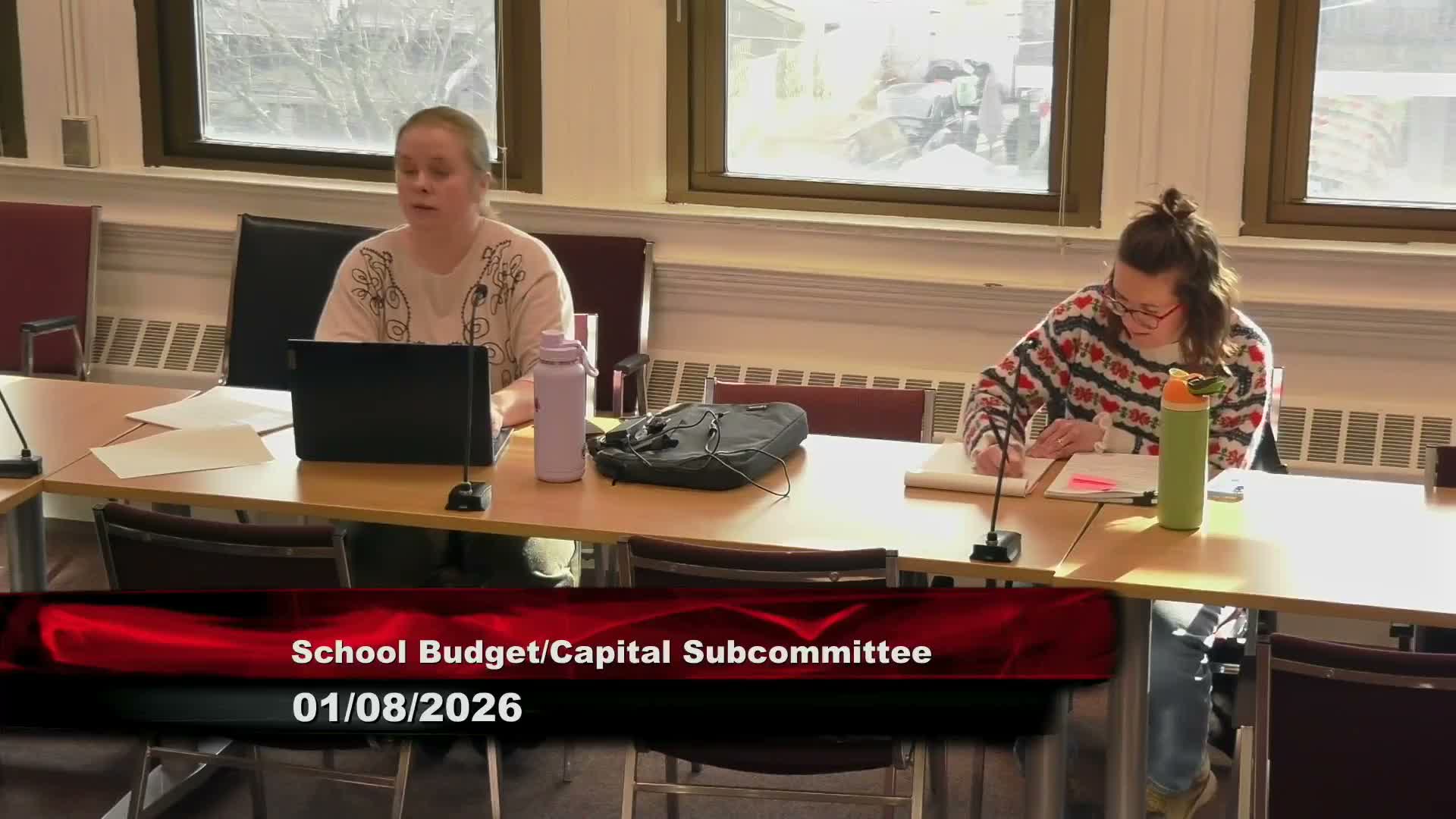
School subcommittee warns rising special‑education tuition, fixed costs leave little discretionary room in FY26 budget
Summary
At a School Committee budget subcommittee meeting, district staff said most of the FY26 budget is committed to salaries, special‑education tuition and operations, citing a spike in out‑of‑district tuition and urging a focused presentation to the Town Council on funding needs.
At a budget subcommittee meeting, district staff previewed the North Attleborough Public Schools’ FY26 budget strategy and warned that rapidly rising special‑education tuition and large fixed costs leave little room for new positions.
The unnamed district presenter (Speaker 3) told the subcommittee that the district has received roughly 4% annual budget increases in recent years but that most of that increase has gone to salary cost for more than 600 full‑time‑equivalent employees and to rising special‑education out‑of‑district tuition. "Most of what we do in a public school…isn't discretionary," the presenter said, adding that salaries, special education and operations account for about 96% of the school department’s costs.
Speaker 3 reported that about 24.5% of the district’s students are identified for special education and that special‑education costs represent roughly 34% of the district’s total spending. The presenter said the district has seen about a 20% increase in students on individualized education programs since FY23 and that out‑of‑district tuition has risen substantially: "Since FY23 they [the state rate‑setting agency] have approved tuition increases…25.2%" and overall out‑of‑district tuition spending has increased by an amount the presenter called "significant." The presenter stated the district’s out‑of‑district tuition budget as $44,400,000 (reported in meeting remarks).
The presenter gave examples of placement costs: private day‑school tuition ranges cited at roughly $51,000 to $265,000 per student, and one residential placement this year listed with an annual tuition of $472,000. When asked whether transportation was included in those figures, the presenter said it was not.
Committee members and other participants emphasized classroom impacts. "It's a very different experience to be in a classroom with 22 or 23 kids versus 26 to 28 kids," said Speaker 1, echoing parent concerns about class size and the practical effect of constrained staffing. Participants said parents who supported the new high school are seeking clearer, more frequent communication about what the budget actually funds and which positions remain unfunded.
Speaker 3 said the district is preparing a budget request and will present a focused, educational version of the budget to the Town Council at a joint meeting, with the goal of clarifying why many school costs are effectively pre‑committed and why some additional staffing requests are essential rather than discretionary. The presenter noted outside revenue sources and reserves total about $4.5 million but cautioned that those funds are often committed to specific uses or held for contingencies such as unexpected special‑education placements.
The subcommittee discussed logistics for the joint presentation to the Town Council, planned for Monday at 7:00 p.m. in the middle‑school cafeteria; staff agreed to provide schedules and notification text to parents. The meeting concluded after a motion to adjourn was made and approved.
Next steps noted at the meeting: staff will tighten the Monday presentation, clarify the list of priority positions (emphasizing special‑education teachers and related support), and send parents information on how to attend or view the joint town council presentation.