Get Full Government Meeting Transcripts, Videos, & Alerts Forever!
Get email alerts on the Program Of Studies topic
No spam. Unsubscribe anytime.
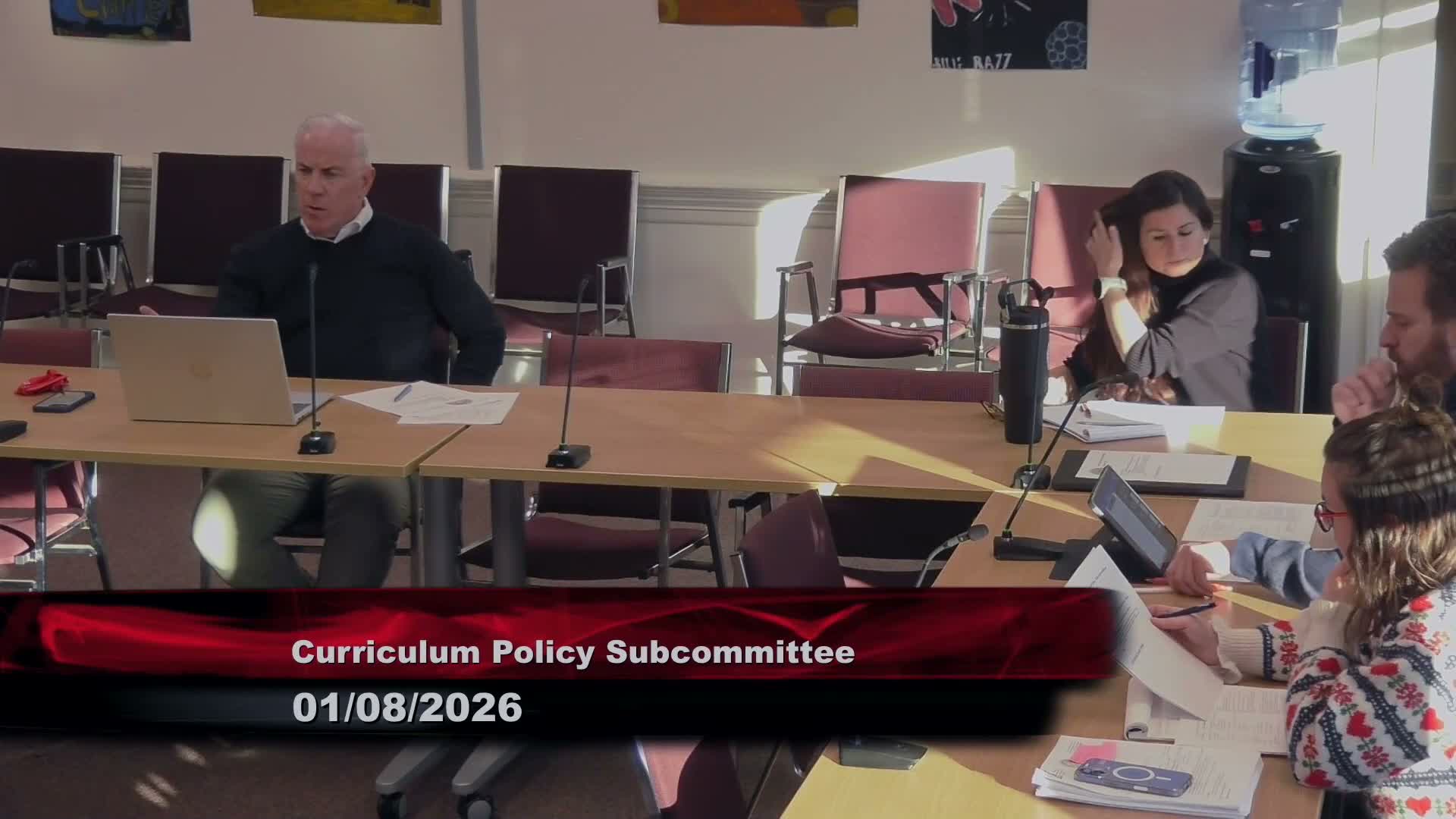
Subcommittee advances Program of Studies updates: credited SEL, medical Spanish, TA course and leveling changes
Summary
The Policy & Curriculum Subcommittee reviewed and supported sending Program of Studies changes to the school committee, including a 1-credit credited SEL sequence (Big Red 101–104), a freshman seminar tied to MyCAP, an AP Seminar offering, medical Spanish and other world‑language electives, a teaching‑assistant course, and course‑leveling adjustments to align with DESE competency rules.
Committee members spent the bulk of the meeting reviewing proposed changes to the North Attleboro High School Program of Studies intended to expand course relevance, create pathways and align some course descriptions with DESE competency determination criteria.
Key proposals: Speaker 3 described several major additions and clarifications. Big Red 101–104, an SEL-based flex-block currently offered to all students, would be reclassified as a progressive credited sequence worth one credit per year (freshman through senior). The course will be pass/fail and is not part of graduation requirements; it will appear on students’ transcripts as additional credits.
The administration also proposed a freshman seminar (quarter-long) to help ninth graders transition academically and socially; expanded seminar sequences for each grade level were discussed. MyCAP (a DESE career/academic planning initiative) will be integrated through guidance during flex time so students meet with counselors regularly.
New course proposals include an English AP Seminar for grade 10 (to broaden AP access) and several world-language electives: Social Justice in the Latin World, Medical Spanish (recommended for students who have completed Spanish 2), and World Cultures/Global Citizens. Speaker 3 said medical Spanish is targeted to grades 11–12 and would be recommended (not strictly prerequisite‑locked) to ensure language readiness.
Another notable addition is a Teaching Assistant course: application‑based, limited-enrollment opportunities for upperclassmen to support instruction (not grading or confidential duties) one period per cycle. The course is intended to give students leadership and early exposure to teaching careers.
Leveling and DESE alignment: Speaker 3 summarized edits to leveling language (defining unleveled, level 1/2/3 in terms of independence and instructional strategies) and said some courses will be re‑leveled to align with DESE competency determination rules so they can count toward competency criteria for students, including those in special education.
Operational details and timeline: Speakers discussed registration logistics (course selection in February–April), how enrollment will determine whether proposals run, and the district’s aim to be largely cost-neutral. Speaker 4 described the governance timeline: program changes will be placed in the school committee backup for the next public reading and must go through the committee’s public-reading process (three readings unless readings two and three are combined).
Outreach: Committee members recommended marketing (short videos, Instagram/Facebook posts, grade-level assemblies and alumni/student testimonials) to raise awareness and enrollment for new offerings.
Next steps: Administration will place the Program of Studies materials in the school committee packet for the upcoming meeting so the full committee can conduct public readings and vote on formal adoption.