Get Full Government Meeting Transcripts, Videos, & Alerts Forever!
Get email alerts on the Education Assessment topic
No spam. Unsubscribe anytime.
North Attleborough presents MCAS results, highlights gains and remaining gaps
Summary
District leaders told the school committee that North Attleborough’s MCAS results show notable gains in several elementary and middle‑school cohorts, highlighted targeted instructional changes and professional development that the district says drove improvement, and outlined persistent gaps to address in ELA and math.
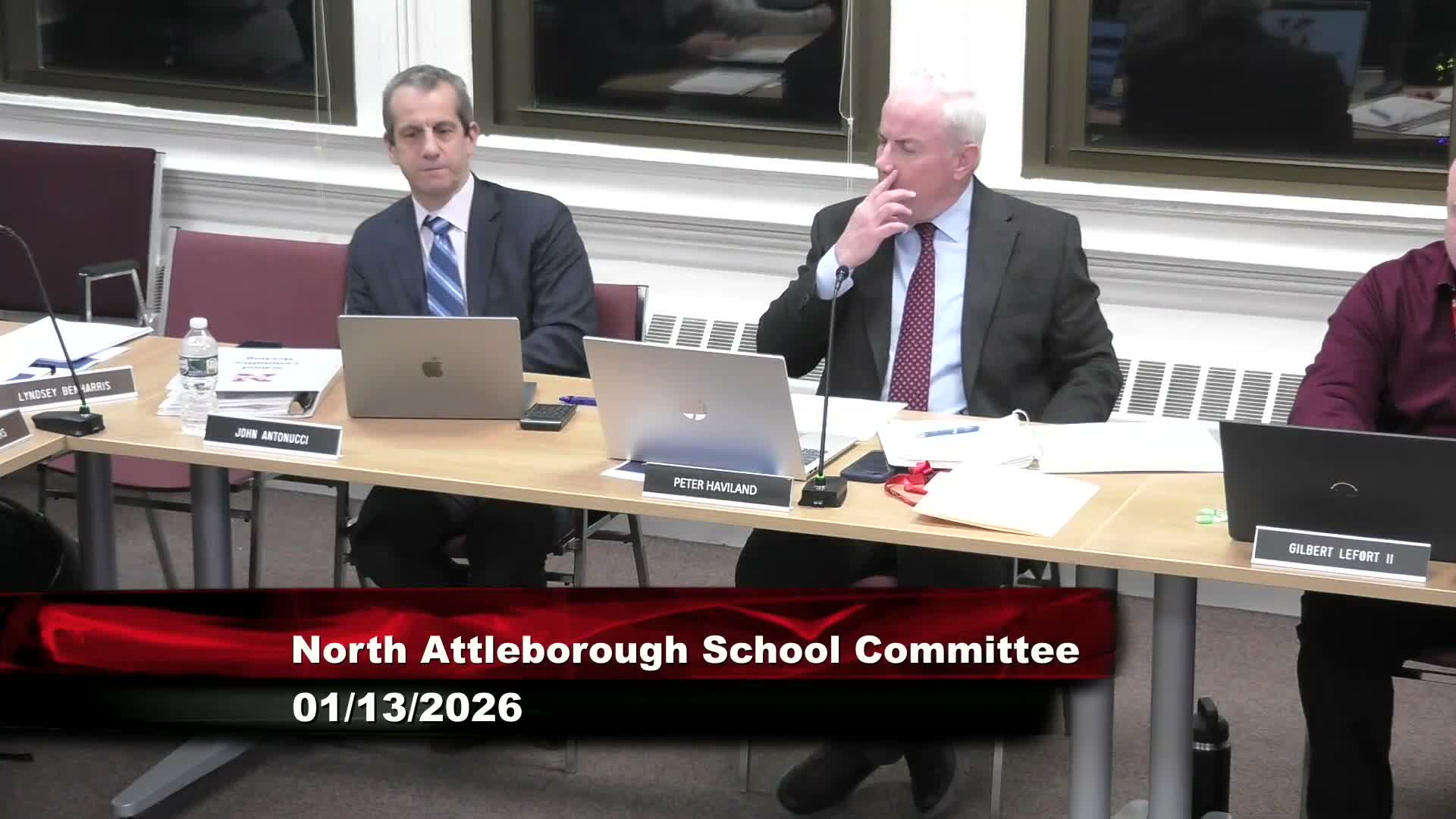
District leaders presented the school committee with a systemwide review of 2024–25 MCAS results on Jan. 13, saying North Attleborough was not among communities flagged in recent statewide coverage and pointing to pockets of substantial growth.
The presentation, led by a district official, emphasized that the district would present results by level rather than school by school and use data to direct instruction. "We're not 1 of those communities," the presenter said, arguing that while the district has "strong foundations in many grades and subjects," it still sees persistent gaps, especially in math problem‑solving and some ELA measures.
Elementary principals described specific gains: Roosevelt Avenue School’s third‑grade math pass rate rose to 68 percent, a 13‑point increase; Fall School fourth‑grade ELA rose to 69 percent (an 8‑point gain); and Community School fifth‑grade math improved by 21 percentage points to 48 percent meeting or exceeding expectations. Presenters credited sustained math professional development and coaching, naming consultant Allison Mello as a key partner.
Middle‑school results were described as a district strength, with eighth‑grade science meeting or exceeding expectations at roughly 57 percent; staff noted a slight dip from 62 percent and said targeted PD and a reallocated math specialist will support recovery. At the high school, presenters said ELA performance and science remained strong and that EL students performed notably in math, with a reported average scale score advantage above the state.
District staff outlined next steps: continue curriculum revision across pre‑K–9, expand structured math practices such as math centers, strengthen vertical alignment between levels, increase professional development in data analysis and instruction, and focus interventions for students with disabilities and English learners. The presenters also recommended improving attendance and family engagement as part of closing gaps.
Committee members asked for public access to trending data over multiple years; staff pointed to the state accountability website and offered to share supporting materials. The district stressed that MCAS is one tool among many and that officials will continue using multiple measures, including classroom assessments and project‑based learning, to guide instruction.
The presentation closed with an invitation for the committee to review more detailed trend data in follow‑up meetings and for principals to share school‑level action plans during the budget season.