
Watertown planning panel recommends two affordable-housing TIFs for Oaks 2 and Dakota Commons Reserve
Get AI-powered insights, summaries, and transcripts
Subscribe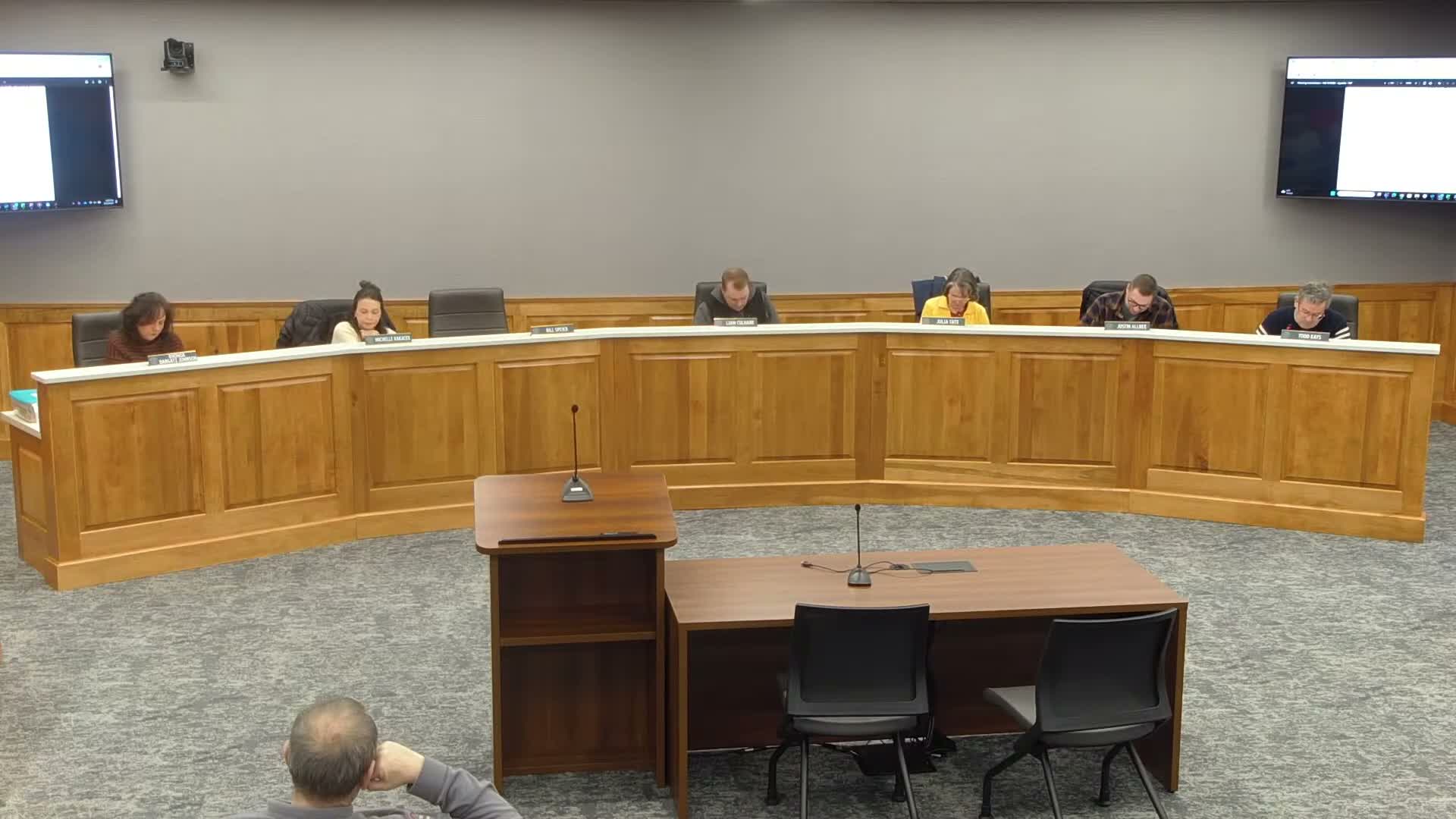
Summary
The Planning Commission unanimously recommended City Council approve two affordable-housing tax increment financing (TIF) districts for the Oaks 2 (72 units) and Dakota Commons Reserve (about 110–112 units) projects on Feb. 19, 2026. Commissioners focused on district boundaries, conservative valuation assumptions and the statutory "but‑for" requirement.
The City of Watertown Planning Commission on Feb. 19 recommended that City Council adopt two tax increment financing districts intended to support new affordable-housing developments: TIF 21 for the Oaks 2 project (a proposed 72-unit apartment complex adjacent to Oaks 1) and TIF 22 for the Dakota Commons Reserve project (roughly 110–112 units).
Commissioners heard a staff overview from Brandy Hatton and a presentation from municipal adviser Toby Morris of Collier Securities, who described the TIF plans as conservative in their valuation assumptions and said developer costs and interest were not shown in the headline valuation but would be addressed through contract cost‑certification and developer‑agreement provisions. Brandy Hatton told the commission the Oaks 2 proposal is classified as an affordable‑housing TIF that would hold rents at 80% of area median income (AMI) per South Dakota housing rules; Hatton said the developers are not requesting the maximum eligible amount and, as stated in the packet, requested $953,564 for TIF 21.
Morris reiterated the commission’s three-point focus: confirm district boundaries; review the TIF financial numbers to ensure projected increment will cover planned expenditures; and answer the statutory "but‑for" question — would the development proceed without the TIF. On the "but‑for" test, Morris said the current financing environment and higher construction costs make the TIF economically necessary in his view for at least the Oaks 2 proposal: "I would probably say yes... because of the economics when you're over $200 a door at 6 and a half, 7% rate," he said, summarizing why developers seek TIF support now.
Commissioners asked about the interaction between TIFs and other taxing jurisdictions; Morris explained that base values remain available to taxing authorities and that school districts are generally held harmless on current general‑fund revenue while growth recognized after district expiration can later flow back into taxing formulas. Commissioners also pressed on how district boundaries were drawn and whether nearby parcels or parking‑lot areas would cause overlap; staff stated the district was its own legal area and that overlapping districts had not been identified for these proposals.
After public hearings with no in‑person opposition recorded, Commissioner Case moved to recommend adoption of resolution 2026‑07 (TIF 21) and the commission voted 7–0 on roll call. A separate motion to recommend adoption of resolution 2026‑08 (TIF 22) likewise carried 7–0. Both motions included a formal finding that the projects would not move forward "but for" the TIF assistance.
The commission’s recommendation sends both TIF plans to the City Council, which staff indicated would consider a related item at its March 3 meeting. If Council approves, the city will proceed to negotiate developer agreements and cost‑certification mechanisms identified in the plans.
What happens next: these are recommendations; City Council action is required to create the districts and commit any tax‑increment revenues. Staff and the municipal adviser emphasized that cost‑certification and contract provisions are intended to protect the city and enforce affordability commitments.