Get Full Government Meeting Transcripts, Videos, & Alerts Forever!
Get email alerts on the Land Use Rezoning topic
No spam. Unsubscribe anytime.
Commission approves second reading of Ordinance No. 1685 to rezone city-owned parcel to light manufacturing
Summary
The Madison City Commission approved the second and final reading of Ordinance No. 1685 to change a city-owned parcel from highway business and agriculture to light manufacturing; planning staff said future conditional-use requests (including data centers or Bitcoin mining) would follow an additional review process and could face conditions on screening, setbacks and noise limits.
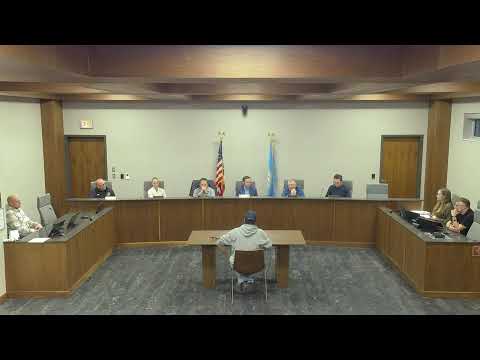
The Madison City Commission on an evening voice vote approved the second and final reading of Ordinance No. 1685, rezoning a city-owned parcel from “highway business and agriculture” to “light manufacturing,” Jamieson said during the meeting.
Jamieson told the commission there had been no changes since the first reading and that the planning commission had recommended approval by a 4–2 vote. ‘‘This is a rezoning ordinance,’’ Jamieson said.
Planning staff (Ryan) described the rezoning and conditional-use process: applicants file a one‑page application and plot plan, adjacent property owners are notified (the city notifies owners within 150 feet), and the planning commission issues a recommendation to the commission. Ryan said conditional uses that are not listed as principal permitted uses — for example, a data center or Bitcoin mining operation — would be handled through a conditional-use application before the board of adjustment; that decision is quasi‑judicial and could be appealed to circuit court, not decided by the city commission.
Ryan described typical conditions the board of adjustment might impose, including screening by fencing or vegetation, setbacks and noise controls. He said acceptable noise at the property line would generally be consistent with highway traffic, roughly in the range of 65–75 decibels.
Commissioners did not request substantive amendments during the second reading; a motion to approve was made, seconded and carried by voice vote.
What happens next: rezoning is final. If a developer later proposes a use not explicitly allowed in the light-manufacturing district (for example, a data center or cryptocurrency mining), that project would require a separate conditional-use review, notification to adjacent owners and potential conditions from the board of adjustment before it could proceed.