
Scotland County warned of steep health‑insurance renewal as advisers outline options
Get AI-powered insights, summaries, and transcripts
Subscribe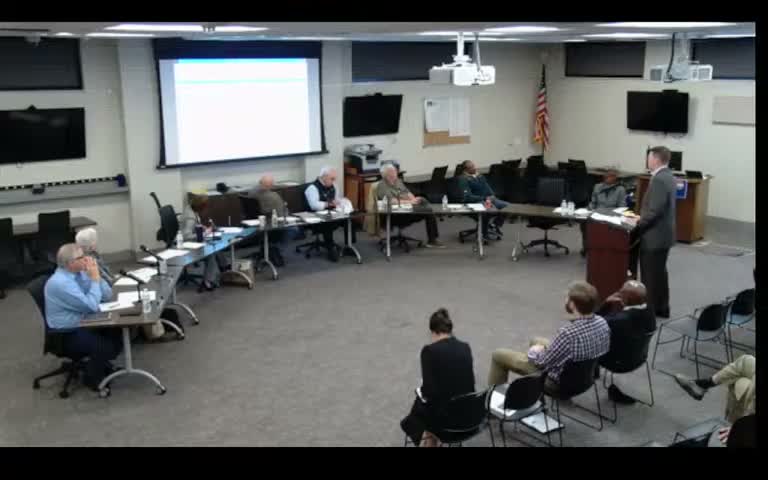
Summary
A Mark 3 advisor told Scotland County commissioners that three years of claims put the county roughly $4.3 million underwater and that available market responses put likely premium increases in the coming contract year well above typical budgets; commissioners heard options including staying in the current cooperative block, switching to self‑funding or joining a larger pool.
Mark Browder of consultancy Mark 3 told the Scotland County Board of Commissioners on Feb. 18 that a small number of very high‑cost claimants and rising specialty‑drug spending have driven the county's health plan into a multi‑year deficit, and that the 2026–27 renewal cycle will be expensive.
"For 23–24, the deficit position was approximately $1,300,000," Browder said. "For 24–25 the loss position was about $1,800,000. That puts you at a three‑year deficit position of $4,300,000." He added that Blue Cross's market renewal was offered at about a 30% increase but that Mark 3's actuarial view put an unadjusted level near 42%.
Browder laid out three broad strategies: remain in the county's current guaranteed‑cost/balanced funded arrangement inside an Intergovernmental Health Alliance block (which provides pharmacy pass‑throughs and a pooling mechanism); move to a self‑funded model (lower long‑term cost but higher near‑term risk and exposure to "lasers" — large individual claim attachments); or join a larger cooperative pool that could level rates over time. He said the IHA arrangement had returned rebates to the county in prior years and limited pharmacy spread pricing.
Commissioners pressed on the causes of the higher costs. Browder pointed to cancer, diabetes and obesity as the top conditions, and to a handful of individual high‑cost claimants — "one person over a half $1,000,000" — as the primary driver of volatility. He emphasized population‑health work, noting a diabetes‑management program that Mark 3 supports as an important mitigation tool.
"You have been significantly insulated from the true cost of the plan," he said. "When your claims start to subside, you'll see the plan stabilize." Yet he warned commissioners not to expect immediate relief from pending pharmacy‑contract reforms, saying those changes will phase in and will not erase the impact of specialty gene and cell therapies that can cost hundreds of thousands to millions per patient.
The commission did not vote on any insurance action at the meeting but directed staff to continue planning; members asked staff to prepare for a procurement cycle starting in the third quarter to allow bidders time to analyze protected claims and census data for a July 1 renewal.
What’s next: County finance staff and the board will use Mark 3’s analysis to refine budget assumptions and to scope procurement and mitigation options ahead of next budget votes.