
District describes "secure" protocol and response to anonymized hoax calls
Get AI-powered insights, summaries, and transcripts
Subscribe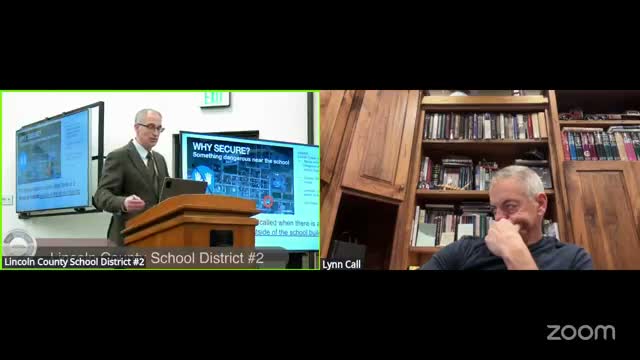
Summary
District safety lead reviewed the difference between "secure" and lockdown procedures and summarized two January events: a 26-minute secure alert at Thane and a multi-district anonymized hoax call that required remote incident coordination with law enforcement.
Warren Westcott briefed the board on the district's safety protocols and two recent incidents used as training examples.
Westcott clarified terminology: "Secure is different than lockdown," explaining lockdown is used when a threat is inside a building while secure applies when the potential hazard is outside the building. He described the life cycle of a secure alert (initiation, internal communication, situational awareness, and controlled release or reunification) and the district's use of an internal alert app to notify staff.
Reviewing two January events, Westcott said a principal placed Thane Elementary into secure at 10:06 a.m. after incomplete information about police activity; the alert was ended at 10:26 a.m. after confirmation that there was no outside threat, and the district released targeted communications to parents. In a separate incident, an overnight computer-generated voice message reached multiple district lines statewide; the district coordinated remotely with law enforcement, treated the messages initially as a potential hoax and released a public notice at 8:07 a.m. after confirming the messages were not an active threat.
Westcott stressed the goal of preserving safe operations and avoiding unnecessary disruption, noting that many hoaxes are intended to create fear and use up resources. He praised the cooperation of teachers, support staff, IT and law enforcement in maintaining normal operations while working the incidents.