Get Full Government Meeting Transcripts, Videos, & Alerts Forever!
Get email alerts on the Policy topic
No spam. Unsubscribe anytime.
Board approves multiple second‑reading policies; first readings ignite debate over meal‑debt and graduation language
Summary
Trustees approved several policies on second reading and discussed first‑reading revisions to meal‑debt collection and student personal electronic device policy (PEDS). Trustees asked staff to clarify statutory language about graduation and to consult the Department of Education before second reading.
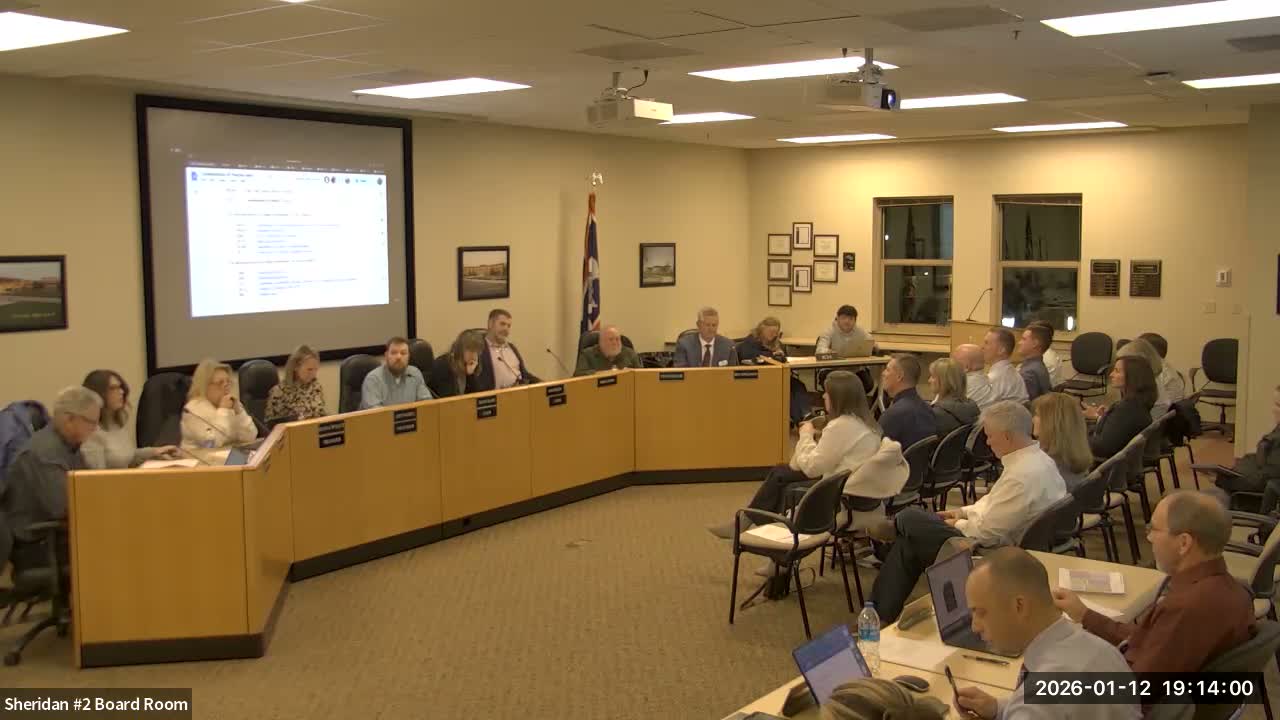
At the meeting the board approved a package of policies on second reading, including GBQ (retirement benefits), IHBJ (homebound instruction), JEA (compulsory attendance and related deletions), and JEB (entrance age). Those policies were approved by voice vote on second reading.
On first reading the board reviewed several policies and proposed language changes: EBAA (notification of pesticide application), EBAB (hazardous materials aligned to Wyoming School Board Association language), EBB (first aid and safety procedures), EFDA (meal debt collection), JFABB (admission of foreign exchange students) and JICJ (student use of personal electronic devices, relabeled 'PEDS'). Trustees focused most on EFDA and statutory interpretation: multiple trustees asked whether statute cited in discussion (referred to in the meeting as "statute 20 1‑4‑3 0 8" and variations) requires withholding graduation ceremony participation for students with debt. Trustee Rambert and others asked that the policy use permissive language ("may") rather than mandatory language ("shall") to avoid denying a student's participation in graduation ceremonies based on meal debt, and requested a legal opinion and consultation with the Department of Education before second reading.
Policy staff (speaker identified in the transcript as presenter 21) said they will work with the business manager and food‑service director and will seek Department of Education guidance, then present clarified language to the policy committee before second reading.
Why it matters: EFDA (meal debt collection) could affect student participation in activities tied to indebtedness; trustees asked for clearer statutory interpretation so local policy language aligns with state law and preserves equitable outcomes for students. The PEDS policy renames 'cell phone' policy and clarifies allowed uses; trustees did not adopt final language tonight and will revisit after the requested clarifications.