Get Full Government Meeting Transcripts, Videos, & Alerts Forever!
Get email alerts on the Education Funding topic
No spam. Unsubscribe anytime.
Superintendent warns proposed state recalibration could swell class sizes, cut classroom teacher funding
Summary
Sheridan County School District #2 officials told the board that draft state recalibration recommendations would shift funding away from classroom teachers—citing a $16.2 million statewide reduction for core teachers—and raise class sizes, while boosting tutoring and summer programs. District leaders urged advocacy and said they will press legislators for changes.
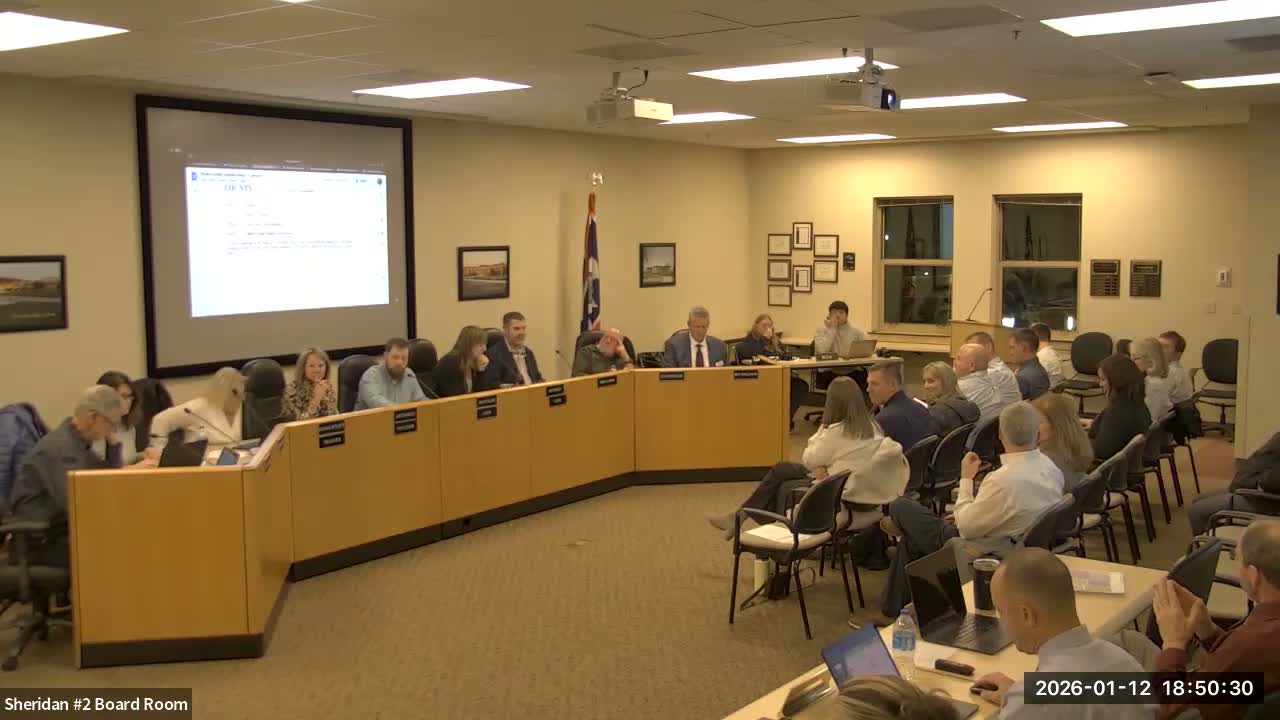
Superintendent Scott Stultz told the Sheridan County School District #2 board that a pending state recalibration of school funding would likely reduce classroom‑teacher allocations and increase class sizes, even as the draft recommends boosts for summer school and tutoring programs.
The superintendent said the recalibration draft shows about an $11 million proposed increase overall for education but reallocates much of that to non‑classroom supports. He said the recommendation equates to a $16,200,000 reduction in funding for core classroom teachers statewide and warned that district modeling would translate to roughly a $2 million loss for this district if the changes stand. "That's wrong," Stultz said of the proposal to reduce classroom teachers while increasing funding for after‑school programs and tutoring.
Why it matters: District officials told trustees that classroom teachers provide the largest measurable benefit to daily learning and that raising the funded student‑teacher ratio from roughly 16:1 toward 25:1 in parts of K–12 could harm instructional quality and local flexibility. Stultz said proposed changes would also alter how a block grant can be used, narrowing the permitted uses to specified staff titles and eliminating much local discretion.
Trustees pressed for clarification and next steps. Trustee Fessler asked whether the state superintendent had weighed in; Stultz said Wyoming Department of Education leadership is awaiting final bill language before adopting a position. Trustees discussed coordinating communications with neighboring districts and potentially co‑authoring public guidance for parents explaining the practical effects of recalibration. Stultz said he expects the recalibration committee will meet next week in Cheyenne and that the legislative services office may post the bill draft on or about the date the committee meets.
Details from the presentation included: a proposal to change class‑size funding (k–3 to 15:1 and 4–12 to 25:1 in parts of the draft model), projected large increases in sums directed to summer school ($41.3 million) and tutoring ($25.9 million) statewide, and concern that reductions in core classroom allocations would diminish local control and force staffing cuts. Trustees asked for follow‑up information on which line items drive projected local revenue losses, how square footage and current building designs interact with larger class sizes and whether consolidated or phased changes could reduce local impact.
Next steps: District leadership said it will send representatives to the recalibration committee meetings, coordinate with other superintendents, and brief the board again after the committee presents its recommendations and the legislature drafts any bill. Officials urged trustees to prioritize outreach to state legislators and to consider joint communications with nearby districts.