
Lompoc utility study urges city to secure land for second substation by late 2020s
Get AI-powered insights, summaries, and transcripts
Subscribe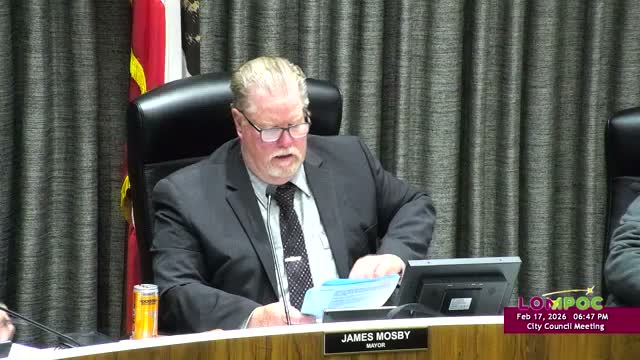
Summary
Consultant John McMurray told the City Council a forecast of electrification and zero‑emission vehicle (ZEV) adoption could push the city’s system peak toward 44.7 MW by 2031 and recommended acquiring land for a second substation around 2028 to provide redundancy and avoid extended outages.
Mike Luther, Lompoc utility director, and consultant John McMurray presented the Electric Division Capital Improvement Plan and a long‑range load forecast, saying the city should begin preparing for a second substation within the next five years.
"The number one thing that you're gonna wanna do is number one is look to acquire the land for a substation," McMurray told the council, framing land purchase as a low‑cost step that preserves options if load grows faster than expected. His midline projection showed a system peak that "increases to, like I said, 44.7 megawatts" by about 2031 as appliance electrification and ZEV adoption add to local demand.
Why it matters: the city currently relies on a single receiving station; McMurray said that creates vulnerability to catastrophic outage if a major asset fails. He described the recommendation as phased: acquire and prepare land by about 2028, do earthwork and site prep, and plan for energization and equipment additions by roughly 2032. He emphasized monitoring actual annual loading and staging investments "as carp mandates start" to avoid unnecessary immediate expense.
The presentation also identified near‑term maintenance and equipment work inside the substation: replace deteriorated PTs/CTs and some switchgear, perform dissolved gas analysis annually, carry out a fuse‑coordination study, and evaluate SCADA upgrades. McMurray said some smaller items are low cost but several mid‑size components should be prioritized in the near term.
Council discussion centered on timing and bill impacts. One councilmember pressed whether electrification will drive large bill increases; McMurray said increases are likely to be gradual and tied to individual appliance and vehicle adoption. Councilmembers compared Lompoc to larger utilities (e.g., Palo Alto), with McMurray noting larger cities are investing heavily in grid upgrades but that Lompoc currently has surplus transformer capacity and a multi‑year window to prepare.
Next steps: staff will provide follow‑up materials (cost tables, timeline estimates and historical load data) requested by council, and the utility will continue to track annual loading against the forecast to determine when to trigger capital work.