Get Full Government Meeting Transcripts, Videos, & Alerts Forever!
Get email alerts on the Public Health topic
No spam. Unsubscribe anytime.
Planning commission recommends citywide smoke‑shop zoning rules with CUPs, buffers and six‑month compliance for existing shops
Summary
The Planning Commission recommended that City Council adopt a zoning ordinance (2026‑01) defining 'smoke shops,' imposing 1,000‑foot buffers from youth‑centered uses and between shops, 500‑foot separation from residential, operating standards and annual inspections; existing legal shops (43) get six months to comply.
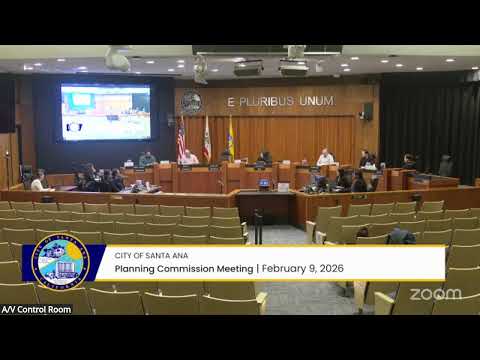
The Santa Ana Planning Commission voted unanimously (Commissioner Oliva absent) to recommend City Council adopt a zoning ordinance amendment (2026‑01) that defines and regulates 'smoke shops' as a distinct land use and establishes permit and operating requirements across the city.
Case planner Siri Champion told commissioners that the number of smoke shops in Santa Ana had more than doubled since Jan. 1, 2024, and that police and code enforcement recorded nearly 200 calls for service related to these businesses in 2025. Staff said investigations uncovered a range of illegal activities at some locations, including storage of banned substances, gambling and the sale of unregulated products; staff cited public‑health and safety concerns as a primary rationale for the ordinance.
Key features of the draft ordinance include a standalone definition of smoke shops, a requirement for a conditional use permit (CUP) in specified commercial zones (C1, C1MD, C2, C4, C5 and CSM), a 1,000‑foot separation requirement between smoke shops and between smoke shops and youth‑centered uses or alcohol/drug recovery facilities, and a 500‑foot buffer from residential zones. The draft also includes operating standards (limits on product display, minimum glazing so store interiors are visible, age‑21 minimum to enter, limits on signage, lighting, security and graffiti/litter abatement), annual inspections and penalties up to CUP revocation.
Staff reported the city currently has 43 smoke shops, of which 38 have certificates of occupancy and tobacco‑retailer licenses. Those legally established would become nonconforming when the ordinance takes effect but would have six months to meet the new standards or seek a CUP or relocate; if a location discontinues the use for six months, subsequent uses must conform with the zoning code.
Commissioners asked about the economic drivers behind proliferation, how landlords and the public would be notified, whether other cities use CUPs (staff cited Fresno and Anaheim), how annual inspections would be resourced, and how to treat convenience stores and mobile vendors. Staff said interagency outreach to landlords and businesses is standard when ordinances change, that fees are designed to cover administrative costs for inspections and enforcement (modeled in part on the city’s cannabis program), and that convenience stores are defined separately to avoid unintentionally classifying them as smoke shops. Commissioners asked staff to consider limiting smoke‑shop locations on major arterials and to clarify whether mobile vending trucks selling tobacco should be covered; both items were recorded as friendly amendments/directions to staff.
The commission closed the public hearing with no public speakers and approved the recommendation to City Council by roll call (unanimous with Commissioner Oliva absent). Staff will reflect the commission’s discussion and the two suggested directions in the report to City Council.