Lifetime Citizen Portal Access — AI Briefings, Alerts & Unlimited Follows
HMC interns present remediation and outreach projects: nanoparticles for Seneca site, warning outreach for people experiencing homelessness
Loading...
Summary
Two HMC interns presented technical and community-focused projects: an intern described use of zero-valent iron nanoparticles and permeable reactive barriers to remediate cadmium and VOC contamination at Richmond's Seneca site; another highlighted gaps in emergency notification and recommended outreach to encourage community-warning sign-ups among homeless populations near refineries.
Two Hazardous Materials Commission interns presented technical research and outreach findings during the meeting.
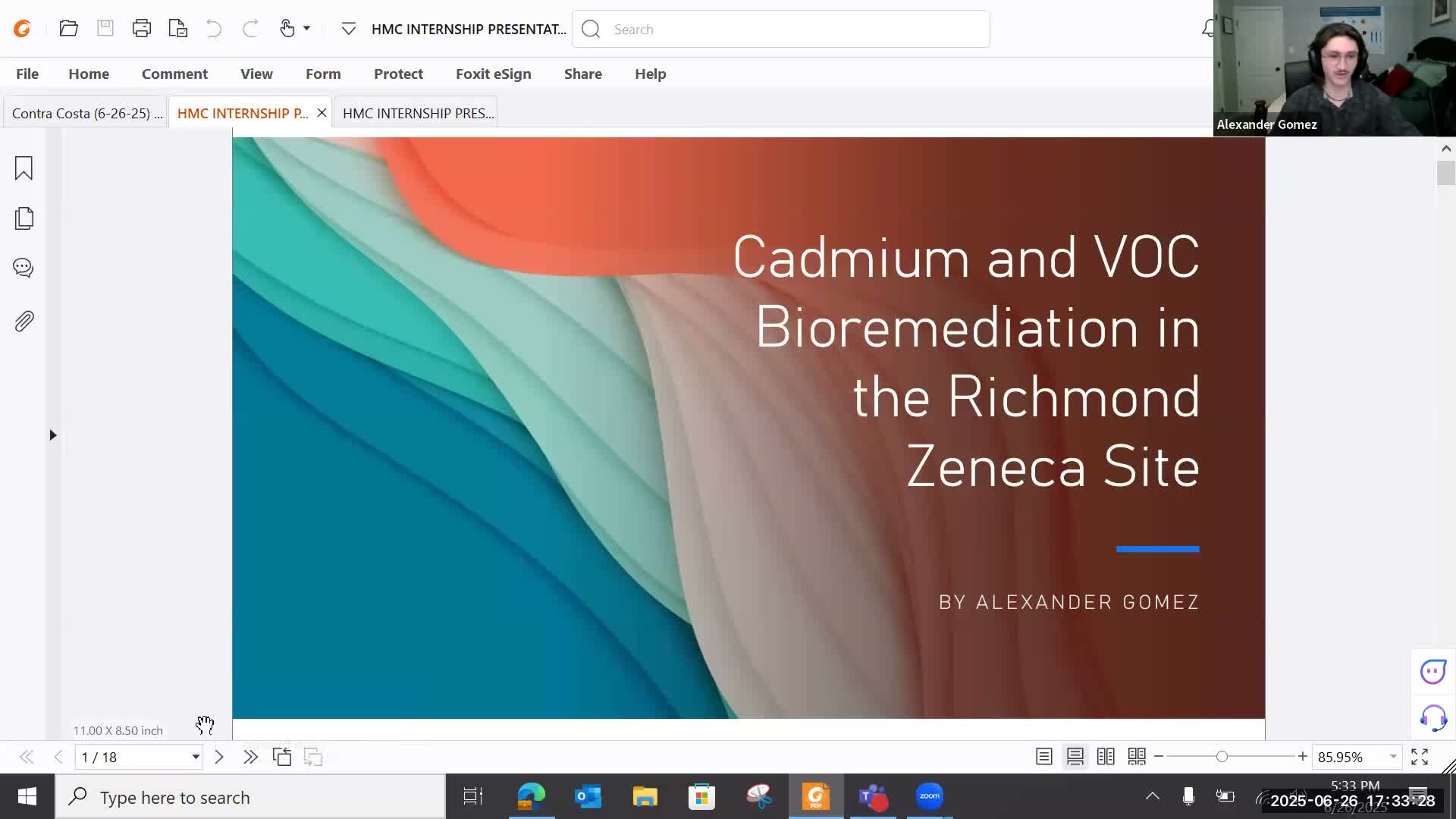
Alex, an HMC intern and recent San Francisco State graduate, presented a review of contamination at the Richmond Seneca site and described potential remediation strategies using permeable reactive barriers (PRBs) augmented with zero-valent iron (ZVI) nanoparticles. Alex said ZVI PRBs have produced large reductions in chlorinated compounds in pilot studies and could be adapted for metals and VOCs but cautioned that large-scale ecotoxicity and nanoparticle-aggregation risks require additional study before full deployment.
Amy, another intern, presented work on notification and outreach for people experiencing homelessness near refineries. She mapped encampments around six hazardous facilities and recommended targeted outreach, enrollment assistance for the county's community-warning system and education on what alert signals mean and how to shelter in place or evacuate. Commissioners asked staff to follow up with outreach teams so those populations can receive warning-system information and training.
Next steps: Commissioners praised the interns and asked staff to coordinate outreach follow-up with county homelessness outreach teams and to note intern findings for future agenda items on site remediation and community notification.