Get Full Government Meeting Transcripts, Videos, & Alerts Forever!
Get email alerts on the Budget Finance topic
No spam. Unsubscribe anytime.
Superintendent’s revenue outlook shows small growth and a budget gap; district proposes buying two vans to cut transportation costs
Summary
District staff projected FY2027 revenue of about $87.38 million (a 2.94% increase from FY26) but noted a roughly $292,000 operating gap; staff also proposed buying two Chrysler Pacifica vans (~$30,000 each) from Toyota of Smithfield to reduce outside transportation costs and support transition programs.
District staff presented a FY2027 revenue overview projecting total revenue of about $87,377,000, up roughly 2.94% from the prior fiscal year’s approximately $85,000,000. The presenter said local appropriation is the largest revenue source (about $53,000,000 projected for FY2027) and that state aid is projected at roughly $30,700,000 under the governor’s budget, which remains subject to final state decisions.
The presenter highlighted tuition and Medicaid reimbursements as smaller but growing components of revenue, noting Medicaid reimbursements increased from FY25 to FY26 and that improved staff reporting practices contributed to higher reimbursement collections. The district projected an expenditure growth rate higher than revenue growth—about 3.28%—creating an operating gap of roughly $292,000 that will require adjustments to present a balanced budget.
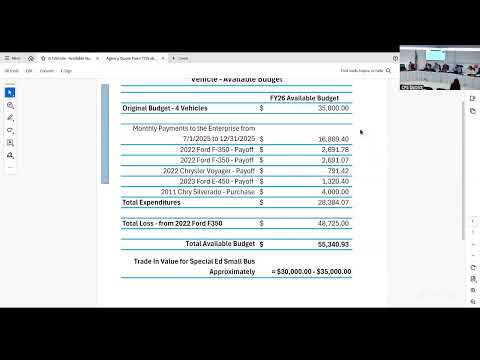
On transportation, staff requested approval to purchase two low-mileage Chrysler Pacifica vans from Toyota of Smithfield under a master price agreement at about $30,000 apiece. Staff said the vans would replace a 16‑passenger van that cannot legally be used for student home‑to‑school transport without a bus driver and would support transitions, athletics and after‑school tutoring; funds for the purchase were described as available within existing transportation allocations.
Why it matters: The revenue projection and small operating gap will shape budget choices for staffing and services; purchasing two vans is presented as a cost‑saving step to reduce reliance on outside transportation vendors.
What’s next: Staff will continue budget work to close the gap and, if approved through the committee’s procurement process, will proceed with the vehicle purchase under the master price agreement.