
Board discusses public‑records workload, outside counsel and possible legal‑service changes
Get AI-powered insights, summaries, and transcripts
Subscribe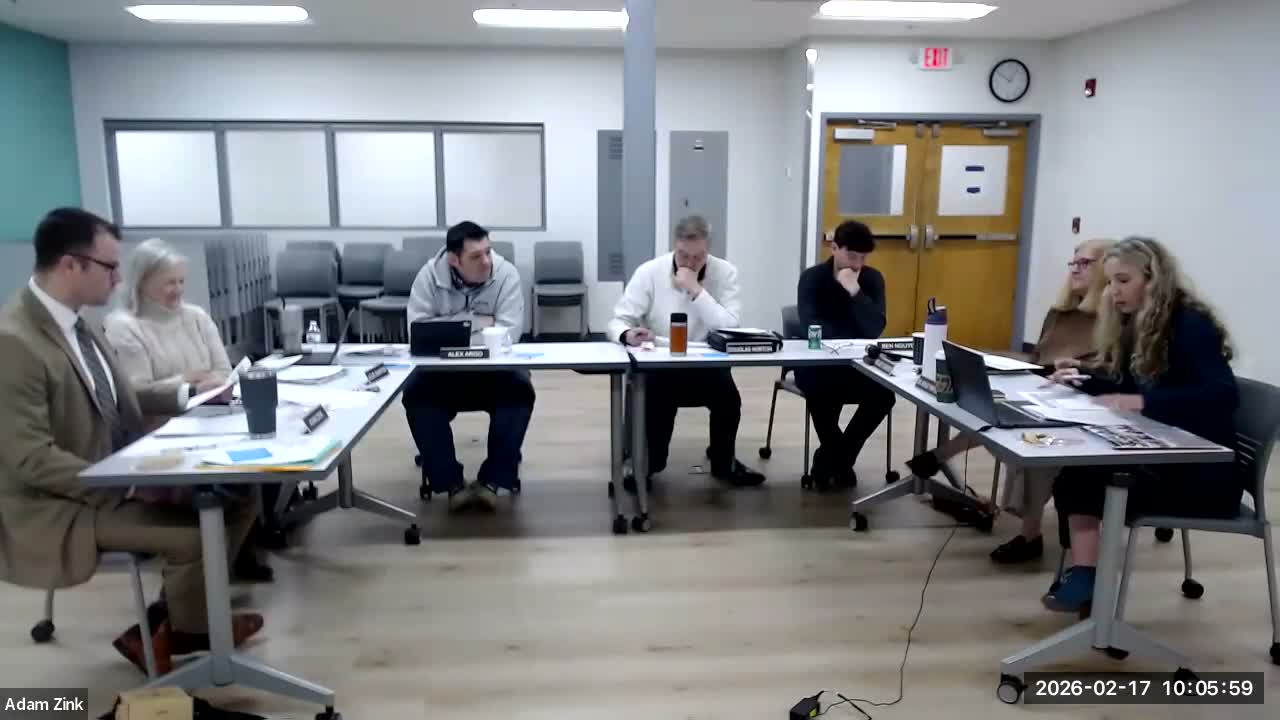
Summary
Board reviewed recent legal spending and the district’s heavy public‑records workload, debated third‑party vs. internal handling, and asked staff to gather bids and itemized bills to evaluate consolidation or flat‑fee retainer models.
Board members and staff spent a significant portion of the retreat reviewing legal services, public‑records processing, and options to control costs while preserving legal expertise.
Staff described an unusually high volume and complexity of public‑records requests that has required outside counsel to manage redactions and FERPA‑sensitive material. “We get a lot of public records,” a staff speaker said, explaining that many requests involve multi‑component items and sometimes protected student information that requires legal review. The board discussed examples of large, complex requests that generated thousands of emails and required legal scrutiny to ensure compliance.
The treasurer and other members outlined the current mix of lawyers and the possibility of pursuing a different pricing model. Options discussed included maintaining the current multi‑firm arrangement, asking for bids for a bundled retainer that would provide broad expertise under one firm, or subcontracting higher‑volume, lower‑risk tasks to paralegals or junior staff at lower hourly rates.
Board members raised concerns about trade‑offs: consolidating to a single firm might improve consistency and offer a flat fee, but could cost more for specialized litigation or special‑education work and reduce the ability to seek second opinions. One board member noted that previous years’ legal expenses included roughly $81,000 tied to special‑education work and cited an example period showing about $141,000 in legal expenses; staff recommended collecting detailed bills and soliciting bids so the board can assess potential savings versus lost specialty capacity.
The board did not direct an immediate change in counsel. Members asked staff to compile itemized legal bills, estimate savings from potential paralegal usage for routine public records work, and present bids or options for a retainer or hybrid model at a future meeting.
Authorities and legal references mentioned during the discussion included public‑records obligations and FERPA requirements; a board member asked who bears ultimate liability under applicable statutes (ORC was cited in the conversation). The board emphasized that any change to legal services should preserve impartiality and timely production of records, while balancing cost control.