Get Full Government Meeting Transcripts, Videos, & Alerts Forever!
Get email alerts on the Land Use Conservation topic
No spam. Unsubscribe anytime.
Residents urge Vermillion council to preserve Prentice Forest
Summary
Two residents told the Vermillion City Council on Feb. 17 that Prentice Forest is an important urban natural area and asked the council to protect it from nearby development; speakers said a petition has gathered roughly 300 signatures and highlighted ecological and community benefits.
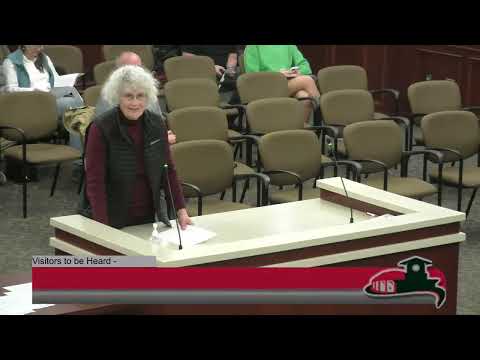
Resident testimony at the start of Tuesday’s Vermillion City Council meeting focused on a wooded lot known locally as Prentice Forest and urged the city to preserve it as a natural area.
Hammond, who said they live at 25 Prentice Avenue, told the council the parcel is owned by VCDC and faces possible development for six to eight houses. “I’m here to explain why I think it’s in the best interest of Vermillion to preserve Prentice Forest as a natural space in the city and to develop housing opportunities elsewhere,” Hammond said, adding that a petition circulated by adjacent homeowners has about 300 signatures opposing development.
A second speaker, Suzanne Skirm of 722 Lewis Street, framed the request within the city’s long participation in Tree City USA programs. Skirm said urban forest patches such as Prentice Forest provide environmental and social benefits — from air quality and stormwater mitigation to mental‑health benefits — and urged city leaders to consider protection and management of the site as part of Vermillion’s tree canopy responsibilities.
Council members did not take action on the comments during the visitors period; public testimony was recorded and the council proceeded to scheduled public hearings and agenda items. The speakers left the council with a request that Prentice Forest be prioritized in planning and conservation conversations.
The council packet and comments referenced national resources and local observations: Hammond cited the Cornell Lab of Ornithology’s location identification and an informal count of 31 bird species observed in a 15‑minute period. Skirm referenced the Arbor Day Foundation’s guidance on urban‑forest value and the role of Tree City USA recognition.
Next steps: Speakers requested that the council consider formal protections or management plans for Prentice Forest; the transcript records no immediate council vote on preservation measures.