Get Full Government Meeting Transcripts, Videos, & Alerts Forever!
Get email alerts on the Wildfire Mitigation topic
No spam. Unsubscribe anytime.
County approves $150,000 pilot to use goats, sheep for wildfire fuel reduction
Summary
Nevada County approved an 18‑month Livestock Fuel Reduction pilot with the Resource Conservation District to treat at least 45 acres on schools and public lands using targeted grazing. The program includes vendor selection, education events, and a $112,000 vendor allocation to pay ranchers for grazing services.
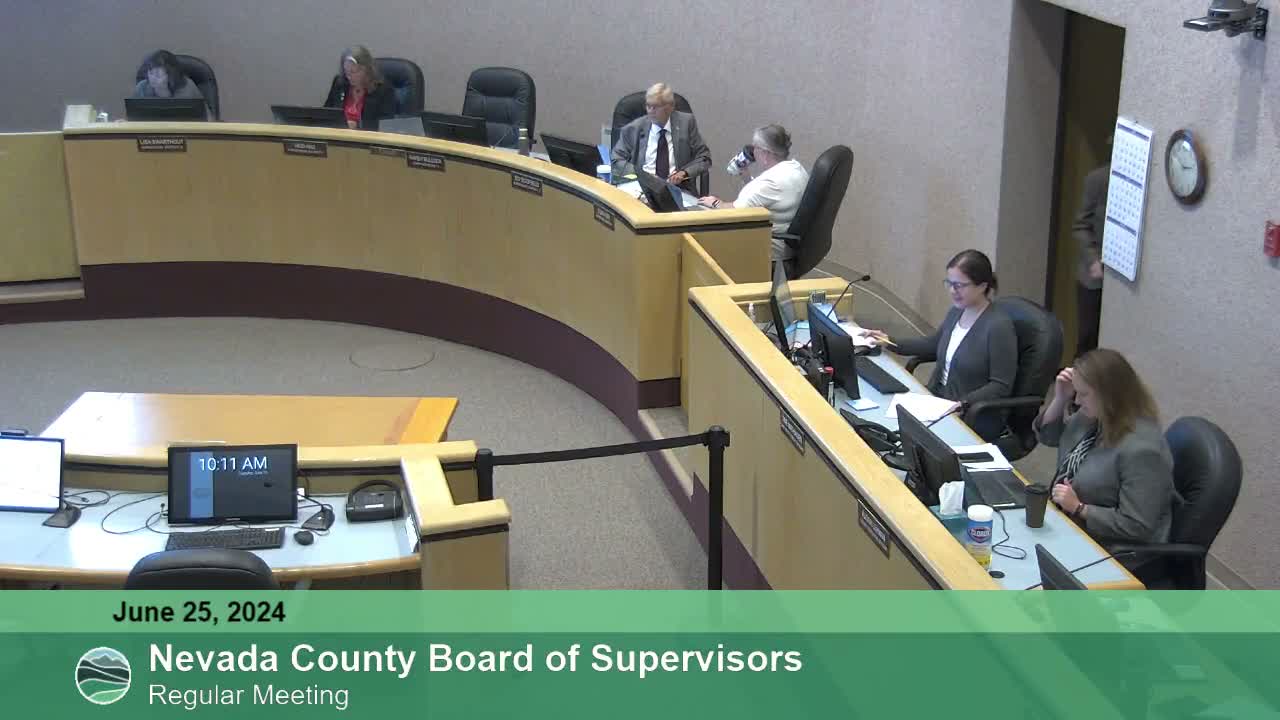
The Nevada County Board of Supervisors on June 25 approved an 18‑month, $150,000 pilot program to use targeted livestock grazing as a low‑cost, multi‑benefit approach to wildfire fuel reduction.
Alex Gibble Toll of the Office of Emergency Services described the Livestock Fuel Reduction Program as a three‑goal initiative: (1) vegetation treatment using livestock on at least 45 acres including three school campuses and two public parcels; (2) community education about livestock as a landscape tool; and (3) workforce development for local agricultural jobs.
Brianna Bacon and Nate Alcorn of the Nevada County Resource Conservation District explained the site selection process, operational planning, and metrics of success. They said the contract allocates roughly $112,000 of the $150,000 to pay vendors (local ranchers) for on‑the‑ground grazing services and covers education and outreach events.
Board members praised the pilot’s cost‑effectiveness and educational potential. Supervisor Hook noted prior local successes and the benefit for students seeing grazing as part of agricultural pathways. Public commenters suggested linking targeted grazing to post‑mastication maintenance and to areas that may reduce fire starts near encampments.
The motion to approve included authorization for the Director of Emergency Services to execute the contract and to amend the Emergency Services budget to cover the pilot.
Why it matters: Targeted grazing can both reduce hazardous fuels and support agricultural economies while creating opportunities for community engagement and school‑based learning.
Next steps: County staff and the RCD will finalize operational procedures, select vendors, perform site visits, and run community education events; vendors will be chosen based on site feasibility (topography, water access, temporary fencing needs).
Source: Presentation and discussion at Nevada County Board of Supervisors meeting, June 25, 2024.