Get Full Government Meeting Transcripts, Videos, & Alerts Forever!
Get email alerts on the Energy topic
No spam. Unsubscribe anytime.
Nevada County hears Pioneer assessment, staff to return with ordinance and CPUC timing
Summary
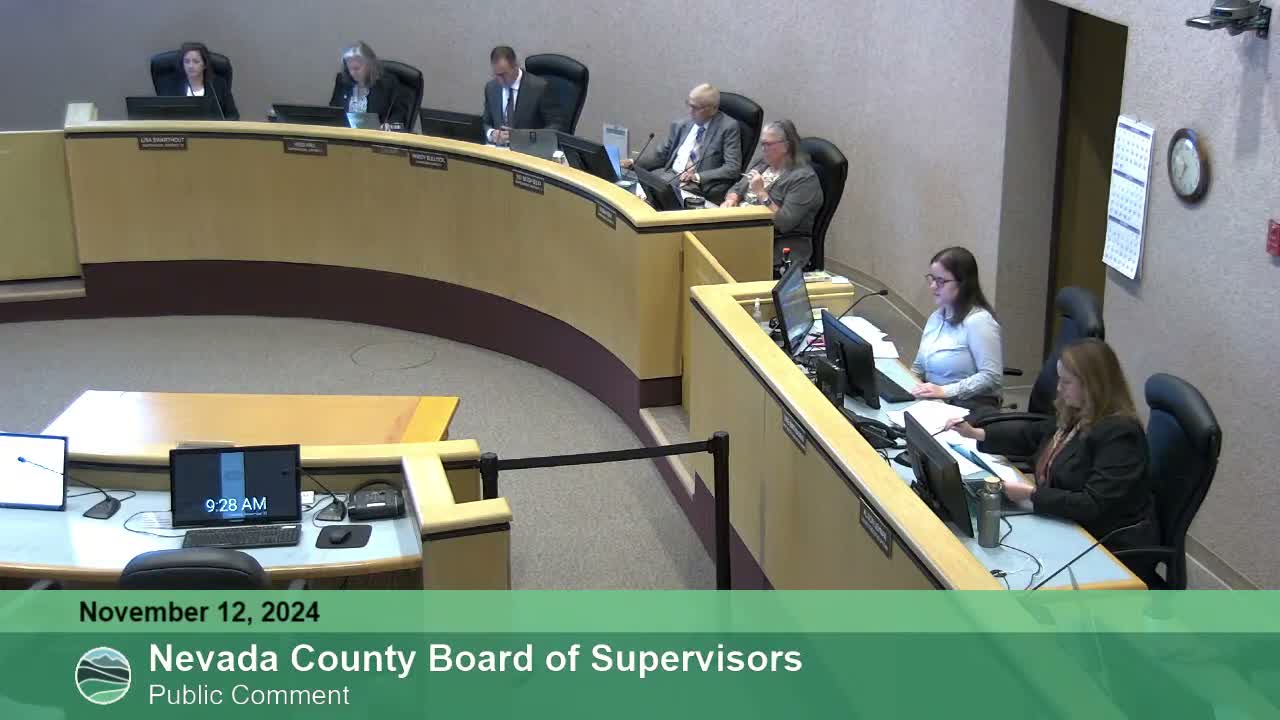
Pioneer Community Energy and consultants told the Board the 2024 impact study shows potential customer savings and advised a delayed, October 2027 enrollment window; the Board accepted the informational presentation and asked staff to return with ordinance language and additional analysis at a January workshop.
Pioneer Community Energy and its consultants presented a new 2024 impact assessment for unincorporated Nevada County, saying market conditions have softened since last year and that joining Pioneer could produce savings for many customers compared with PG&E. Don Eckerd, Pioneer CEO, told the Board that Pioneer would give jurisdictions a choice, allowing local residents to stay with PG&E if they opt out and that local officials would serve on Pioneer’s advisory committee.
The assessment, performed by Pacific Energy Advisors, analyzed 2022–2023 eligible customer data and estimated roughly 33,000 eligible accounts in the county consuming just under 300,000 megawatt‑hours. Consultant Alden Walden said reduced peak summer prices and additional generation coming online make a 2027 launch—ideally October 2027—more favorable than an earlier enrollment, because it avoids the historically expensive Q3 months.
County staff and Pioneer representatives outlined the next steps: Pioneer’s board will vote on expansion on Dec. 19, staff would bring ordinances for first and second readings in January and February, and an implementation plan would be submitted to the California Public Utilities Commission (CPUC) for review in March; the CPUC’s approval window would then set a 90‑day timeline to enroll customers. "You're going to have a say on 40% of the PG and E bill, which is the generation side of it," Don Eckerd told supervisors, noting local input into generation decisions.
Board members asked technical questions about resource adequacy, CPUC requirements and opt‑out mechanics. Supervisors also requested more granular bill comparisons, particularly for households with rooftop solar or third‑party solar contracts, and asked staff to return with updated financials at a January workshop. The Board accepted the presentation without taking a vote on joining Pioneer, consistent with staff’s request that the item remain informational while the county prepares ordinance language and community outreach.
What's next: staff will craft ordinance language for consideration at the January workshop, coordinate with Pioneer on community outreach and continue monitoring market changes before any formal decision or resolution is submitted to the Board.