Get Full Government Meeting Transcripts, Videos, & Alerts Forever!
Get email alerts on the Housing Policy topic
No spam. Unsubscribe anytime.
Nevada County revives Title 25 to ease rural home permitting; board removes sunset and allows rentals
Summary
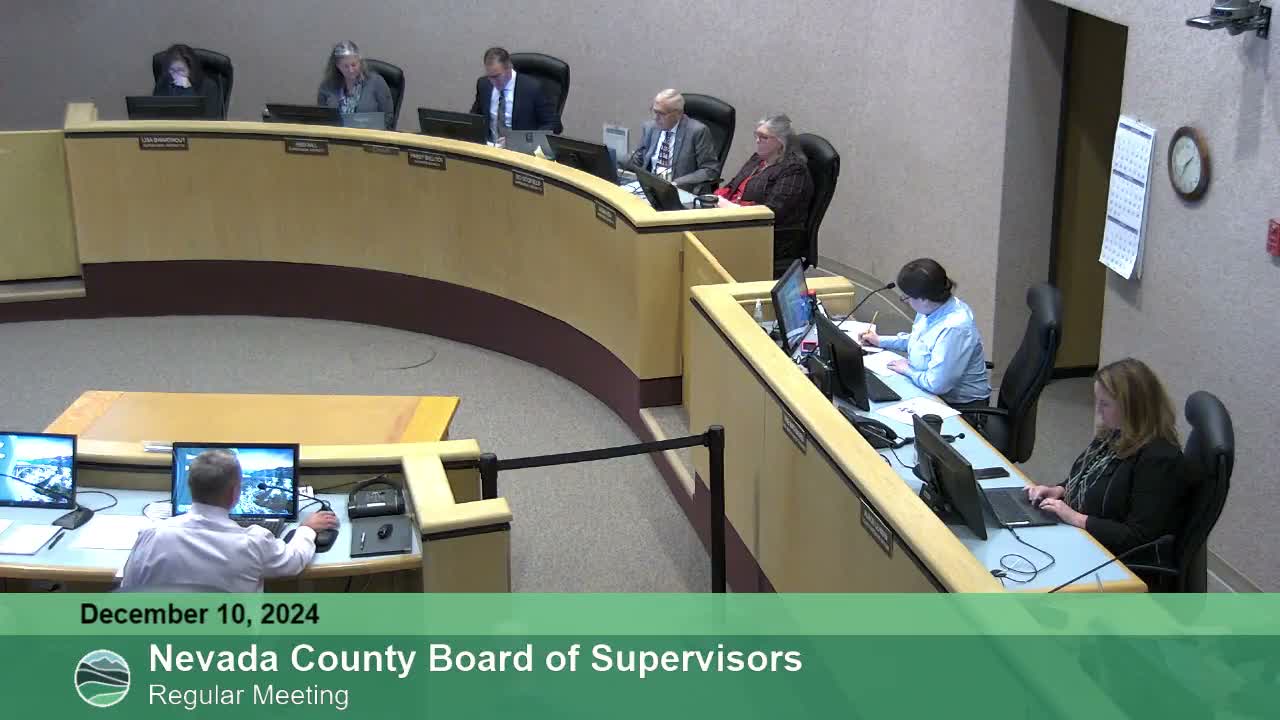
The Board of Supervisors voted Dec. 10 to introduce and waive first reading of an amended Title 25 ordinance offering a lower-cost permitting pathway for limited-density rural dwellings; the board removed a proposed three-year sunset and a two-year rental delay and directed annual reporting back to the board.
The Nevada County Board of Supervisors on Dec. 10 advanced an amended ordinance to bring back California Code of Regulations Title 25 as a local tool to permit limited-density, owner-built rural dwellings in specified rural zoning districts.
Building Director George Shurek told the board Title 25 permits ease the cost and technical burdens of new rural housing by allowing alternative materials and a smaller scope of mandatory work while preserving life, health and safety inspections. He said the county would still require septic and well approvals from Environmental Health, Wildland–Urban Interface (WUI) fire protections, smoke detectors and, for homes larger than 1,200 square feet, sprinklers. The department recommended the ordinance as a three-year pilot to test community interest.
Public commenters and several supervisors pressed staff for changes. Tom Durkin and local builders urged a longer pilot or no sunset so the program could mature; others asked for payment plans or deferred-fee options to reduce up-front cost barriers for residents attempting to legalize unpermitted units. Several speakers asked that the program also be permissive for farm and workforce housing.
After discussion, the board voted to introduce and waive the first reading of an amended ordinance that removes the three‑year sunset provision and eliminates the proposed requirement that a homeowner occupy a new Title 25 dwelling for two years before renting it. The board also directed staff to return with a written report within one year describing program uptake and any recommended modifications.
The board’s direction preserves the program’s key features: simplified plan submittal (owner-prepared plans are permitted), a reduced inspection regimen (four inspections instead of the typical 12), allowance for alternative construction methods and case‑by‑case consideration of nonstandard materials, and strict applicability to parcels in rural zoning designations described in the ordinance (generally five acres and larger). Shurek said property owners who choose Title 25 would be required to record a deed notice for real-estate disclosure.
Supporters called the changes a practical tool to help residents — including owners of older, unpermitted dwellings — bring housing into compliance. Skeptics warned the county to monitor for unintended outcomes, such as speculative development or subdivision patterns that undermine agricultural land. The board asked planning and building staff to conduct community outreach and report back annually; staff said they would also explore fee-deferral and outreach strategies to increase access.
Next procedural step: staff will prepare the revised ordinance for a second reading and final adoption, and the board asked staff to present an implementation report within a year.