Greenville County council denies major change to Pebble Creek planned development after neighbors oppose townhomes
Loading...
Summary
Council voted to deny a requested major change to the Pebble Creek planned development after multiple residents urged preservation of tennis courts, pool and neighborhood character; the developer had asked only for direction on options including 24 townhomes.
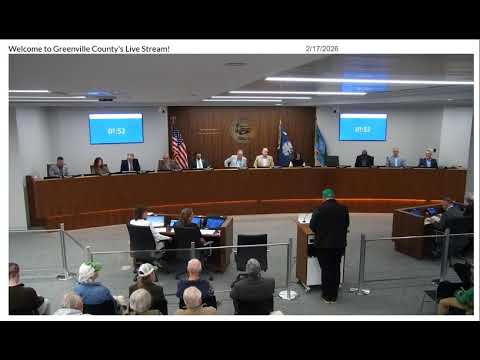
Greenville County Council at its regular meeting denied a request for a major change to the Pebble Creek planned development that would have allowed new homes where community recreational facilities now sit.
Neighbors and long‑time residents spoke against replacing the tennis courts and other amenities with housing, citing traffic, safety and the value those facilities have provided to families for decades. "We say no, and that's 100% of Pebble Creek," one resident said, urging council to reject the proposal. Others described children who learned tennis at the courts and the social fabric that the pool and club created.
Sergei Tsushko, introduced himself as one of the owners of Green City Homes and said his company presented two options: roughly 10–15 larger homes, or 24 attached townhomes designed for downsizing residents and younger families. Tsushko said the existing courts and related recreational areas are "run down and unusable," that the golf course and HOA lack the financial capacity to restore them, and that Green City had stepped forward to offer a solution. He described the developer's request as asking for guidance from council rather than seeking immediate approval.
Residents countered that neglect by the property owners did not justify removing facilities that were recorded as part of the planned development. "The loss of the tennis courts would further destroy the fabric of the neighborhood," a 45‑year resident told the council. Multiple speakers who live across from the courts emphasized narrow streets, lack of sidewalks and parking concerns if new homes were built.
On the council floor, Counsel Bradley moved on behalf of the committee to deny the change at second reading. Councilors discussed preserving the integrity of planned developments and whether changes should be allowed only when necessary. The motion to deny carried on a voice vote; the transcript records "the ayes have it," and the recorded committee recommendation was to deny. The developer's proposal now remains without county approval.
Next steps: The denial at second reading stops this proposed major change under the county's zoning process unless the applicant pursues further action or appeals the decision. No further vote tally for the denial was specified in the public transcript.