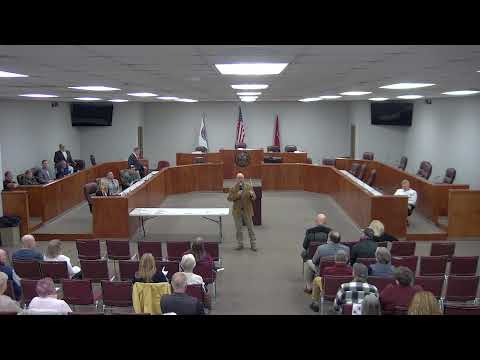
Coffee County summit warns of rising scams; TBI agent outlines simple steps and local resources
Loading...
Summary
At a Fraud Prevention Awareness Summit at the Coffee County Administrative Plaza, local law enforcement, bankers and a Tennessee Bureau of Investigation cyber agent described recent scams (jury‑duty, romance, wire/ATM, crypto) and urged residents to freeze credit, verify transactions and use local resources such as SafeSeniorTN and deed‑fraud alerts.
Coffee County leaders and fraud‑response partners urged residents to take basic precautions after a series of presentations and case studies at a Fraud Prevention Awareness Summit at the Coffee County Administrative Plaza.
Sheriff Chad Parton opened the session and said the county has seen a steady stream of victims this year, calling the problem "very important to me" after recounting both municipal and personal losses. "We all want this to stop, and we all wanna educate our loved ones," he said.
The summit centered on concrete examples: Investigator Jonathan Anthony described local cases in which victims were coaxed into sending money through romance schemes, QR codes or phone intimidation. In one investigation he described to the audience, family members together invested about $225,000 after an online contact offered apparent investment returns; in another case a resident moved funds from a local Coffee County bank account to an out‑of‑county ATM following a phone call instructing the transfer.
"We get the FBI involved in this," Jonathan said while describing efforts that led to identifying accounts and, in at least one case, extraditing a suspect from Miami.
Circuit Court Clerk Jenny Anthony told attendees how to recognize jury‑duty scams and how the court actually notifies jurors. "We will never call you, text you, and demand money," she said, adding that the statutory penalty for failing jury service is a fine of up to $500 — not the large sums fraudsters demand.
Representatives from local banks described what they see at teller windows and steps customers can take. Brad Goodwin of First Vision Bank advised customers to use credit cards rather than debit cards for online purchases and to verify wire instructions in person or by phone. Brent Parsley of Coffee County Bank described daily examples of compromised cards and urged patience when bank staff put holds or ask extra questions to protect customers.
Tennessee Bureau of Investigation Special Agent Nick Christiansen gave statewide figures and prevention guidance. "In Tennessee last year, we had 11,000 victims report to IC3," he said, referring to the Internet Crimes Complaint Center, and added that those reports documented about $190 million in losses; he emphasized that reporting likely captures only about 10 percent of actual victims. He urged practical steps: freeze credit with the three bureaus, enable multifactor authentication, use password managers and follow the four simple actions he summarized as the "4 D's": "Don't answer; Disconnect; Don't click; Delete." "If something's different, stop and ask questions first," he said.
Speakers also highlighted community resources. Organizers distributed pamphlets and pointed attendees to SafeSeniorTN for up‑to‑date scam information, to the county recorder/registrar for deed‑fraud alerts, and to AARP and local victim‑assistance partners for help with recovery. Realtor Jimmy Jernigan encouraged property owners to sign up for deed alerts and to verify unusual offers in person or through county offices.
In an audience Q&A, participants asked about Marketplace and QR‑code risks, device cleansing after suspected compromise, and how law enforcement cooperates with foreign authorities (including Interpol and newer tools such as a so‑called "Silver Notice" to freeze victimized accounts). Speakers acknowledged international complexity but described ongoing partnerships that sometimes yield arrests and account seizures.
Organizers closed by urging families to talk with older relatives, register for fraud alerts, and bring suspicious calls to local law enforcement and their banks. Jenny Anthony said the group may hold another summit in the fall to expand outreach.
The summit combined local case studies, bank‑level prevention tactics and state cyber expertise, offering residents specific actions to reduce risk and contacts for help.