
Sugar Grove trustees table Grove Area 1 plat of easements after residents flag missing dimensions, groundwater concerns
Get AI-powered insights, summaries, and transcripts
Subscribe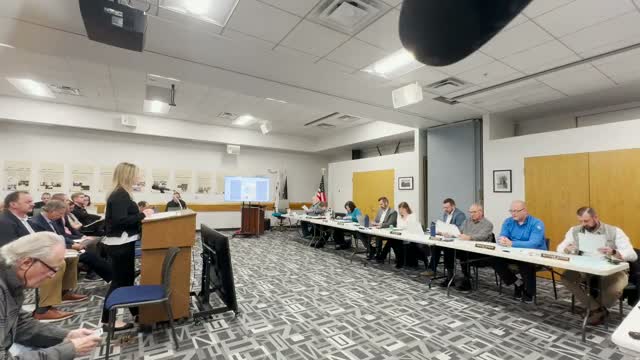
Summary
After residents and the village president identified missing lot dimensions and raised groundwater and statutory concerns, the Village of Sugar Grove board voted to table approval of the Grove Area 1 plat of easements to allow engineers and surveyors to correct and verify the documents.
President Sue Stilwell and several residents pressed the Village of Sugar Grove board on Feb. 17 to delay action on the Grove Area 1 plat of easements, saying the recorded subdivision and the corrective easement plat contain missing and incorrect measurements and may not comply with the Plat Act and village code.
The board had before it a corrective plat of easements presented as addressing additional sanitary‑sewer, public‑utility and drainage easements needed after final engineering. Residents and President Stilwell said they found at least four defects on the recorded subdivision plat — including a lot labeled about 60 feet short of its true dimension and missing north‑border dimensions for parcels labeled A and B — and urged a full engineering and surveyor review before recording or approving related easement documents. "This is an absolute mess," President Sue Stilwell told the board, adding she was concerned about liability and construction occurring from incorrect legal descriptions.
Representatives for the developer Crown acknowledged a scribe error on the subdivision and said the discrepancy is commonly corrected. Dan Olson, speaking for Crown, told trustees: "We will acknowledge there was a scribe error on the subdivision. It is commonly and easily rectified with a certificate of correction." Crown attorney John Maze said the company did not intend to refile a new plat and repeated that its preferred remedy is a certificate of correction: "Our solution is certificate correction," Maze said.
Residents, however, pressed for more than a quick correction. Jayden Chadda, calling out groundwater and procedural concerns, warned the board that approving the flawed documentation could lead to future lawsuits and chronic basement flooding: "The village has now been sued twice, and if this plat goes through, I imagine the village would likely be sued again," Chadda said.
Staff and applicant engineers said the final engineering package had been reviewed by multiple entities and that some errors could be addressed through standard survey corrections. Engineers also described the site's stormwater approach and soil‑boring results, but residents asked for more recent or additional borings in locations with shallow groundwater. An engineer for the applicant said the worst soil borings showed shallow groundwater of 1 to 3 feet in localized spots (typically near proposed stormwater basins) while other borings showed groundwater much deeper in other areas.
Faced with conflicting views about what is statutorily required and what can be fixed administratively, trustees voted to table the matter until the next board meeting so surveyors and engineers can complete corrective documentation and staff can provide confirmation that the plats and easement documents meet statutory and code requirements. Trustee Roskoff moved to table the item; Trustee Michaels seconded. By roll call the motion to table carried, with Trustees Roskoff, Michaels, London, Special and Bonnie voting aye and Trustee Lundy voting no.
Next steps: staff and the developer agreed to provide a certificate of correction or revised documents and to confirm that all required measurements and legal descriptions comply with the Plat Act and village code before the board takes final action.