
Parents and staff urge more inclusive outreach and academic supports as redistricting plan moves forward
Get AI-powered insights, summaries, and transcripts
Subscribe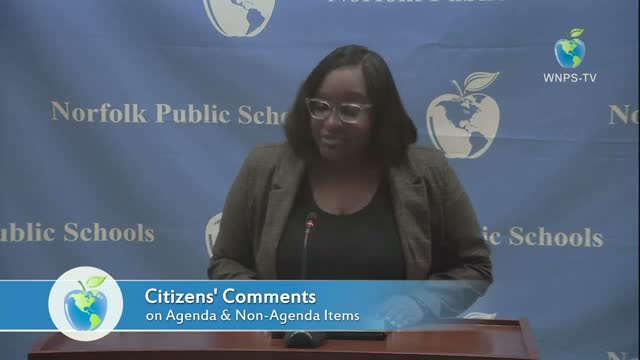
Summary
At the Feb. 18 meeting, community speakers — including the Special Education Advisory Committee and ESL staff — urged school‑based meetings, translation/interpretation and protections for students with disabilities and English‑learner families; a reading specialist also warned of teacher burnout and urged district retention policies.
Multiple community speakers addressed the board during public comment on Feb. 18, urging stronger, more inclusive engagement around the proposed consolidation and redistricting process and asking the district to protect systems that have built trust with multilingual and special‑needs families.
Shakara Lawrence, speaking for the Special Education Advisory Committee, asked the district to "ensure that all engagement efforts are accessible, inclusive, and responsive to the communities most affected, particularly families of students with disabilities," and recommended school‑based meetings and multiple outreach formats to reduce barriers to participation.
An ESL teacher who described work at Mary Calcott (Calcutt) told the board that the school has built deep relationships with Spanish‑speaking families and that much of the early outreach felt "primarily put out in English," leaving some families confused and excluded. The speaker urged translations, interpretation and school‑site meetings to allow genuine participation.
"Preserving the community protects systems and relationships that are clearly working," one commenter said, urging the board to consider phased transitions to avoid disrupting supports that helped raise academic outcomes at schools slated for reassignment.
Lisa Walker, a reading specialist, told the board that teacher burnout and low pay remain urgent operational problems and recommended policies focused on retention and reduced workloads, including concentrated K–2 supports and reconsideration of expectations that contribute to turnover.
Board members and staff acknowledged the concerns and said the district will expand multilingual communications, provide school‑site presentations, and continue transition committee work with principals and stakeholders. Administrators reiterated that many staffing placements are already in progress and that federal and local requirements for special‑education services will be followed as students move to receiving schools.
Speakers asked the board to continue to monitor equity impacts and to share clear metrics that will be used to evaluate academic and social‑emotional outcomes during transitions.