Get Full Government Meeting Transcripts, Videos, & Alerts Forever!
Get email alerts on the Land Use Solar topic
No spam. Unsubscribe anytime.
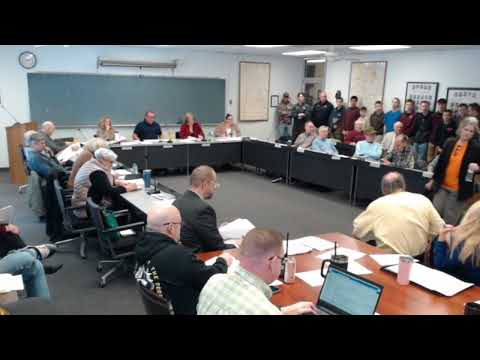
Iroquois County board advances conditional approvals for major solar projects after residents press drainage, liability and decommissioning safeguards
Summary
After extended public comment, the county moved to approve conditional-use permits and timing variances for multi‑site solar projects (including a 50 MW proposal) subject to drainage surveys, third‑party engineering review, screening plans and strengthened decommissioning and financial assurances.
The Iroquois County Board voted this month to advance conditional approvals and timing variances for large solar projects after residents raised repeated concerns about drain‑tile damage, liability and battery storage safety.
David Preston, identified in public comment as the lead developer for Allian, described one proposal as “a 50 megawatt solar project, 10 megawatt battery,” and said the developer has removed infrastructure from a drainage district line and will submit stormwater and drainage reports and a department training plan for county review. He said the company included many of the county’s recommended conditions in its application.
Why it matters: Neighbors and drainage‑district representatives told the board the projects could intersect century‑old tile lines that protect thousands of acres of farmland and warned that pile driving, posts or a battery failure could cause contamination, crop damage or costly repairs. Several speakers asked the board not to issue building permits until legally binding protections and mapping of tile lines are in place.
“Martha,” a landowner who gave public comment, asked the board to withhold a building permit “until the solar company gives a sound assurance that our district has been protected,” citing tile‑line impacts and the need for court‑enforceable protections. County zoning materials and the record show the board sought to address that with required farmland‑drainage plans, third‑party engineering reviews where the drainage district and developer disagree, and television inspections of drain tiles both before and after construction.
The zoning official explained limits on county authority under a 2023 state statute and said the practical approach is to require developers to provide a farmland drainage plan to both the county and the drainage district; if the developer and district cannot agree, an independent third‑party engineer will resolve technical disputes. The official also described enforceable conditions the county can impose directly: grading and stormwater plans, TV inspections, regular reporting to the drainage district, road‑use agreements and staged financial assurance for decommissioning.
What the board approved: After extended discussion the board made and carried motions to approve conditional‑use actions and several timing variances — including allowing certain drain‑tile surveys and the interconnection agreement to be completed at the building‑permit stage rather than at the conditional‑use stage — provided developers meet enumerated conditions. The board also approved a variance to allow an alternate fence option in specific situations and required that final vegetative screening plans return to the planning committee for approval.
Developer response and commitments: Preston and other project representatives said they will submit drain‑tile survey reports, grading and stormwater plans, TV inspections, a decommissioning plan and proposals for financial assurance. Company representatives also noted an economic impact study they provided estimating $8–9 million in local economic benefit, much of it flowing to small districts and local taxing bodies.
Next steps: The board’s approvals move the projects to the building‑permit stage with explicit conditions tied to drainage surveys, third‑party engineering review where disputes persist, annual drainage reporting, road‑use agreements, landscape/screening plans and staged decommissioning funding. If developers do not meet these requirements, the county retains the ability to withhold building permits or require remediation as set out in the conditions the board adopted.
The county did not adopt a requirement that developers sign a drainage‑district contract before approval — the zoning official said the state statute limits the county’s authority to force private third‑party agreements — but the conditions the board approved compel an exchange of drainage plans, comment opportunities for the district and an independent engineer to resolve unresolved technical disagreements.
The board’s actions do not represent an unconditional project approval; rather, they clear procedural steps while formal technical requirements, monitoring and contract terms remain to be satisfied before construction can proceed.