Get Full Government Meeting Transcripts, Videos, & Alerts Forever!
Get email alerts on the Capital Funding topic
No spam. Unsubscribe anytime.
Charlotte County narrows capital shortfall; HMGP and 2026 sales‑tax projects remain priorities
Summary
County staff reduced the six‑year general‑government capital shortfall to about $64 million by adjusting project timing and adding $5 million/year returned from the Murdoch CRA; HMGP allocations for Hurricane Ian total about $103 million with a remaining local match shortfall of roughly $12.8 million, and the county plans to bring HMGP projects and a sales‑tax prioritization back to the board in coming meetings.
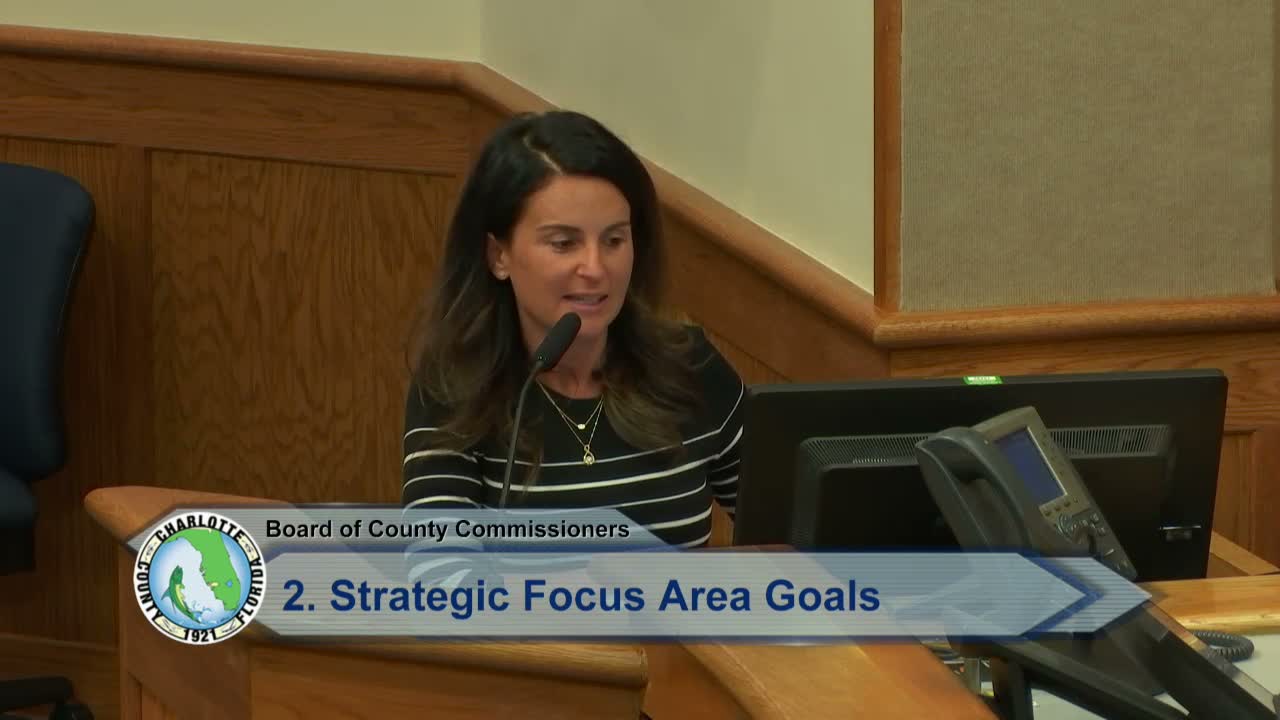
Francine Lisby, Assistant Budget Director, presented an update to the county’s general‑government capital funding plan at the June 19 focus‑area workshop, showing revised revenue assumptions and adjusted project timing that staff say makes the six‑year shortfall more manageable.
Lisby said preliminary valuations from the property appraiser came in at 9.63%, supporting staff’s projection assumptions. She said the Capital Projects Fund will no longer need to transfer funds to the Murdoch CRA going forward and staff built a $5,000,000 per‑year return from the CRA into the capital projects revenue line, adding roughly $30,000,000 over six years.
On hazard mitigation, Lisby said staff submitted a list of Hurricane Ian projects for Hazard Mitigation Grant Program (HMGP) consideration amounting to about $103,000,000; after removing one large item (the mid‑county operations facility) the remaining project build‑out was roughly $143,000,000, leaving a local shortfall for HMGP projects of about $12,800,000. She noted possible CDBG/HUD funding could help match costs, but that was not finalized.
For the 2026 sales‑tax initiative, staff produced an initial project list and moved projects whose construction timing could be delayed outside the six‑year window; the board has previously directed that at least 50% of sales‑tax proceeds be dedicated to transportation, which will shape prioritization. Lisby said moving project timing forward by one year improved near‑term cash flow, though staff still show a $64,000,000 shortfall across the six‑year window under current assumptions.
Lisby presented one option to narrow the gap: increasing the capital‑projects millage by 0.1 mill, which she estimated would yield about $3,500,000 in FY26 and approximately $25,000,000 over six years, cutting the shortfall to about $38,600,000 in the model presented.
Commissioners asked targeted questions: several sought comparison data for GLP‑1 spending among neighboring counties; others queried the HMGP special‑needs safe‑room item (staff said that HMGP requires tying projects to a single eligible site for the grant application and estimated a hard‑structure special needs shelter footprint of tens of thousands of square feet). Lisby said as DEM approves HMGP projects, each will be returned to the board for project‑specific scope and funding decisions.
The board did not vote on funding changes at the workshop; staff will bring HMGP project approvals to future meetings as FEMA/DEM clears projects and will continue the sales‑tax prioritization process through committees and board review.