Get Full Government Meeting Transcripts, Videos, & Alerts Forever!
Get email alerts on the Stormwater topic
No spam. Unsubscribe anytime.
Red Bank stormwater supervisor reports surge in work orders, expands GIS mapping and inspections
Summary
New stormwater supervisor Lewis Brill told commissioners the division completed 505 work orders in 2025, reduced a backlog from about 110–120 to roughly 37 open items, expanded training and ArcGIS mapping, and is increasing inspections and interagency coordination to address illicit discharges and sediment at construction sites.
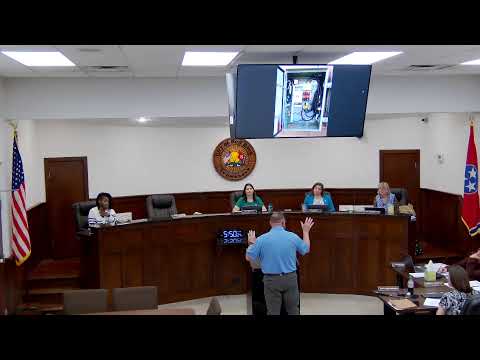
Lewis Brill, the city’s public‑works stormwater operations supervisor, gave a detailed progress briefing to the Red Bank City Commission, saying the division completed 505 work orders so far in 2025 and has reduced a lingering backlog from roughly 110–120 items to about 37 active cases.
Brill said the largest single category of work orders — about 150 of the 505 — involved debris and waste removal. He said 381 work orders were generated internally, 113 were submitted by citizens and roughly 20 remained uncategorized. Staff have been breaking complex tasks into smaller parent/child work orders to make field tracking and follow‑up more precise.
The supervisor highlighted stronger outreach and volunteer efforts, including workshops with the nonprofit Park Waterways for invasive species removal and stream‑bank restoration, and a recent concentrated street‑sweeping effort at the 27 South on‑ramp from Signal Mountain Road that cleared sediment blocking catch basins.
Brill also described expanded staff training (construction inspection, CDP recertifications, excavation and pipeline training) and the recent adoption of ArcGIS field maps to collect asset data in the field. Imported asset data from a prior consultant has been used to build a street‑sweeping map, an asset‑inspection map and hydrologic monitoring layers intended to support targeted inspections of pipes and inlets.
On enforcement and water quality, Brill said the division is tracking illicit discharges at construction sites, conducting post‑rain inspections, working with contractors on sediment controls and logging incidents in iWork. He emphasized education and outreach as the first line of enforcement and said the city is coordinating with Hamilton County Water Quality and regional agencies where jurisdiction overlaps.
Brill said the division is tentatively hosting a multi‑agency concrete pipe installation and inspection training on April 2, with about 40 expected participants, and staff are exploring TDOT SWIG and SRF funding opportunities for larger projects. Commissioners asked clarifying questions about jurisdiction (Hamilton County handles sites disturbing more than one acre), 'smart yards' credits to reduce private runoff, and routine public‑naming ideas for a street sweeper. Brill said they will continue prioritizing backlog reduction and improved tracking.